

The Broadstone Reading Stage presents JOHN DANIEL, JONATHAN GREENE, & ALISON PALMER
Please register for the Zoom link in advance by clicking here

The Broadstone Reading Stage presents J. DAVID CUMMINGS, MARY TAUTIN MOLONEY, & WILLA SCHNEBERG
Click here to register for the Zoom link (please register at least 30 minutes in advance of the event).


Recent & Forthcoming Books!
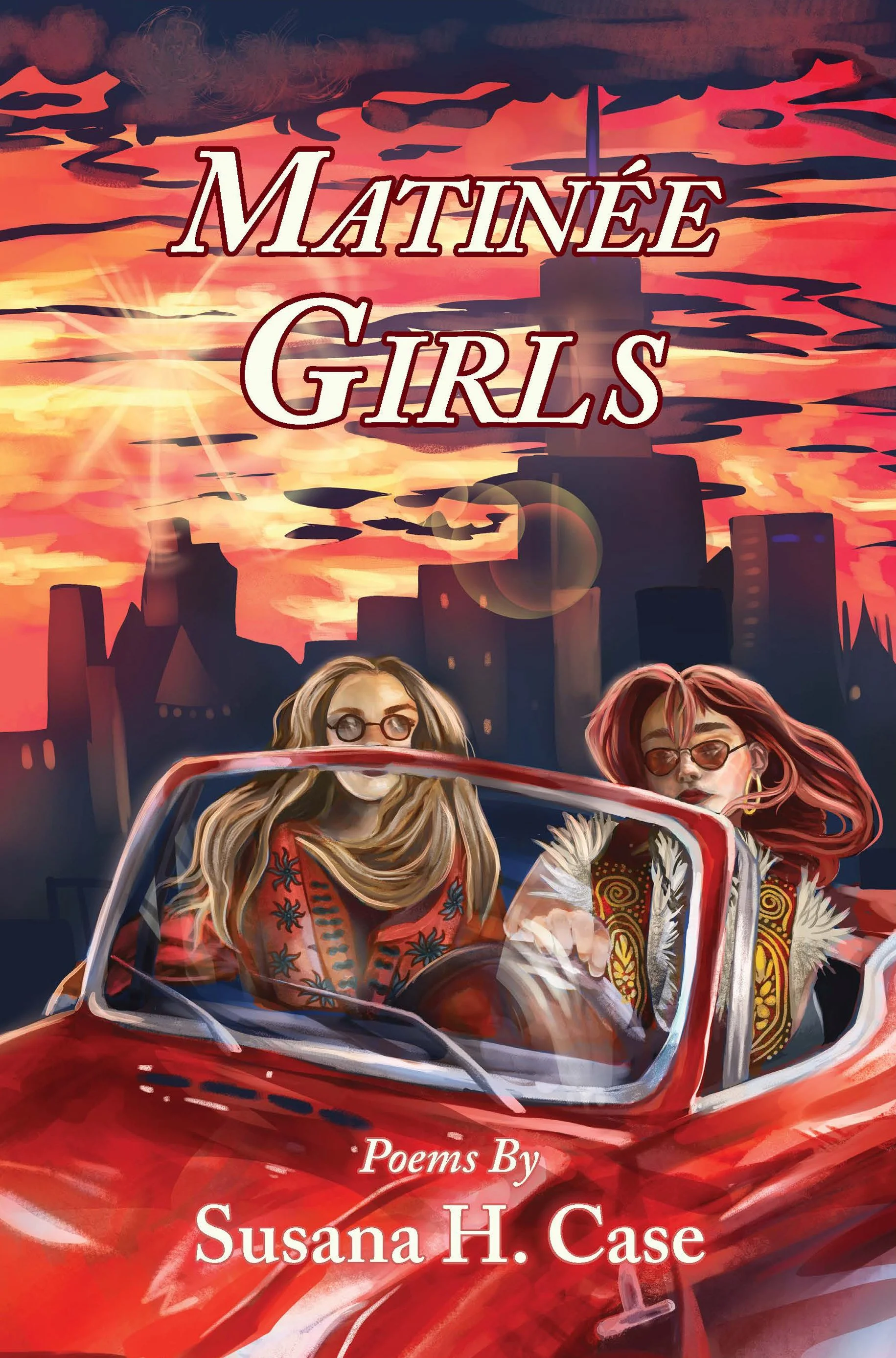
Publication Date: October 15, 2026
Paperback, 80 pages
ISBN: 978-1-966677-58-1
In Matinée Girls, a memoir brought to life by poet Susana H. Case, the reader is escorted through the poet’s 1960s girlhood, recounting her youthful adventures which spanned the globe from Ohio to Moscow, experiences filtered through her present observations as time has allowed each to influence the other.
Praise for Susana H. Case & Matinée Girls
With reinvented liner notes of the Beatles’ White Album peppered throughout razor-edged narrative poems laced with the underbelly of sixties’ headlines, I’m reminded that mastery of a craft comes from experience and that the most provocative works of art wrestle chaos into lyrics. I’m tempted to press Susana H. Case’s tenth collection on vinyl and play it backwards to hear what additional intensity lurks in these poems—as if I need any more. “Doesn’t confusion-coming-down-fast describe every love affair you’ve ever had?” Yes. Matinée Girls is rated ‘R’ for Revolutionary.
—Sandra Yannone, author of Boats for Women & The Glass Studio
Susana H. Case’s Matinée Girls is a transformative collection that will continue “pounding through us like a new heartbeat.” The work in this book sustains the reader as it journeys back in time when the Beatles and Buddy Holly echoed the tone of our nation’s struggles. The memories are a testament, an exquisite examination of womanhood and sexuality, a map to places where the “street swallows its secrets.” This collection will take the reader from the Adriatic Sea to a cracked adobe shack and then to sparkly heels on cobblestone. This work captures a time and place that is as indelible as the poems. Each turn of the page will remind you “there must be / someone somewhere singing.”
—Connie Post, author of Between Twilight & Prime Meridian
Whether addressing the Tate murders, ranting and giggling with a friend about pulling off and throwing out the window their jeans and panties while driving on an L.A. freeway, or philosophizing about the tracks of the Beatles’ White Album, Susana H. Case astutely observes the plight of women and girls in her latest book, Matinée Girls. Clever and witty, she illustrates her remarkable range of knowledge in this coming-of-age collection of entertaining and poignant poems.
—Margo Taft Stever, author of Bareback Rider & The End of Horses
The poems of Susana H. Case’s Matinée Girls reenact personal dramas, especially in the search for love, that play out in adolescent and young adult lives amidst the glamour and sensationalism of the sixties. Beneath the turbulent surfaces of these scenarios, we glimpse the emerging “defiant bones” of the poet’s self-assertion, and we learn with her that there are “sacrifices / to love not worth making.” Interspersed with the poems are interludes of reimagined liner notes for selections from the Beatles’ iconic 1968 White Album, notes that reflect with pathos and irony on the poet’s life.
—Carolyne Wright, author of Trajectories: Crossing the Map of Poetry & Masquerade: A Memoir in Poetry
About the Author
This is Susana H. Case’s tenth book of poetry and her fourth with Broadstone Books. She has won several Pinnacle Book Achievement Awards, an IPPY, a NYC Big Book Award Distinguished Favorite, and she was a finalist twice and an honorable mention for the Eric Hoffer Book Award, as well as a finalist for the American Book Fest Awards and the International Book Awards. The first of her five chapbooks, The Scottish Café (Slapering Hol Press), was rereleased in an English-Polish version, Kawiarnia Szkocka (Opole University Press), and an English-Ukrainian edition (Slapering Hol Press). Her work has also been translated into Spanish, Italian, and Portuguese. Case co-edited, with Margo Taft Stever, the anthology I Wanna Be Loved by You: Poems on Marilyn Monroe (Milk and Cake Press) and is co-editor with Margo Taft Stever and Sandra Yannone of Unsinkable: Poetry Inspired by the Titanic (Salmon Poetry). Currently, she is an editor at Slapering Hol Press. http://www.susanahcase.com/.

Publication Date: October 15, 2026
Paperback, 98 pages
ISBN: 978-1-966677-59-8
The End and The Beginning is autobiography in verse, beginning with Tony Howarth’s childhood in England (“six years old / I’m swept up by the crowd / everyone headed for Ravenscourt Park”). He recounts his boyhood war years (“I’m bundled on to train with Dad / evacuated from London / passed from auntie to uncle to auntie”) and an abrupt move to the States to join his mother (“a passport and ticket / on an aeroplane / to the United States”). There in postwar America, he forms deep friendships (“Win and me we’ve done a lot of talking / getting to know one another / ...I ask him...could we be room mates / he says sure”), and finds the love of his life (“I should buy a ring for Marna / my heart has made up its mind”). A stint in the army allows for a joyous and long-awaited reunion with his beloved father (“a tap on my shoulder / I turn with a huzza into his arms / so sharply that everything in our hands / scatters across the platform”), completing the circle of the title.
Praise for Tony Howarth & The End and The Beginning
What the poet called “the still, sad music of humanity” suffuses this thrumming ode on two timeless romances – between son and father, between lost youth and found love – with an aching beauty that will shimmer in the heart of every reader blessed to have taken a similar journey to selfhood.
—Jeremy Gerard, performing arts critic and biographer
Lovers of poetry and storytelling will be entranced by this sweeping story of a boy’s journey to manhood. Tony Howarth sets the reader down in England . . . in a time and place where war, family turmoil and deceit separate a young boy from the father he loves. Each narrative poem is like a snapshot as the boy struggles to make a place for himself wherever he lands. I was breathless at times as I followed the high-spirited boy’s determination to explore and endure whatever came along as he searched for the way to manhood, and to finding the father he was forced to leave behind.
—Sarah White, author of The Wanderlust: A South Carolina Folk Tale & others
Tony Howarth, known for his moving novels in verse, has written a triumphant contemporary
Odyssey—one that turns the narrative on its head and privileges the son's story and his poignant quest to rediscover his father. Throughout the book, we witness the ways that literature and love work to save the speaker as he bravely navigates the challenges of war, displacement, emigration, poverty, and familial lies. The End and The Beginning is a wonderful collection from a poet at the height of his powers.
—Jennifer Franklin, A Fire in Her Brain (Princeton University Press, 2027)
About the Author
Tony Howarth, a playwright, director, and former journalist, retired in 1991 after twenty-eight years as a teacher of English and theatre at Woodlands High School in Westchester County, New York. He began writing poetry in 2009 after a visit to William Wordsworth’s Dove Cottage, in England’s Lake District, developing his craft at the Hudson Valley Writing Center under the treasured guidance of Jennifer Franklin and Fred Marchant. His poems have appeared in many magazines, among them Chronogram, The Naugatuck River Review, Obsessed with Pipework (England), The Connecticut River Review, Raven’s Perch, The Sow’s Ear, and the Grayson Press anthology Forgotten Women. His verse dramas Wild Man of the Mountain and A Hand to Hold, and his memoirs in verse, The Griefs That Fate Assigns and After the Storm, A Shaft of Sunlight were published by Broadstone Books.
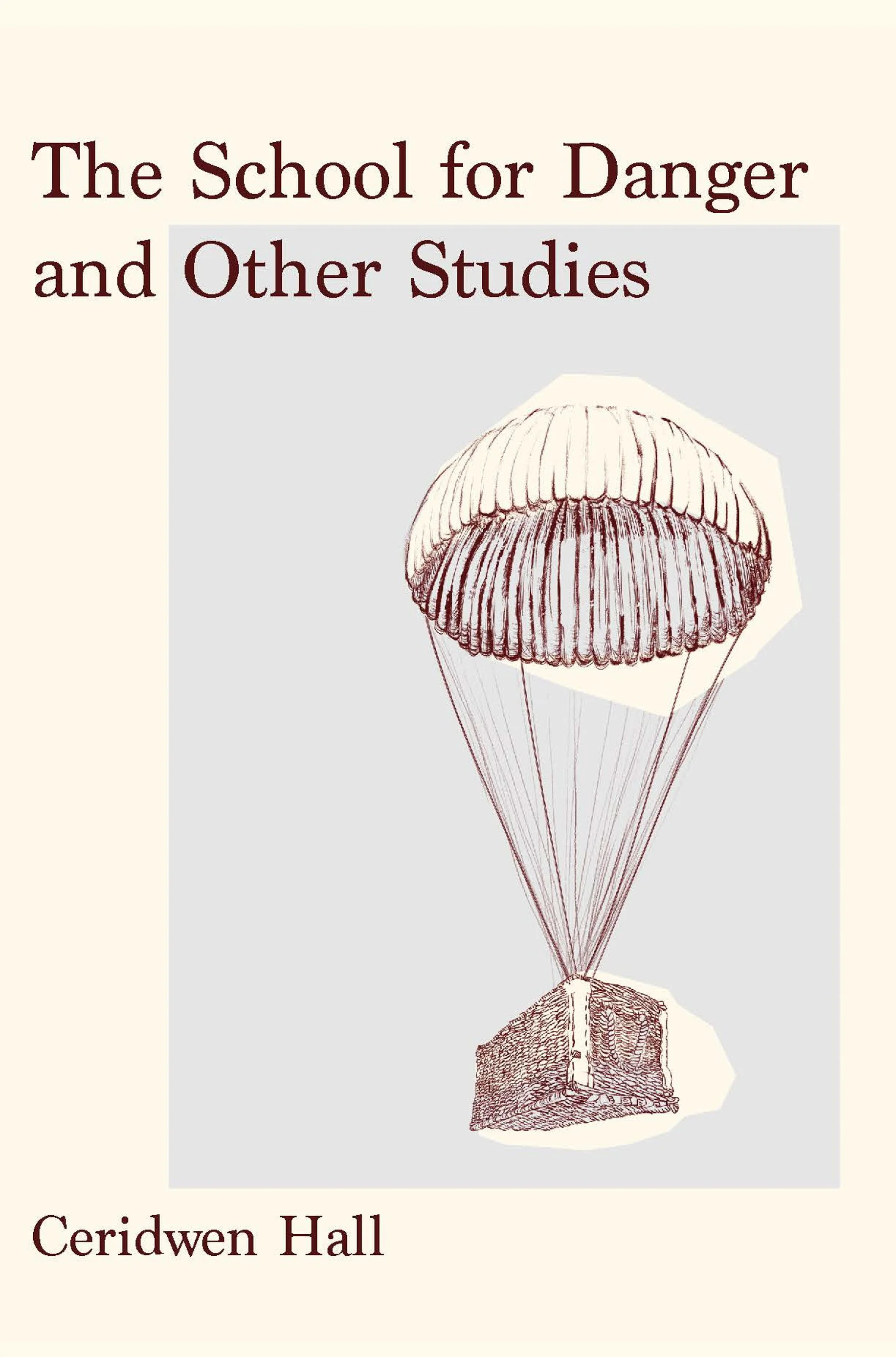
Publication Date: September 15, 2026
Paperback, 92 pages
ISBN: 978-1-966677-56-7
In The School for Danger and Other Studies Ceridwen Hall explores her life as both student and teacher, in poems revealing that the former does not end simply because the other is achieved. Interspersed and interacting with these poems are others exploring her fascination with spies of World War II and the paintings of Claude Monet. Her work inspires the reader to examine their own school days while meandering the paths of art, history, and nature.
About the Author
Ceridwen Hall is a poet, educator, and writing coach. She completed her MFA at the University of Illinois, Urbana-Champaign, and her PhD at the University of Utah, where she received the Clarence Snow Fellowship and the Levis Prize in Poetry. She is the author of Acoustic Shadows and three chapbooks. Her work has appeared in TriQuarterly, Pembroke Magazine, Mississippi Review, Craft, Poet Lore, and other journals. Find her at www.ceridwenhall.com.
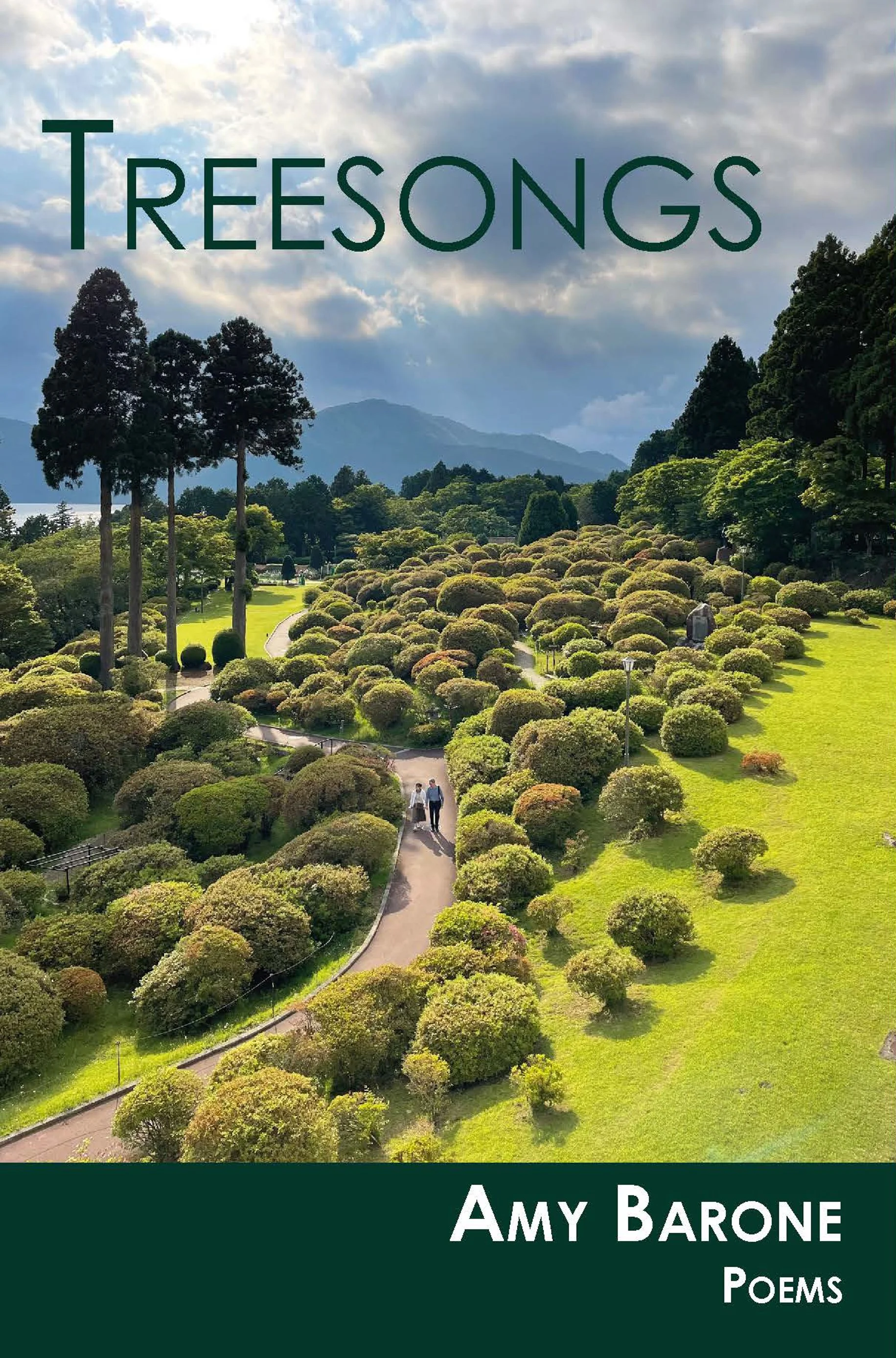
Publication Date: September 1, 2026
Paperback, 74 pages
ISBN: 978-1-966677-51-2
In Treesongs, the latest collection from poet Amy Barone, she pays homage to all things green. This volume reveals her love of nature, and emphasizes her deep appreciation for trees – as scenic beauty, environmental necessity, and a source of spiritual wonder.
Praise for Amy Barone & Treesongs
In her new collection of poems, Treesongs, Amy Barone takes us on vivid journeys around the globe. In each of these poems, she offers insights into history, sorrow, joys, and the natural environment, while trees of many varieties stand as witnesses to life. In her poem, “Sanso Garden,” Barone tells of a garden of bamboo trees in Kyoto, Japan where there is a sign that says, “I hope you can meet the Buddha here today.” By savoring these masterful and beautiful poems by Amy Barone, we can most definitely encounter the Sacred.
—Maria Famà, author of Trigger
Amy Barone’s new book of poems, Treesongs, is informed by an amazingly professional and loving feel not for only trees, but for all of Nature’s artifacts; wildflowers, water, etc. She marshals this marvelous array of natural salvation to offset the sadness of where the human world is at today. Barone‘s book joins with Nature and will live forever!
—Ron Kolm, author of The Bookstore Book: A Memoir
Amy Barone’s latest book takes us along as she travels with the intent to sample a menu of the untried. Going from one oasis of peace to another, she visits Iceland, Japan, Laos, Greece, Morocco, India, Italy and, closer to home, Wyoming, Montana, and home itself as she explores the depths of the human heart. Journeying through sections of the book—Leaves, Branches, Trunk, and Roots—we observe through her the special nature of places that nourish the anima and experience the complexity of emotions held within ourselves—longing, lost moments precious or sad, ghosts of the past, search for hope, spirituality, and a sense of peace in untamed landscapes and locations where she can pass through a living prayer thatgoes on and on and learns about and participates in unique spiritual practices of place and its reverence for nature and history.
—Karen Neuberg, author of Pursuit & the elephants are asking
About the Author
Amy Barone is the author of Defying Extinction, published by Broadstone Books in 2022. Her book, We Became Summer, was released by New York Quarterly Books (2018). Barone wrote Kamikaze Dance, fromFinishing Line Press, which recognized her as a finalist in the 2014 Annual New Women’s Voices Chapbook Competition. Foothills Publishing released her first chapbook, Views from the Driveway, in 2008. Her poetry has appeared in The Café Review, New Verse News, The Ocotillo Review,and Paterson Literary Review, among other magazines and anthologies.
She spent five years as Italian correspondent in Milan for Women’s Wear Daily and Advertising Age. Barone has worked as a communications director at non-profit, government, and private organizations. She holds a Bachelor of Science degree in Business Administration from Villanova University and a Master’s degree from the Thunderbird School of Global Management.
Barone is a member of the brevitas online poetry community that celebrates the short poem. She performs at spoken word events at venues in New York City and Philadelphia. A native of Bryn Mawr, Pennsylvania, she lives in New York City and Haverford, PA.
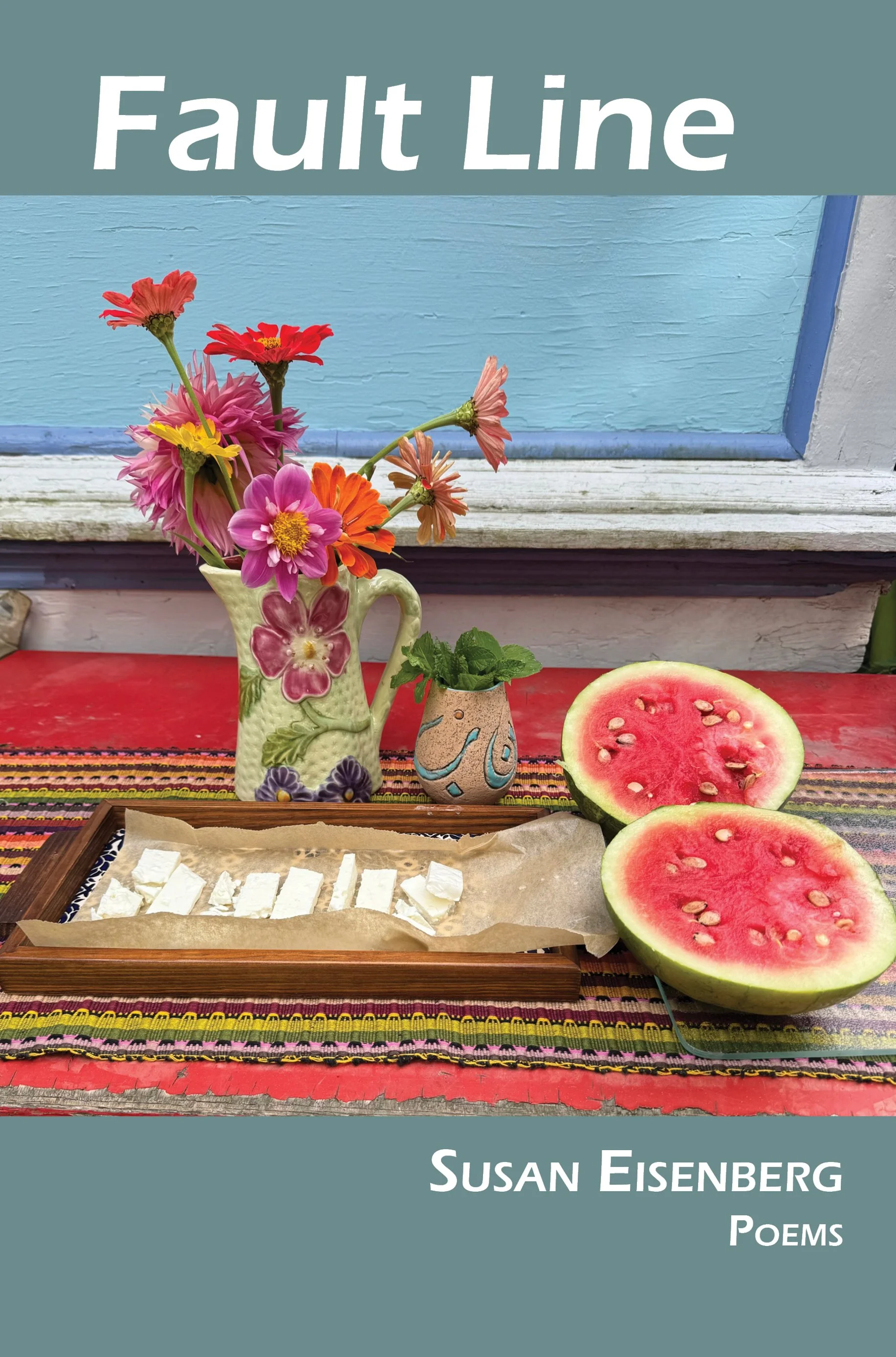
Publication Date: August 15, 2026
Paperback, 42 pages
ISBN: 978-1-966677-55-0
Drawing on a range of poetic strategies, Susan Eisenberg grafts onrushing news accounts onto the page. With haunting imagery, the poems of Fault Line stress test how the political and moral landscape, friendships, and language itself become altered by the catastrophic destruction in Palestine. The collection closes with a bit of hope from Jenin.
Praise for Susan Eisenberg & Fault Line
These straight-talking, truth-seeking poems, as they fill in the blanks, remind us that what we think we know is shaped by what has been left out of a self-justifying script. Grieving for what they bring to light by looking where we aren’t supposed to go and knowing who we aren’t supposed to know, these ethically grounded poems give statistics embodied human shape, expose the perversion of official naming, and, in the astonishing “Unlearning Deafness,” reveal what can block even open-air calls to prayer.
— Eleanor Wilner, Chancellor of the Academy of American Poets
Susan Eisenberg’s razor-sharp, powerful poetry gives voice to the anguish and horror that swirls and metastasizes through this ongoing history: Gaza, Jenin, the Naqba, the countless dead and wounded, the bulldozed homes, the trees, the children … a “devastation so shocking so fast / I failed to keep up.” Even irony loses its irony as self-serving justifications spill “like cyanide.” This courageous collection of poems has us join her in protest but also in perseverance: Jenin’s watermelon seeds do germinate, she tells us.
— Linda Dittmar, author of Tracing Homelands: Israel, Palestine, and the Claims of Belonging
For years, Susan Eisenberg, an electrician by trade, has written tough-minded poems about the working-class experience. Now, she turns her clear-eyed vision to the dehumanization and devastation of the Palestinian people. Seeing that dehumanization and destruction from a deeply empathetic Jewish perspective, she writes: “How could a God who / commanded, Thou shalt not steal / promise land not His?” Being a poet above all, she finds her metaphor with her hands in soil, planting thirteen watermelon seeds from Jenin on the West Bank. When nothing grows, to her consternation, her friend advises patience: “They are from Jenin. They don’t give up easily.” And fourteen plants sprout. The parallels with the cultivation of empathy — and poetry — are unmistakable. The collection closes with an Arabic translation of the same poem, proving that Susan Eisenberg still knows the meaning of the word “solidarity,” and can teach us all.
— Martín Espada
About the Author
Poet, visual artist, and oral historian, Susan Eisenberg is author of the nonfiction NYT Notable Book, We’ll Call You If We Need You: Experiences of Women Working Construction and five previous books of poetry — Stanley’s Girl, Perpetual Care, Blind Spot, Pioneering, and It’s a Good Think I’m Not Macho. Among the first women in the country to become a licensed union construction electrician, she has read her poems at the ILO in Geneva, Switzerland, and the U.S. Department of Labor; her mixed media art installation, On Equal Terms, exhibited at the AFL-CIO. Honors include the Virginia Quarterly Review’s Emily Clark Balch Prize for Poetry, the Joe Hill Award, and the University of Michigan Center for the Education of Women’s Twink Frey Visiting Social Activist fellowship. A Resident Scholar at the Brandeis Women’s Studies Research Center, she is Poetry Editor of Labor: Studies in Working Class History (Duke). Raised in a three-generation household in Cleveland, she lives in Boston.
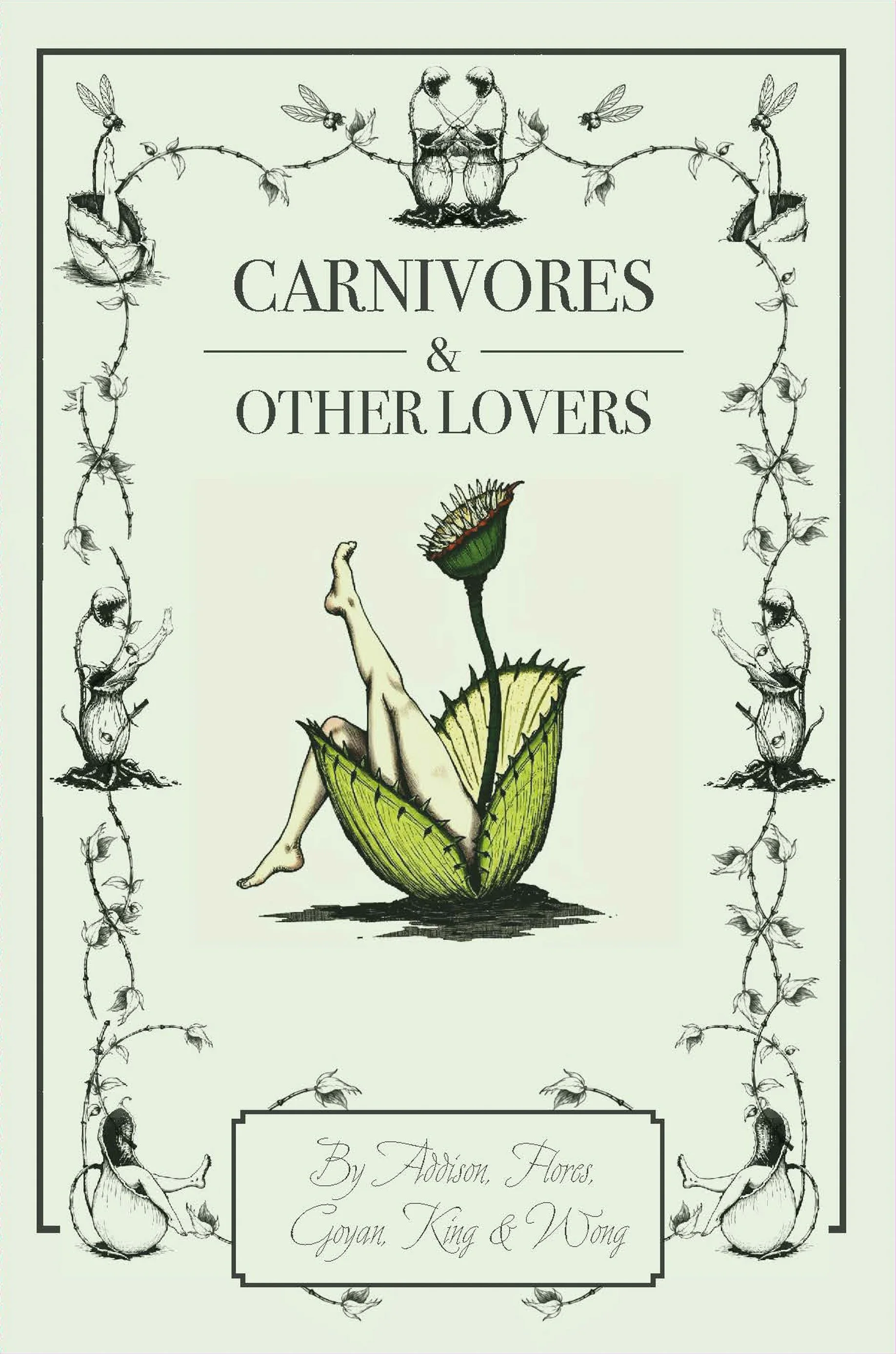
Publication Date: July 15, 2026
Paperback, 56 pages
ISBN: 978-1-966677-49-9
Written by a collective of five female poets, Carnivores & Other Lovers explores poetry written not as an anthology but collectively. Each poem shares elements, thoughts, and language from each of the five poets. This volume melds all voices into one, giving the reader a blend of five psyches into one voice.
Praise for Carnivores & Other Lovers
Enter these pages with delight and dread! For you risk being swallowed whole, chewed up and digested by the creative juices of five brilliantly different spirits, working together. Five poetic artists – or is it artistic poets? –have woven their unique visions and words to create a sixth entity, a verbal quilt made of ideas, hopes, dreams, desires, sorrows, pain and love. They are joyous as well as thoughtful and provocative.This is a book to keep by your bedside, to wake up to, to sleep with and perhaps to cry over. A book that offers many shades of fragrance."
—Manjula Padmanabhan, author of dystopian novels and plays (The Island of Lost Girls, Harvest) & winner of The Onassis Prize
Carnivores & Other Lovers made me feel full and hungry at the same time. With a distinctly feminine point of view that veers into domineering and nurturing in equal measure, the poets in this collection offer the reader a chance to consume a spectrum of binaries, to imagine a world where everything is the truth, even the ones that oppose each other. The language of these five poets is introduced via the pulse of earthly organisms, a blood that eventually pools into our strongest, most beloved organ by the final page. Rich with rhythm and sensation, Carnivores is a meal both nourishing and empowering.
—Jasika Nicole, queer artist, writer & actor (Fringe, The Good Doctor, Scandal, Punky Brewster)
In Carnivores and Other Lovers, Elizabeth Eve (E.E. King) conducts the poetic voices of Linda D. Addison, Andrea Goyan, Consuelo G. Flores, and Elizabeth Wong into a sonic orchestra of feminine resistance, desire, and consumption with the passion of a ferocious devouring love. The sonic coherence and primordial truth entwined in each of these poems is unrelenting and unforgettably transcendent.
—Jamal Hodge, 2x Bram Stoker Award & Nebula Award Nominee, Everything Endless, The Dark Between The Twilight
The lawyers for the criminally poetic have been at it again. And what a carnivorously delectable feast they have created. As before, King provides the prompt, and the ensemble of talent does what they do best. Enhance… With this group of writers and their magnitude of sheer talent, there’s no mystery to me how their combined thoughts result in such a profound connection.
—Cindy O’Quinn, Bram Stoker Award® winning author
This collection of five poets, who may not have started out as poets, proves that poetry is in everyone and should be extracted like gold from our depths. A prompt, a story, a feeling... all this can produce such gems as what’s on these pages. I’m for poetry no matter how it happens. If anything, we need poetry more than ever. Politics, belief systems, the mass media – they’ve all failed us. But poetry stays true. I love these voices. Keep speaking out in the real “tongues” of spirit. Silence today is criminal.
—Luis J. Rodriguez, author of Borrowed Bones & My Nature is Hunger, former Poet Laureate of Los Angeles
About the Authors
Linda D. Addison, the author of six Bram Stoker Award-winning collections, including Everything Endless, written with Jamal Hodge, and How To Recognize A Demon Has Become Your Friend, recipient of the HWA Lifetime Achievement Award and SFPA Grand Master of Fantastic Poetry. Her site: www.LindaAddisonWriter.com
Consuelo G. Flores is multidisciplinary artist, playwright and Culture Bearer who’s known for her altars during the Days of the Dead season. She’s curated exhibitions and produced educational programming in the cultural, literary, media, and visual arts sectors and is thrilled to be a magpie with this talented group of women. www.instagram.com/consuelog.flores/46
Andrea Goyan is an award-winning author. She is a grateful bird among the flock of Magpie Poets behind this collection of poems. Her debut novel The Catalyst is available where books are sold. You can find many of her stories for free on her website Andrea Goyan. Follow Andrea on Bluesky or at Mutations & Manuscripts| Substack.
E.E. King is an award-winning painter, performer, writer, and naturalist - she’ll do anything that won’t pay the bills, especially if it involves animals. Ray Bradbury called her stories, “marvelously inventive, wildly funny and deeply thought-provoking.” Her art has been collected internationally. Her novels include Dirk Quiby's Guide to the Afterlife and Gods and Monsters, recommended for Nebula2026 reading. Check out paintings, writing, musings, and books at: www.elizabetheveking.com and read newstories and see new paintings Daily @elizabetheveking.substack.com
Elizabeth Wong is a Los Angeles-based playwright known for melding comedy and social issues. Her plays include Kimchee & Chitlins, Letters to a Student Revolutionary, and Tam Tran Goes To Washington . She’s also a theatre director, tv sitcom writer, multi-media artist, essayist and professor at Boston Conservatory@Berklee. She’s found in Wikipedia and at www.elizabethwong.net. She’s a proud member of the Dramatist Guild and Writers Guild of America. Follow Elizabeth at @elizabethwong648 or @elizabeth.wong8
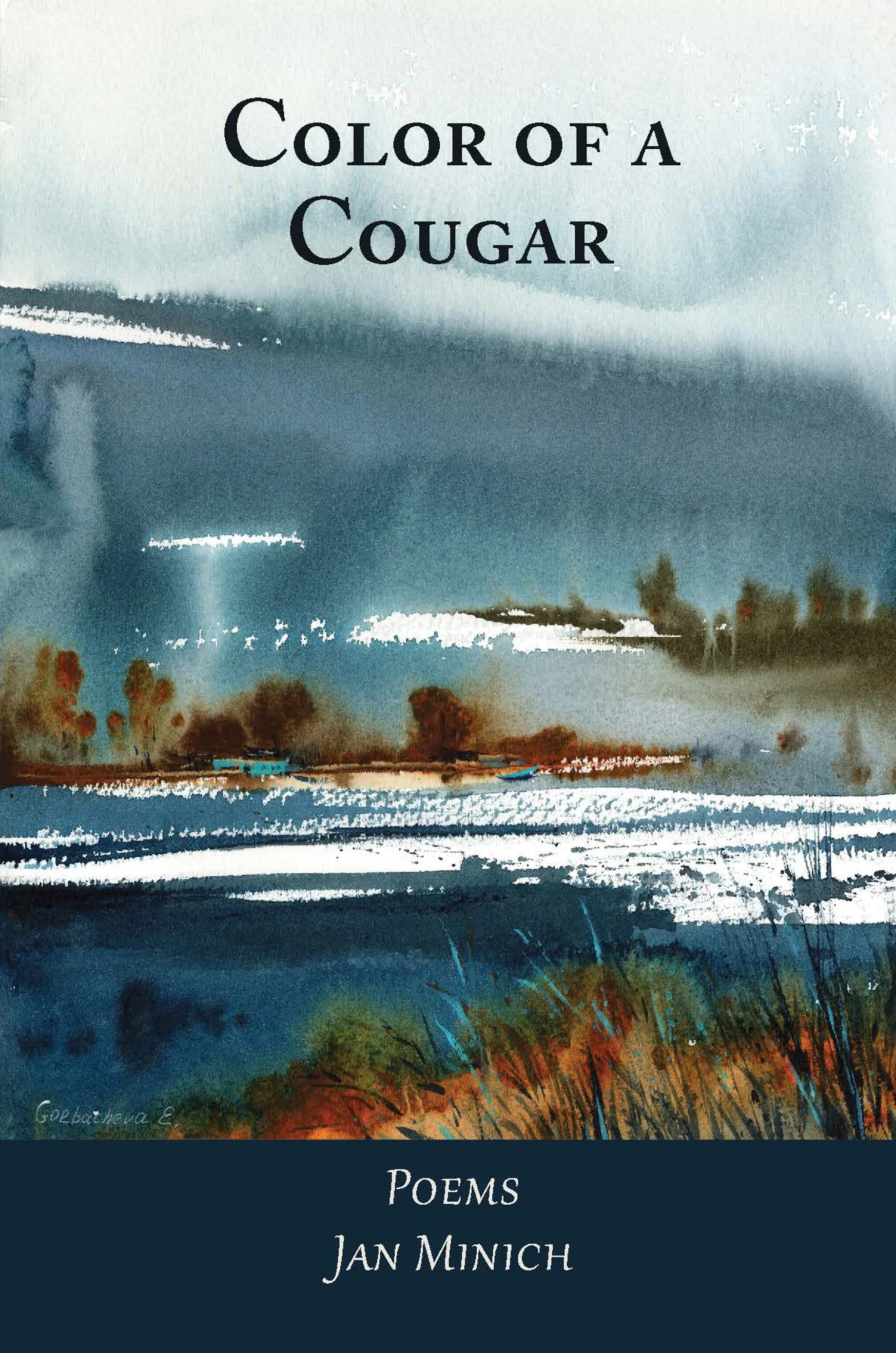
Publication Date: July 15, 2026
Paperback, 84 pages
ISBN: 978-1-966677-50-5
The poetry of Jan Minich in The Color of a Cougar takes us from Ohio (“the change of a season, / autumn in Ohio I haven’t seen / in twenty years, I had forgotten / how fragrant the trees are”) to the Utah canyonlands (“In here Sweetie and I are alone. / A jay is calling from the junipers / and the chipmunks / have been teasing her all evening”). These poems show us the loneliness, yet satisfaction, of solitude as an antidote for grief: “but I have these mountains, / this solitude that never waivers / and comforts me on cold nights.” That a life well lived may, in the end, be lived alone, and that self-reliance, especially in grief, can save the human spirit.
Praise for Jan Minich & Color of a Cougar
Steeped in time and experience, Minich writes poems enjambed by image, emotion, history, and conversation. Poems that wend their way through forests and furniture, coves and canyons, baited hooks and black gloves, birds and berries and murderers. Poems with the soft approach of padded feet, the brutal grip of claw and teeth. The poem “Youth, with its hopeful / hopeless conundrum of survival in a time of climate change, / joy filtering into the sandy soil.” The light and sensuality and complexity of “Hanging Gardens.” The chilling historical violence of the Bloody Benders. The dark and troubling nature of human nature in “Ruins,” “Prey,” and “Recess.” Minich channels the characters in this collection of poems to hit a nerve, to staunch complacency. To tell the story of a time in human history when poetry is the only way to tell it.
—Star Coulbrooke, Inaugural Poet Laureate of Logan, Utah, author of Both Sides from the Middle
Jan Minich plays the long game in his new poetry collection Color of a Cougar. It’s an exemplar of patience and persistence, each poem—even the short ones—going beyond memory or anecdote to find endurance in form. His voice, often elegiac and projecting a vision of our hardscrabble moral predicament, is nonetheless unfailingly affirming. In Minich’s restorative vision, the natural world and the human community, the living and the dead, find solace and survival in the confirmation of the spirit. In “Fortune Teller,” the poet imagines the undertow, “taking me out then pulling me back / to be renewed in the breakers / in the moonlight still farther out,” reminding us that devotion to craft makes the poem, and diligence of prosody is the stuff that makes it eternal.
—Richard Hedderman, author of Still Life with Workboot.
The poems in Jan Minich’s Color of a Cougar live in liminal spaces, and their speakers and personae are at home in the dark, as in “Poland, Ohio”: “After the sun sets and the light / is gone, we feel our way / along the fallen tree / to the other side”. Fittingly, it is a book of memory, both personal and mythic, and of hauntings; the poems meditate on the impermanence of human presence in the world. There are places, it tells us, “Where it’s possible to remain / only if one takes an oath of silence / to the stillness waiting there.” This beautiful collection serves as a reminder and a guide, to the remaining, the oath, and the stillness.
—Lisa Bickmore, Utah Poet Laureate
About the Author
Jan Minich grew up near fields, ponds, and lakes in Ohio. He has an MFA from the University of Iowa, and a PhD in American Literature and Poetry Writing from the University of Utah. He taught literature at College of Eastern Utah/Utah State University for many years and directed their Wilderness Studies Program. Always drawn to water and the outdoors, Jan summers in Bayfield, Wisconsin, where he cruises Lake Superior in a small boat, and in winter, hikes Utah’s canyons. He lives in Wellington, Utah, with his wife poet Nancy Takacs and their two dogs.
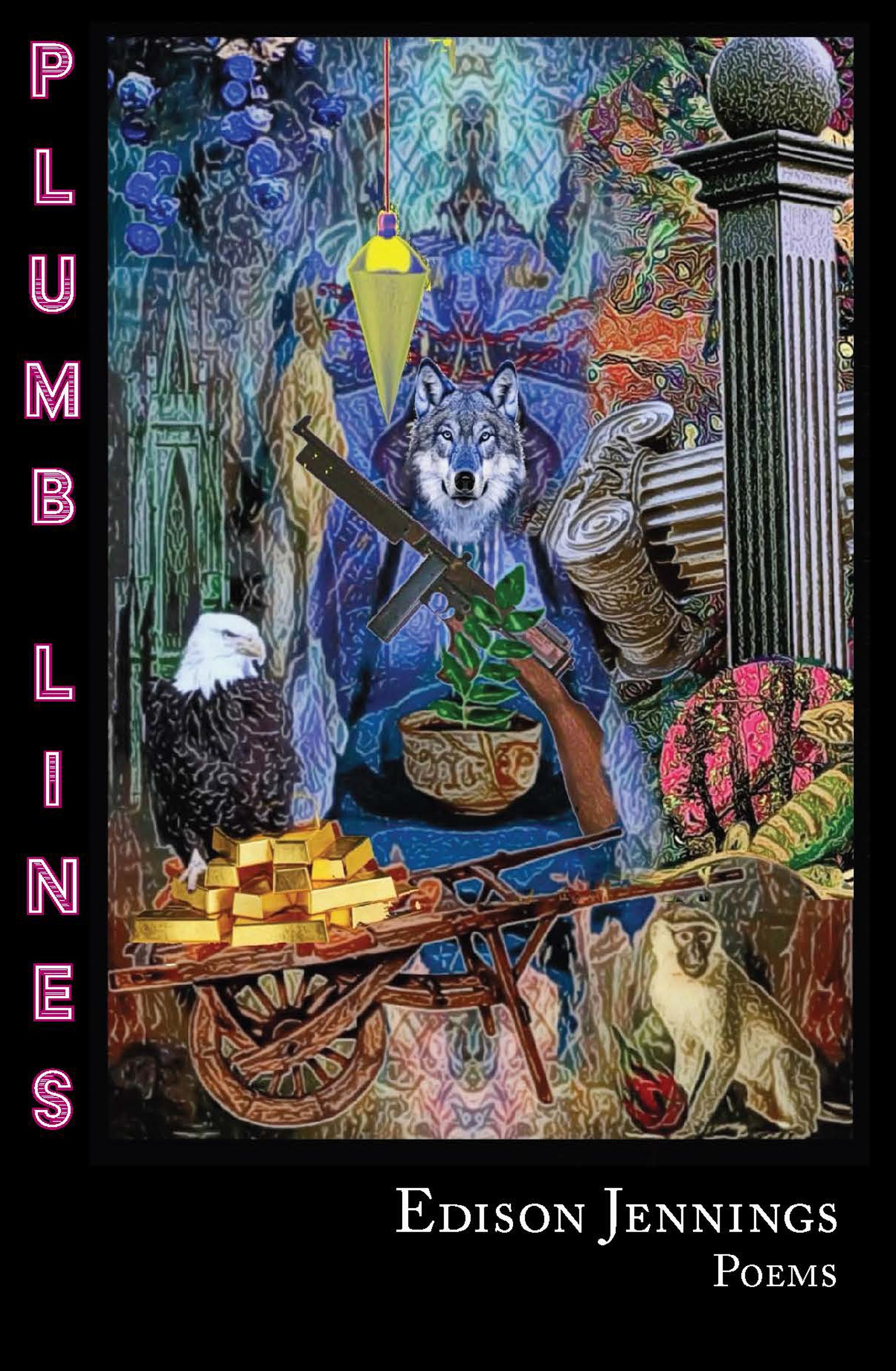
Publication Date: July 15, 2026
Paperback, 40 pages
ISBN: 978-1-966677-53-6
Plumb Lines, the new poetry chapbook by Edison Jennings, takes a hard look at the hard life of small-town Appalachia. These poems move between the demise of a derelict church (“As for the church, no one had attended service there in over sixty years so no one was sure what genus of church it was...”), and the hopefulness of the local Head Start (“Meanwhile the children sleep, still beautiful...”). This poetry, sad yet beautiful, opens our eyes to small town tragedies both personal and communal. Jennings captures life in his world, and makes it our own.
Praise for Edison Jennings & Plumb Lines
Edison Jennings’s chapbook, Plumb Lines, is a tapestry of pain and violence, of loss and memory. The writing is direct and fierce, refusing to avoid disturbing truths. The poet’s gift of language is strong, the voice, certain, definitive – placing the reader inside shifting locations: from a wolf’s cave to burned-out church to Head Start classroom to “snow-baffled streams” – revealing the depth of Jennings’s craft, showcasing his mastery of narrative and lyrical forms. There’s an exploration of what remains after loss, after the violence, which is a marvelous but tragic thread working through the poems. Plumb Lines is a powerful work grounded in the grit and ache of life that readers will carry with them – “in a secret pocket…in the false heel of a shoe, or sewn beneath the skin” – long after the book is finished.
—Sam Rasnake, author of Fallen Leaves and A Thread to Follow
The poems in Plumb Lines by Edison Jennings are both mythic and conversational, balancing experience of the sacred and the grounded. They emanate from a meticulous attention to form and especially diction, every word in place, his voice speaking to you as if directly, head cocked or eyebrows raised. Storytelling comes with twists of humor, irony, and pathos to render images indelible—from ashes buried in a maple to a frail man in bed, from children poised between the safety of Head Start and what the world offers outside the sanctuary, to wolves killed by Daniel Boone and crew. And more.
—Felicia Mitchell, author of Trail Magic
Edison Jennings’ finely crafted, insightful new book, Plumb Lines, explores the meaning of “America, that most shocking poem,” from “Napa Valley manse to West Virginia meth lab,” finding cruelty and tragedy but also hope. The title is from the Bible’s Book of Amos, where God puts down a plumb line to show that justice will not be compromised. From the story of how Daniel Boone and his companions killed a wolf and then “cleaned their beautiful rifles,” to the story of a racist murder that stays hidden until “a missing child revealed the township’s dull bucolic a deceit,” these stories are unforgettable, complex and wise, and leave us readers seeing our world—and our country—in a fresh light, sometimes disturbing but always cleaving to the plumb line of justice.
—Robert Thomas, author of Sonnets with Two Torches and One Cliff
At the bottom of a plumb line is a weight, the bob, that enacts or makes visible the perpendicular, the straight-up-and-down. It is a simple tool that enables a skilled craftsperson to make a structure that might enclose or shelter or preserve almost anything. Edison Jennings is such a craftsperson. When you enter his poems, you see he knows what he’s doing; you understand you are in the presence of a poet acutely aware of the burden of being alive. From inside the sadness that is life, his art erects a shelter, which helps make it possible to go on.
—Robert Wrigley, author of The True Account of Myself as a Bird
About the Author
Edison Jennings lives Southern Appalachia. His poetry collection, Intentional Fallacies, is available at Broadstone Books and elsewhere.
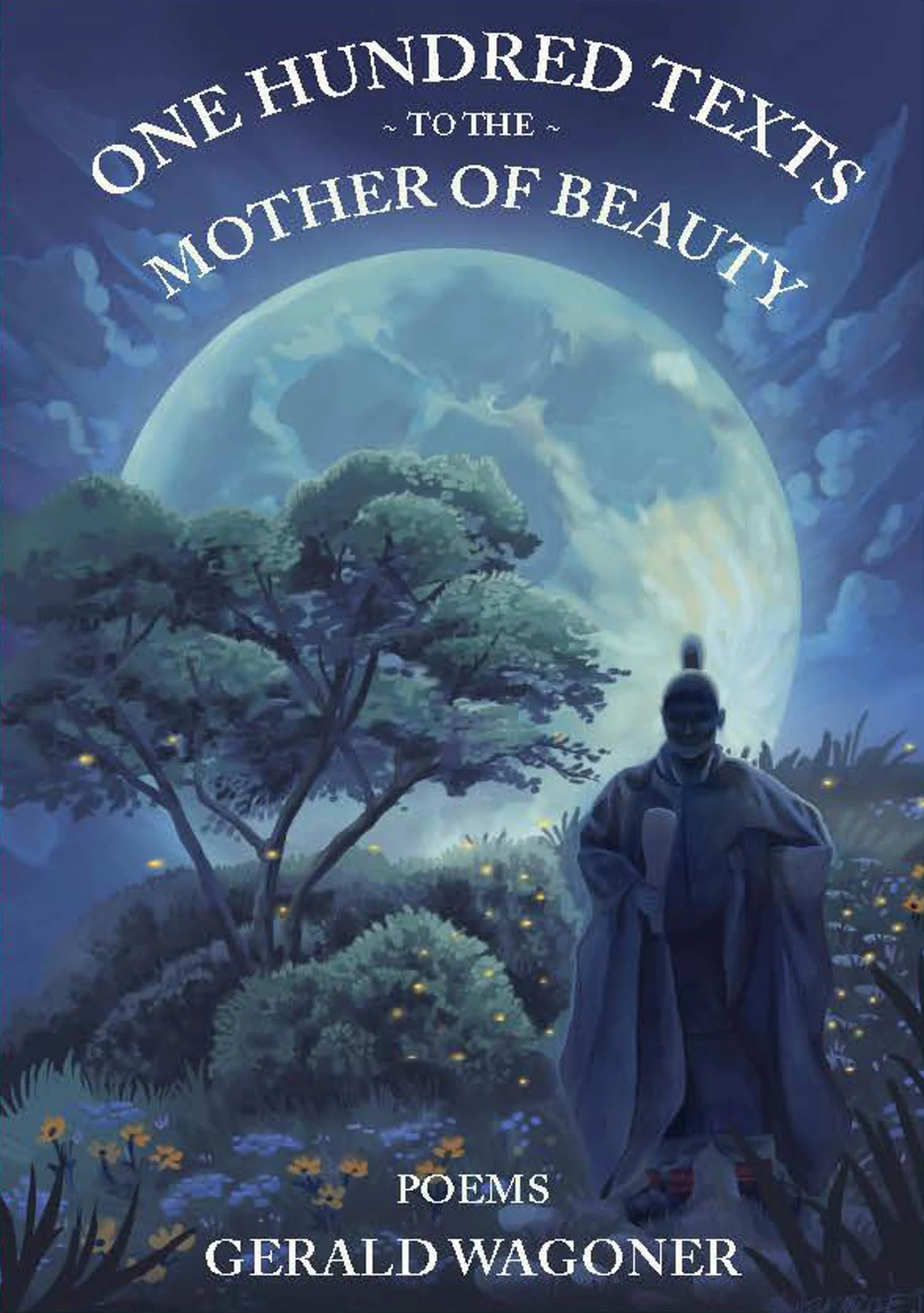
Publication Date: June 15, 2026
Paperback, 84 pages
ISBN: 978-1-966677-43-7
In One Hundred Texts to the Mother of Beauty, Gerald Wagoner writes of love, both physical and spiritual, framed by special intimate environs. “Every kiss a taste of spring water, so cold your eye teeth ache.” Wagoner’s poems are crafted as messages to his muse, the Mother of Beauty, addressed by many names, among them Klio for order and Urania for the cosmos, each inspired by a unique voice. “Heavenly Urainia, by whose grace go I. Sing the quickening of quarks: the weak force, the strong force, the gravity of it all that gathers us together.”
Praise for Gerald Wagoner & One Hundred Texts to the Mother of Beauty
In a hundred invocations, entreaties, connections, contentions, and yearnings, Gerald Wagoner writes of encounters with the elusive and enlivening other—manifesting as muse, engenderer, and persistently possible paramour ever-altering in her proximity, These lithe, imagistic missives conjure both common life and abiding myth, with settings from the Gowanus Canal to waking dreamscapes of desire. One Hundred Texts to the Mother of Beauty gives us lyrics that at once classical and romantic—paeans to the desired inspirer, enthrallments to the passions of poetry.
—David Groff, author of Live in Suspense
Gerald Wagoner’s One Hundred Texts to the Mother of Beauty is both ecstatic and expansive, a dreamscape that touches on every myth I can think of that binds the creative powers of human effort to the divinely inspired eroticism of supernatural beings and their love. I loved getting lost in these tiny missives of desire, creation, devotion, and supplication. Wagoner’s touch is feather light, though his voice carries the weight of his art’s urgency.
—Jason Schneiderman, author of Self Portrait of Icarus as a Country on Fire
One Hundred Texts is a modern-day scroll depicting the many layers of love we only secretly acknowledge.
—Kristine Esser Slentz, author of Face to Faces
Sometimes in this book, there’s an almost-babble, like that of the lovelorn, a descent and ascent into the vortex of language attempting to say what love is and where it goes and lives and takes us prisoner. But this poet’s experience as a sculptor, his awareness of this Earth upon which we build and create keeps us just this side of beauty, with enough patience to detect “a faint whiff of the whispering night.” Sometimes he turns snitch, involves us all in the brazen effort to find the love he’s after—“the city was there, a commotion of wanting.” And we find we can’t deny, not a word of it.
—Mervyn Taylor, author of Unpainted Houses.
About the Author
Gerald Wagoner is the author of When Nothing Wild Remains (Broadstone Books, September 2023) and A Month of Someday, (Indolent Books, March 2023). Hischildhood was divided between Eastern Oregon and Montana where he was raised under the doctrine of benign neglect. He has a BA in Creative Writing from the University of Montana and an MFA in sculpture from SUNY Albany. Wagoner exhibited regularly, and has taught Art and English for the NYC Department of Education. He currently lives in Brooklyn.
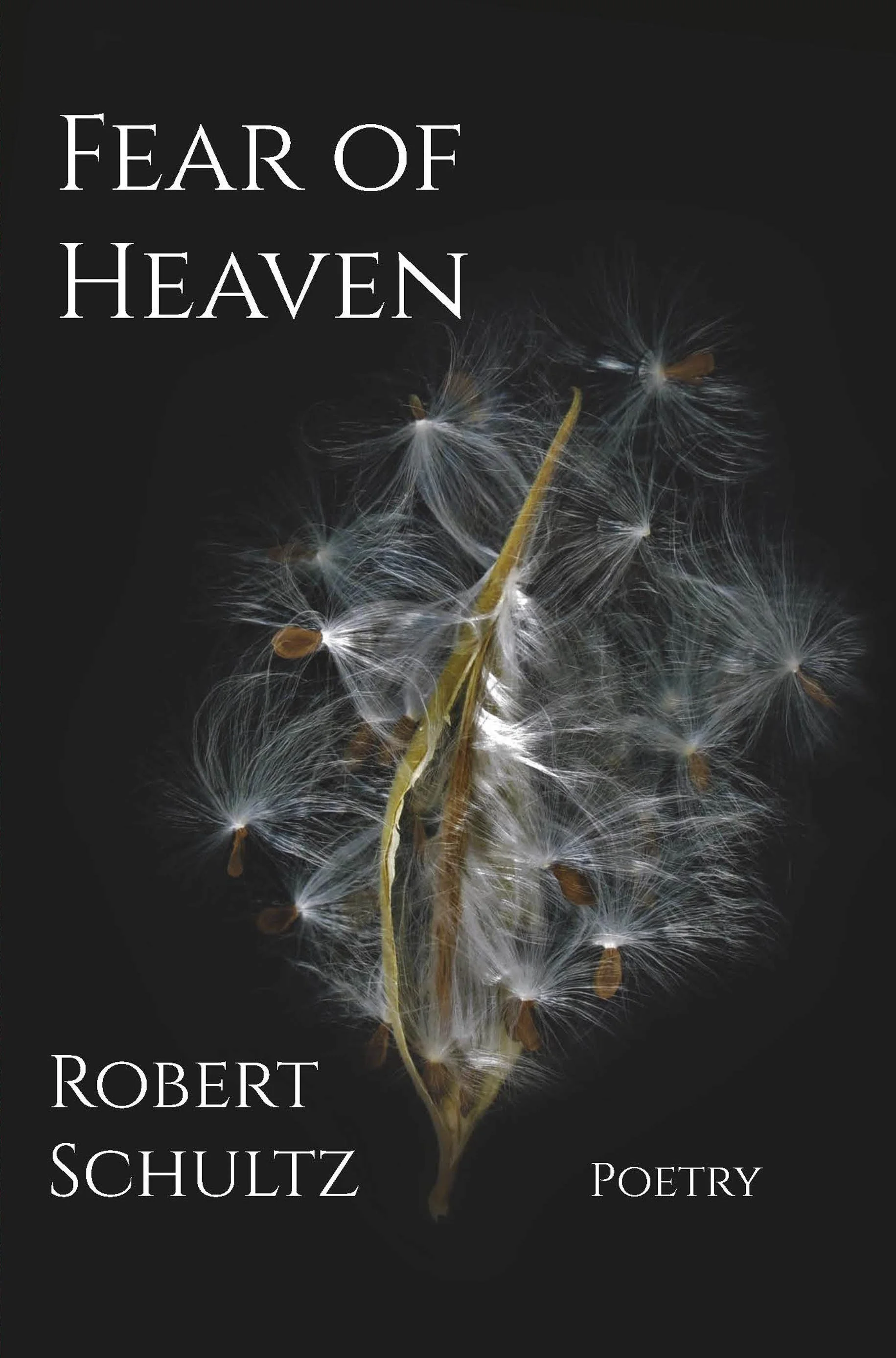
Publication Date: June 15, 2026
Paperback, 80 pages
ISBN: 978-1-966677-48-2
Robert Schultz’s poems speak of love lifelong (“There comes a final parting, our time run out / In this lovely world where time presses”) and eternal (“We’ve taken a photograph of the birth of stars / before Earth.”) In Fear of Heaven he questions how long is eternity? “Eternity is not a long time, / but is time’s opposite-flash / that violates the speed of light.” Time is both daily and cosmic, an unfathomable void but also our most precious gift. “Every morning now when I step / out into the green world, it is as if / my last day, not because it is likely / to be, but because it is one day / certain.” Fear of heaven is the fear all share of losing our earthly paradise.
Praise for Robert Schultz & Fear of Heaven
In Fear of Heaven, Robert Schultz takes his readers into the big themes with a lightness of touch. Schultz’s subjects are found in the near and dear, as well as in the far and nearly unfathomable— in family, a long marriage, and his own garden’s wisdom, as well as in the James Webb telescope’s piercing visions. In this book there are potent nods to nature, and life’s inescapable ephemerality emerges in luminous moments in poems such as “Dusting” and “Winter Smoke.” Though evocative of biblical concepts and language, Schultz’s voice is humanistic when in a haiku he declares, “I pass quickly now / into words, like this white rose / imperishable.” To take the poet at his own words on words, in the included essay, the purpose of poetry is “to carry us out of ourselves and into another’s world.” We meet each other everywhere in this poet’s tender, elegiac voice.
—Cathryn Hankla, author of Return to a Certain Region of Consciousness: New & Selected Poems
These poems balance continuing jolts of mortality with visions of the timeless. Fear of Heaven incorporates touches of humor and subtle irony in songs of wonder, in a range of forms: sonnet, couplets, haiku, rhymed and unrhymed lyrics. Schultz conveys with vivid alertness the mysteries of the cosmos and the mysteries of dailiness, connected by a thread of autobiography. The concluding essay on the “primordial” in poetry probes deep into our awe of the gift of language, memory, witness, and bonds of human love.
—Robert Morgan, author of To Honor the Imagined Whole
About the Author
Robert Schultz is the author of nine books in three genres, including a novel, The Madhouse Nudes, and a work of nonfiction, We Were Pirates: a Torpedoman’s Pacific War. He has taught at Cornell University, The University of Virginia, Luther College, and as the John P. Fishwick Professor of Literature at Roanoke College.
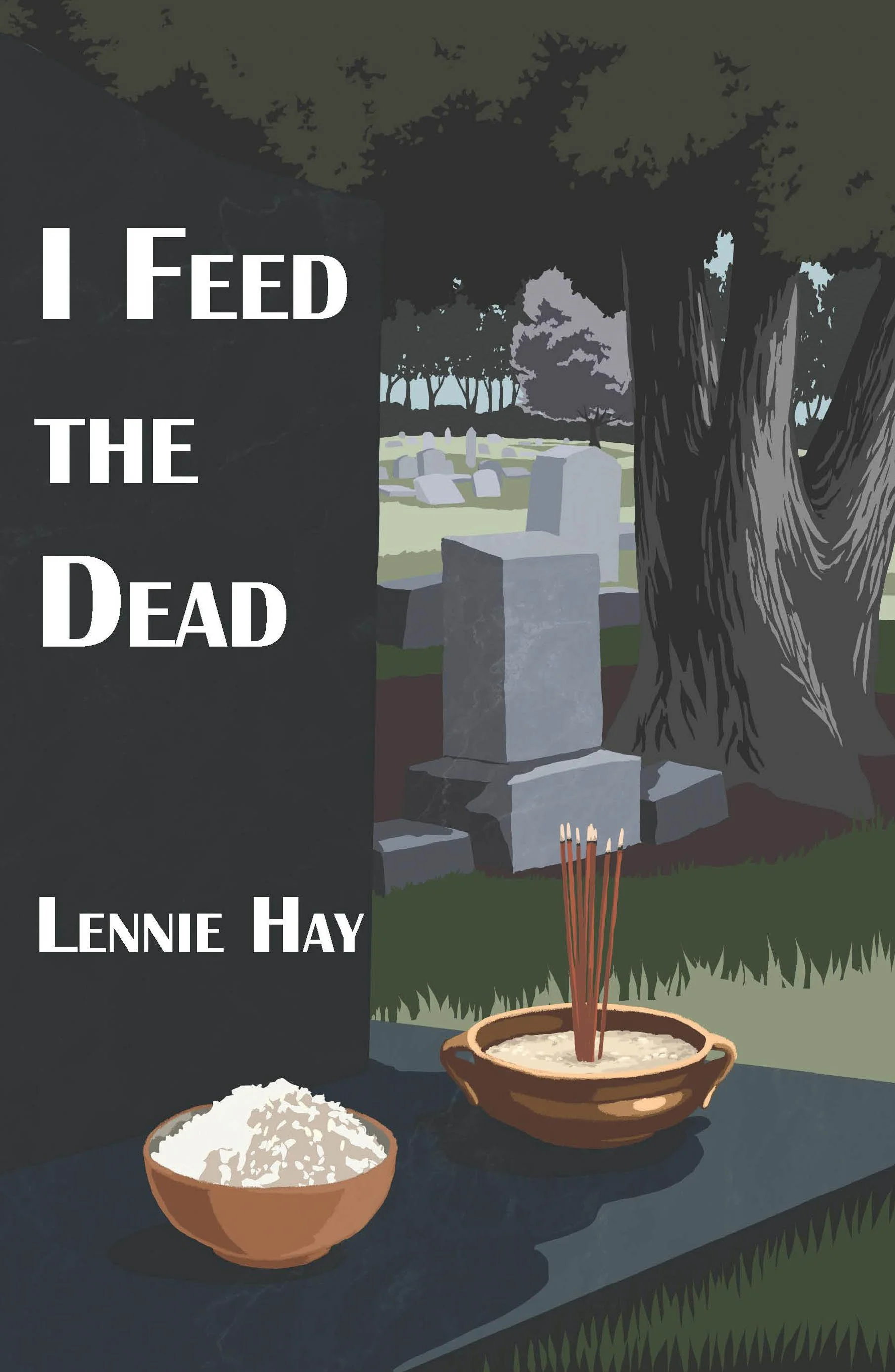
Publication Date: May 15, 2026
Paperback, 100 pages
ISBN: 978-1-966677-45-1
In I Feed the Dead, the latest collection from Lennie Hay, she focuses on family – “Losing a name can give you a reality.” Family leads to the importance of food and home – “I sauté lines in free verse, sliding in our childhood butter / with a pinch of narrative.” This rich foundation sustains her through pandemic-imposed trauma set against the beauty Mallorca, where “grace enfolds us inside these hours, / makes us more human, as suffering sometimes does.” Whatever food, family, and home mean to each of us, Hay addresses them evocatively, leaving us filled with food for thought..
Praise for Lennie Hay & I Feed the Dead
“Because hunger follows [her] everywhere,” Lennie Hay’s dazzling collection of poetry looks unflinchingly at the realities of loss. She interrogates her Chinese heritage as she considers the loss of loved ones and wrestles with her own mortality. All of this is masterfully and fiercely executed. Food is never just food and eating is an act of inheritance, mourning, love, and reckoning. Hay’s work is deeply sensitive and acutely witnessed. This is a book that perfectly balances the knife edge of that which fills us and that which empties us. In it, school children “carry their nightmares in backpacks” and the “grave Gulf keeps [her] secrets.” I Feed the Dead is filled with tenderness, beauty, and clarity and I loved every word.
—Didi Jackson, author of Moon Jar & My Infinity
In I Feed the Dead, Lennie Hay writes with skillful attention to the textures and tensions of daily life. Through an Asian-American speaker, the collection explores how identity is shaped by ancestry, appetite, labor, and care. The speaker’s forage through a lineage scattered across immigration records, where family names reduce ancestors to “another variation / a ghost misspelled” culminates in the bold declaration “I claim all our names.” At the heart of the collection, a formal ambition emerges in a crown sonnet where language turns from appetite to predation. Its interlocking lines carry us from “Bilbao’s dim sum” and “pintxos” to a “viral feast” that “waits to gorge on Spain,” enacting contagion through repetition. Hay’s sensory poems bear witness to life’s seasoned moments, unfurling like hand-pulled noodles in Lanzhou, stretched and folded, structure married to art.
—Nancy Chen Long, author of Wider than the Sky
It takes courage to face aging for what it is and to where it inevitably ends. In I Feed the Dead, Lennie Hay takes on the subject as scholar and artist. She describes the tradition of leaving food and gifts at loved ones’ gravesites, intending to keep them safe and content, alive in the minds of the living. She revives her parents and siblings in the vivid language of poetry, as she does a lost friend advising the poet to write more poems. Among the last poems in the book, Hay takes us to her raucous Zumba class, to a jazz festival, and on a voyage with her husband up the St. Lawrence Seaway, leaving his illness at home. The poet offers a guide for living fully and loving widely in poems that are wise, joyful, honest, and informed.
—Maureen Morehead, author of The Red Gate
About the Author
Lennie Hay writes of cultural fault lines and injustice in her poetry often using images reflecting her passions for water, music, and food. Her 2024 debut poetry collection, Lost in America, explored the complexity of growing up Chinese American in the Midwest. Her second collection, I Feed the Dead, uses a range of poems, and subject matter to honor the dead she has loved—her Chinese father, German Ukrainian Mother and others—while she faces head-on life’s fragility for herself and others in today’s world. Lennie holds degrees from the University of Minnesota, the University of Louisville, and an MFA from Spalding University. A retired public-school educator, she lives in Southern Indiana and Florida. Lennie’s poetry has been published in local, regional, and international journals, as well as in anthologies, and has won local and regional prizes.
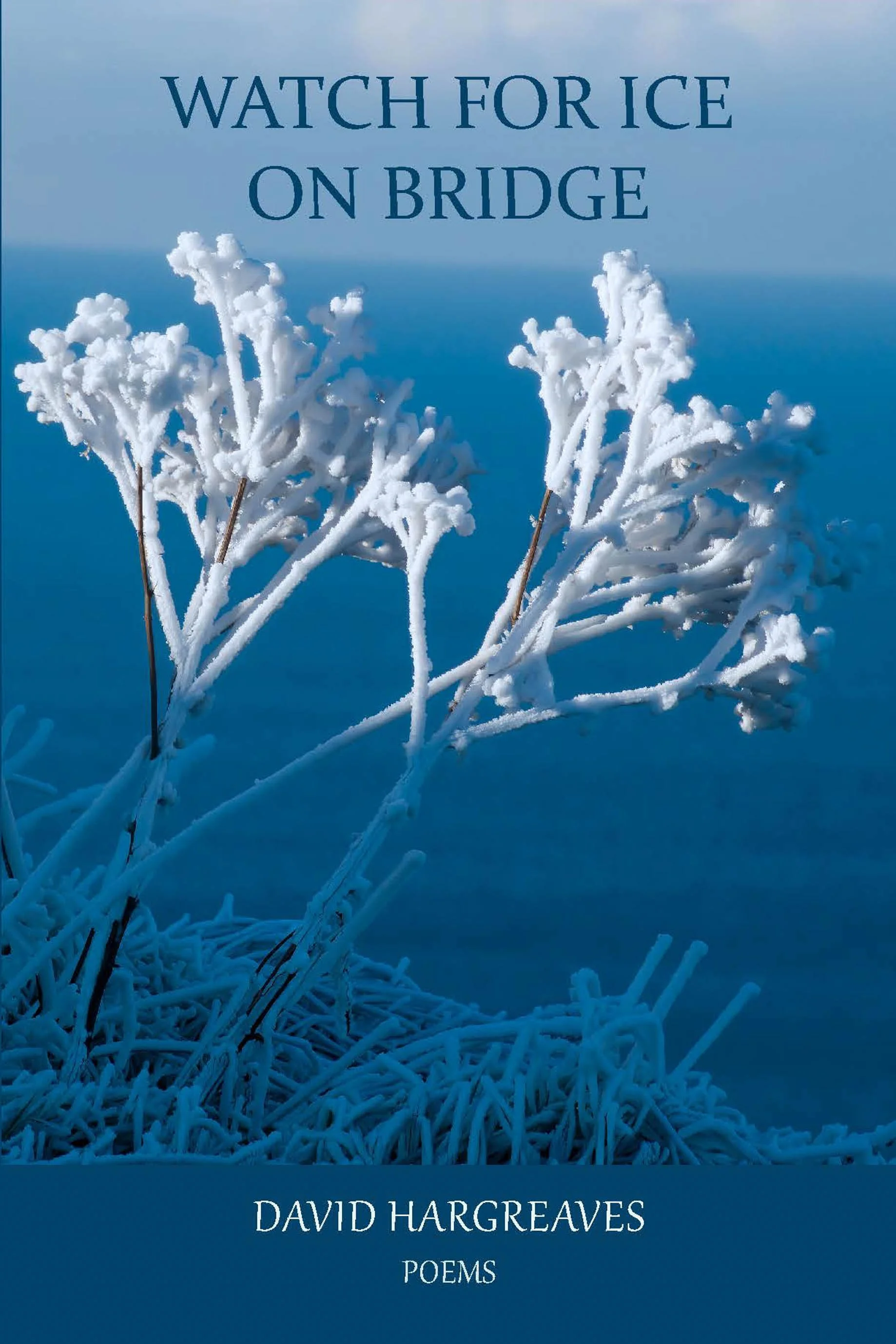
Publication Date: May 15, 2026
Paperback, 132 pages
ISBN: 978-1-966677-46-8
David Hargreaves’ Watch for Ice on Bridge couples personal memories and experiences against the backdrop of the natural world. Hargreaves grapples with the drowning death of his younger brother – “No one warned my little brother there will be no warning… // ...if my belly crawl and wrist lock grab, like I had seen on TV, might save him.” A harsh cancer diagnosis confronted, “To placate the Fates, spinning the thread of this tale: six weeks radiation / And a hormone injection.” These incidents set, respectively, against a winter frozen lake and the cold sterility of the modern MRI lab are vividly described and evocative. Watch for Ice on Bridge takes the reader into Hargreaves’ experiences with frank emotion and no sentimentality.
Praise for David Hargreaves & Watch for Ice on Bridge
From chemotherapy to needle-nose pliers to a Swainson’s thrush, there’s a singular voice that finds mystery and wonder wherever it goes. The power, here, is that Hargreaves refuses easy taxonomies… these poems don’t seek to order the world or arrange dioramas of the human experience. They instead shine a light on all that is deranged and beautiful and impossible. They live in the irreconcilable spaces we call a daily life. A powerful read.
—Michael McGriff, author of Angel Sharpening its Beak & Inquest
David Hargreaves’ poems combine gentle, sometimes delicate language with a robustness of perception that aims to capture the world in all its complex diversity—not with the aim of preserving it in amber, locking it up in a museum case, or pressing it between the pages of a musty book, but in order to allow it to dance, to sway, in our imaginations and memories. Watch for Ice on Bridge is a book of many pleasures, a book to savor.
—Troy Jollimore, author of Tom Thomson in Purgatory & Syllabus of Errors
About the Author
Born in Detroit, now a longtime resident of Oregon, David Hargreaves is a poet, translator and linguist. His translation of Nepal Bhasa poet Durga Lal Shrestha’s collection of poems, The Blossoms of Sixty-Four Sunsets, appeared in 2014, and his translation of Chittadhar Hrḍaya’s poem “River,” for the anthology River Poems (Everyman’s Library Pocket Poet Series), appeared in 2022. His own book of poems Running Out of Words for Afterwards (Broadstone) was published in 2022.
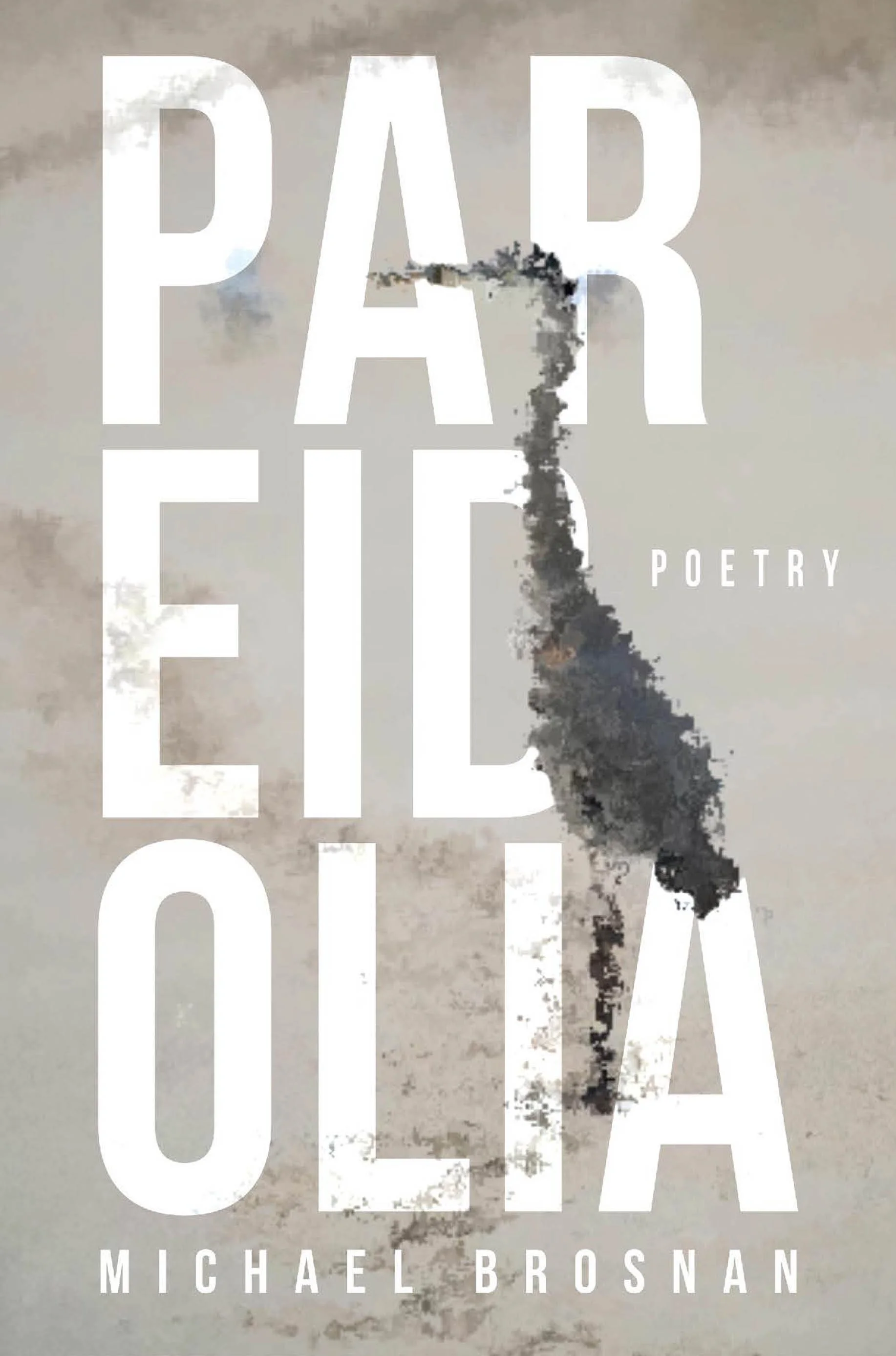
Publication Date: April 15, 2026
Paperback, 124 pages
ISBN: 978-1-966677-42-0
In his poetry collection Pareidolia, Michael Brosnan asks us to see life in the abstract. Floating clouds, a fishing heron, or ducks on a pond all become metaphor describing the abstract concepts that form his life, all our lives. In the title poem we are told to listen to “the bright trill / of the winter wren,” that it is “an exhortation of how to greet / the day with full on awareness / that this is it, the all of it, bathed / in grace and beyond our grasp.”
Brosnan exhorts us to ask the unanswerable and yet constantly seek the answers in music, nature and most importantly, in self-reflection. The perpetual questions of where have we been? How does that affect where we go or end? The adult version of “are we there yet?” Do we ever get there? And if so, how do we know?
Brosnan forms poems based on phrases that come to him in a seemingly random manner. In reality these works are carefully composed and exquisitely crafted. These poems move us to look around and more importantly, listen around us. What is the “soul contained in sound”?
Praise for Michael Brosnan & Pareidolia
Michael Brosnan’s terrific fourth book, Pareidolia, lives within the curious and wonderful moments where lives brush against each other. Here, encounters with ducks, herons, lovers, tuna sandwiches, and strangers are a “parade in random patterns.” Yet Brosnan deftly — and with such heart — turns these associations into the very essence of how we experience life: nonlinear, and with an immediacy to the threads which connect us to each other, which ground us in who we were and who we will become. “Some days you’ve just got to believe / there is no grand plan,” Brosnan writes, taking genuine comfort in the seemingly chance ways our lives take shape. Through it all, Brosnan is a poet in awe of his surroundings, eager to document with clarity everything from the tongue of the vole to the expanse of language, seeking meaning within each thread that makes a life.
—Samantha DeFlitch, author of Cornerstone & 2025 Artist in Residence at Acadia National Park
An exquisitely crafted lyrical lens held up to a life not merely lived but deeply examined, Pareidolia, as the title might suggest, is an artist’s attempt to find, in the shapes and lines of poetry, meaning and patterns in the great mystery of our shared human existence. Navigating through city and country, through the natural world and the human, through the music of language and the language of music, Brosnan, with stunning verse, meditates upon joy and loss as only an older poet can and yet with all the vibrancy and energy of a still discovering artist. Pareidolia is an achievement of voice and style available only to the mature and fully realized poet.
—Matt W. Miller, award-winning author of Tender the River & Club Icarus
About the Author
Michael Brosnan is a poet and writer based in Exeter, New Hampshire. He is the author of three earlier collections of poetry: The Sovereignty of the Accidental (2018), Adrift (2023), and Emu Blis, Bums Lie, Blue-ism (2024), the latter of which was a finalist for the Wandering Aengus Book Award. His poetry has appeared in numerous literary journals and has won awards from various arts organizations. He is also the author of Against the Current, a book on urban education, and writes often on issues related to teaching and learning.
Publication Date: April 15, 2026
Paperback, 98 pages
ISBN: 978-1-966677-41-3
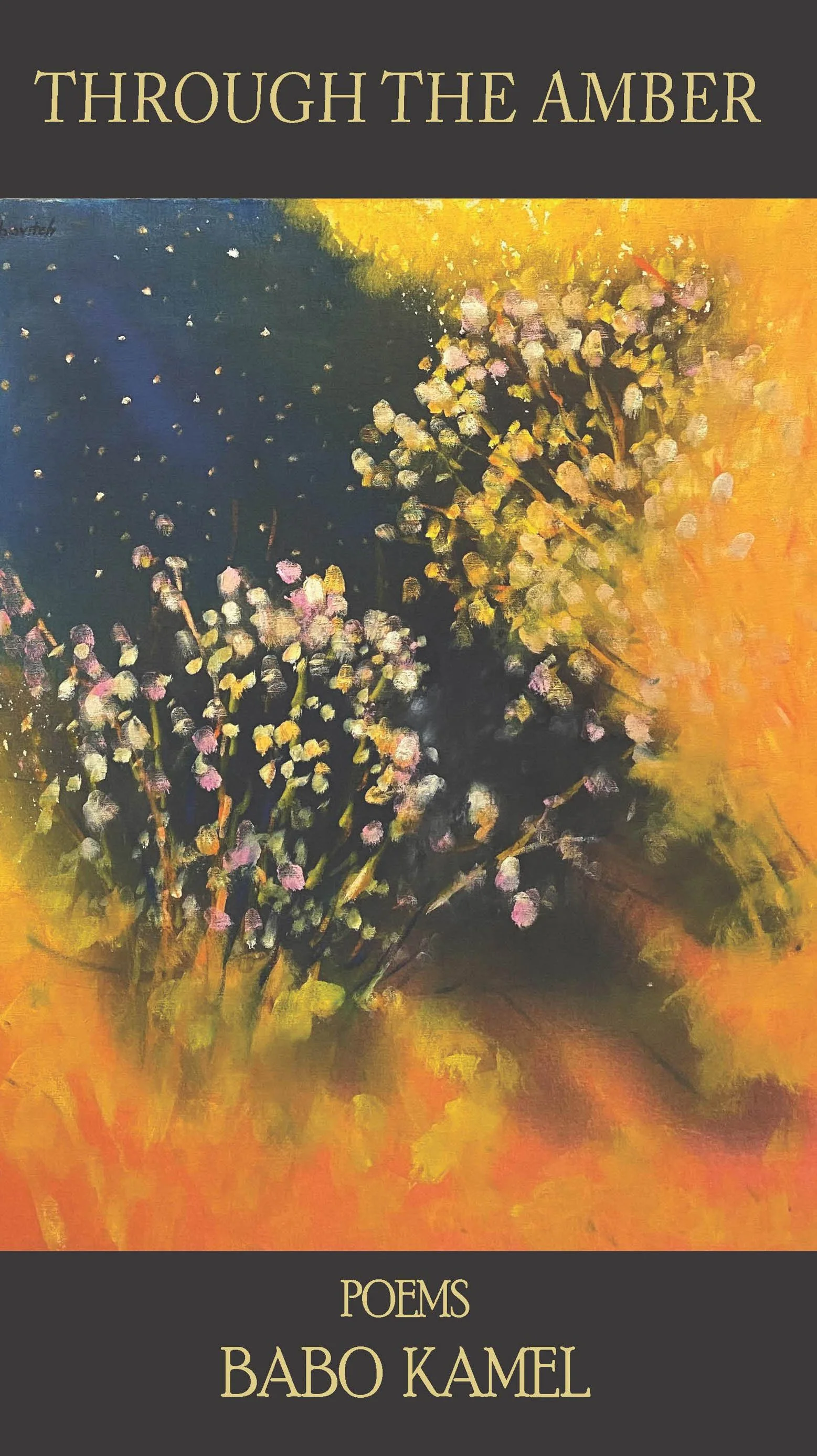
As amber traps the bodies of ancient life, poet Babo Kamel preserves her memories in glimpses of family, parents, and old loves. “Can you hear the crow’s eternal laugh bending time?” She tells of her grandmother’s flight from pogroms and persecution, continues with stories of her parents, homage to her father’s painting, and how she is haunted by her mother’s death decades later. Lastly, Kamel allows us a look into her own life and memories including her first experience of death and loss. Shaded by the color blue – “Not the taken for granted blue of Florida skies,” “or the ink of love letters faint on aerogramme paper” – this work takes you deep into loss. Yet you emerge hopeful that memory, like amber, can gift you with the past.
Praise for Babo Kamel & Through the Amber
This incandescent lyric blessing of a book is Babo Kamel’s ode to family, the living and the dead, her love song of survival in diaspora—a song vital in these challenging times. In Through the Amber, Babo Kamel shows us a child born of a shtetl erased years before—a refugee of an inherited story who grew to carry the memory of aunts who die and friends who disappear, to mourn the dead who don’t know they’re dead. A displaced child who learned not to say she was a Jew, who hid from herself even when she looked in the mirror. A child who grew to write poems her artist father once told her held hundreds of paintings. And these poems do. They do. Babo Kamel’s masterful poems paint a life as indelible in memory as your own. I am grateful for these poems and for this poet.
—rose auslander, author of Wild Water Child
Babo Kamel’s dead may be securely fastened inside an amber gemstone, but they often visit, “riding currents, then circling back.” Piercing the amber, the poet releases the complex lives of her dead who sweep back and forth like “melody rising from the crimson ground.” These particular lives, enmeshed in a particular time and history, become “intimate as breath.” I was swept away by the painterly beauty, living depths, and sheer reach of this enthralling collection.
—Patricia Corbus, author of Ashes, Jade, Mirrors & others
As you move Through the Amber you will find you have entered another consciousness, and you will draw long breaths at the events unfolding, the ordinary and the surprising. You’ll be aware of the weight of the living and the beauty of the familiar. What we see and understand in the daily gathers mystery and solidity, and you will pause to re-see and re-think familiar experience. These are poems rich with family and presence, given us by the keen eye and wise heart of the poet, her past alive in her present, and they will become yours: a line, a gesture, a yellow scarf, the angle as you ascend a particular hill, or climb a local mountain. Babo Kamel’s work draws on a rich apprehension of the ordinary and is intersected by the rare; as the poems unfold, they render the dead and the living, we feel the weight of life and the vast volume of emptiness that goes on forever. These are poems made from the ordinary, and like our lives, they are rich with surprise and wisdom, poems dressed in the familiar ordinary of the daily, and rich with the unforgettable.
—Deena Linett, author of When I Was Water
Through the Amber is a collection of poems that paints a portrait of generational relationships, emotional attachments, and enduring memories that disturb and comfort. From many perspectives, and in vivid detail, these poems explore the co-existence of the dead and the living who inhabit our lives. How dreams and real places shape our perceptions and fine-tune our sensory appreciation. Like an amulet made of deeply earthen amber, a most historic gem material, Through the Amber pays faithful homage to life’s true measure - its collection and recollection, attentiveness to everyday and grand significance.
—K. Alma Peterson, author of two collections of poetry & a forthcoming chapbook
About the Author
As a dual citizen, Babo Kamel resides in Montreal, Quebec and Gorham, Maine. Kamel’s work appears in the Greensboro Review, Lily, Poet Lore, The Fiddlehead, and Best Canadian Poetry 2020 among others. She is a seven-time Pushcart nominee, and a Best of Net nominee. Her chapbook After is published with Finishing Line Press. Her full-length poetry collection What The Days Wanted is published with Broadstone Books. She holds an MFA from Warren Wilson’s Program for Writers.
Publication Date: April 1, 2026
Paperback, 36 pages
ISBN: 978-1-966677-17-8
Sun go down and moon rise up
Time the eater be always near
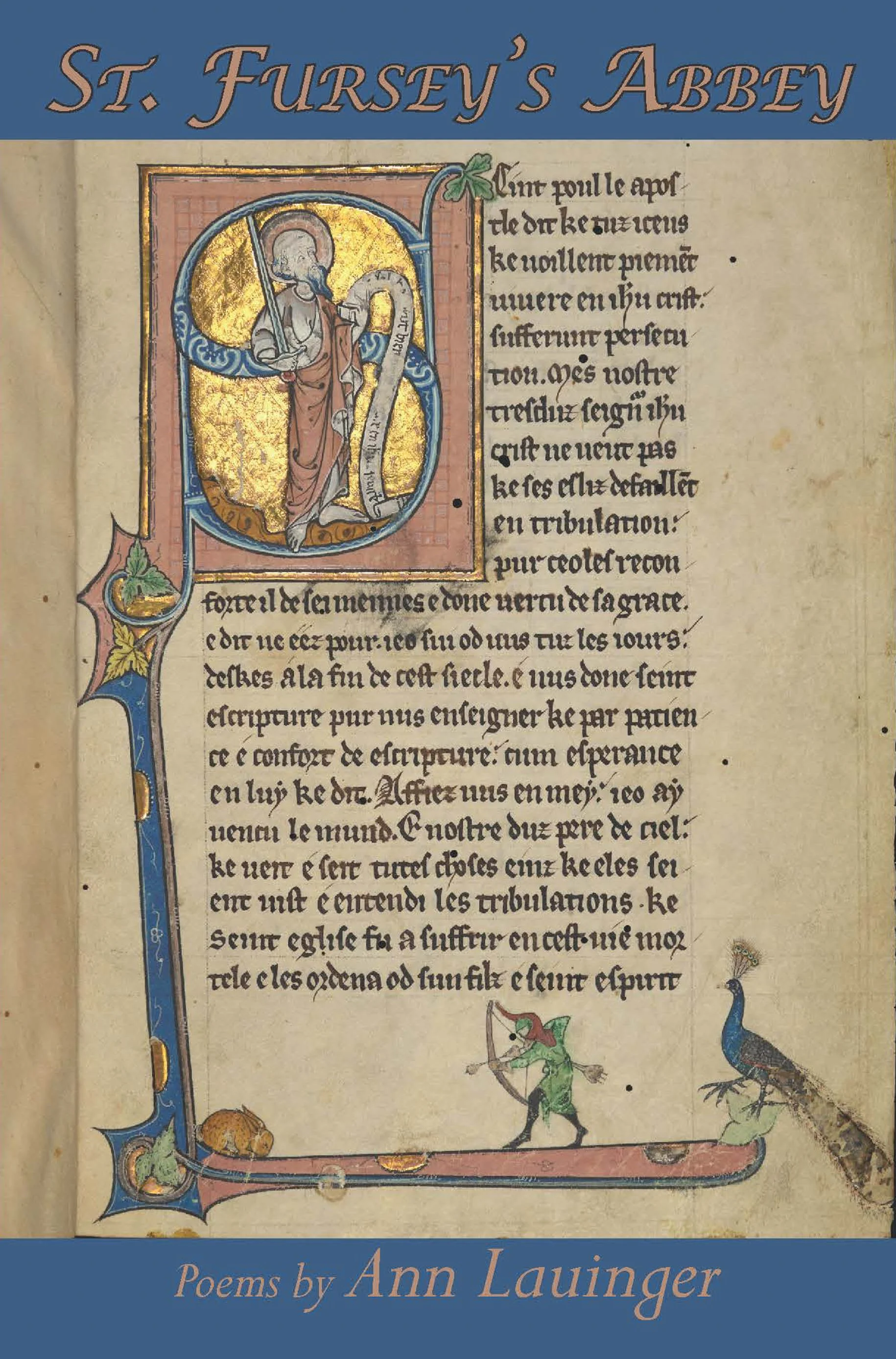
If the past is another country, who lives there? The poems of St. Fursey’s Abbey hopscotch back and forth in time to invoke an imagined place where myth and magic jostle against human hopes and uncertainties. Inhabitants of a multilayered past—a cunning woman, an inanimate box of relics, the woodwose, a doubting priest—reveal themselves through their voices in poems that play with language and form, while our present moment, like a ghostly visitor, haunts the margins.
About the Author
Ann Lauinger’s previous books of poetry include Dime Saint, Nickel Devil (Broadstone Books, 2022), Against Butterflies (Little Red Tree Publishing, 2013), and Persuasions of Fall (University of Utah Press, 2004). Her poems have appeared in publications such as the Cumberland River Review, the Georgia Review, Parnassus, Plant-Human Quarterly, the Southern Poetry Review, and SWWIM. Featured in anthologies, including The Bedford Introduction to Literature, and on Poetry Daily and Verse Daily, she is a winner of Smartish Pace’s Erskine J. Poetry Prize and the Agha Shahid Ali Prize in Poetry from University of Utah. Professor emerita of literature at Sarah Lawrence College and a member of the Slapering Hol Press Advisory Committee, she lives in Ossining, New York.

Publication Date: April 15, 2026
Paperback, 94 pages
ISBN: 978-1-966677-40-6
The poems in Habitat of Ghosts touch upon childhood, aging, and much in-between, haunted by memory, maturation, and loss. In the first three sections, poems converse with each other via images: of hands (caressers of the extant), of eyes (portals of perception), and of hair (correlatives of thought). In the fourth section those image clusters give way to various representations of the poet’s early and ongoing impulse to speak, write, engage with other writers, witness, heal, and honor. These final poems may even be ars poeticas, for they portray how poets are made and what poets do, which is, come to think of it, what ghosts also do in their own smoky style: breach the barriers of isolation and mortality to sing.
Praise for Charlene Fix & Habitat of Ghosts
In a cold and foreboding world, Charlene Fix offers us the warmth of these elegant poems— “perfect incantations” that reveal the unseen world in all its startling beauty, darkness, and tenderness. Habitat of Ghosts is a prismatic flame which transforms the ordinary into the iridescent. Handwritten letters shift into “the hearts of birds drumming softly,” and spectral loved ones appear at pianos and bedsides and in cafeterias and dog’s fur. A song, prayer, and confession, this collection is the gift of pure spiritual labor and wisdom refined in the fires of suffering and loss. Habitat of Ghosts is a masterpiece of alchemy, a treasure for everyone who encounters its light.
—Sayuri Matsuura Ayers, poet & essayist
Through Habitat of Ghosts, Charlene Fix travels with grace, love, sorrow, and smiles. Her generous poems welcome us to travel with her, her arm around our waist, her “nimble hands pushing on doors / of air, opening them…” She comforts and renews the spirit as she remembers that “beauty lingers yet in damaged things.” These poems invite us into the souls of rooms we may have lived in for years—rooms of intimacy, rooms of loss, of parenthood, of marriage, of friendship, of creation—but now, with Fix’s gift for invitation and revelation, we are guided to a more ripened understanding of these essential places. And, with these extraordinary poems and their well-wrought wisdom, we too may “endeavor to ripen well.”
—David Swerdlow, author of Empty the River
About the Author
Charlene Fix came of age in South Euclid, Ohio, one of many free-range kids in this mostly working class suburb on Cleveland’s east side. So it is no surprise that these poems wander around a bit too, loosely tethered to those modest homes and schools, and later to localities beyond, spirit soaring but poems anchored by an accretion of universal particulars from childhood to aging. Charlene started writing poems in grade three, and by high school would walk the mile from a Cedar Center bus stop home from temp jobs downtown, never missing a beat in the books held open in her hands. She earned bachelor’s and master’s degrees in English from The Ohio State University where she met her husband Pat during the riots in 1970, took a ten year break from writing while raising kids, teaching, dabbling in domesticity, then suddenly found herself buying piles of paper and writing again. Charlene has published poems in various literary magazines, and has been honored by grants from The Ohio and the Greater Columbus Arts Councils, two awards from The Poetry Society of America, and several Pushcart Prize nominations. Emeritus Professor of English at Columbus College of Art and Design, Charlene co-coordinates Hospital Poets at the Ohio State University Medical Center, works for peace and social justice, and is the mother of three and grandmother of two. Her website is http://charlenefix.com
Publication Date: March 15, 2026
Paperback, 112 pages
ISBN: 978-1-966677-38-3
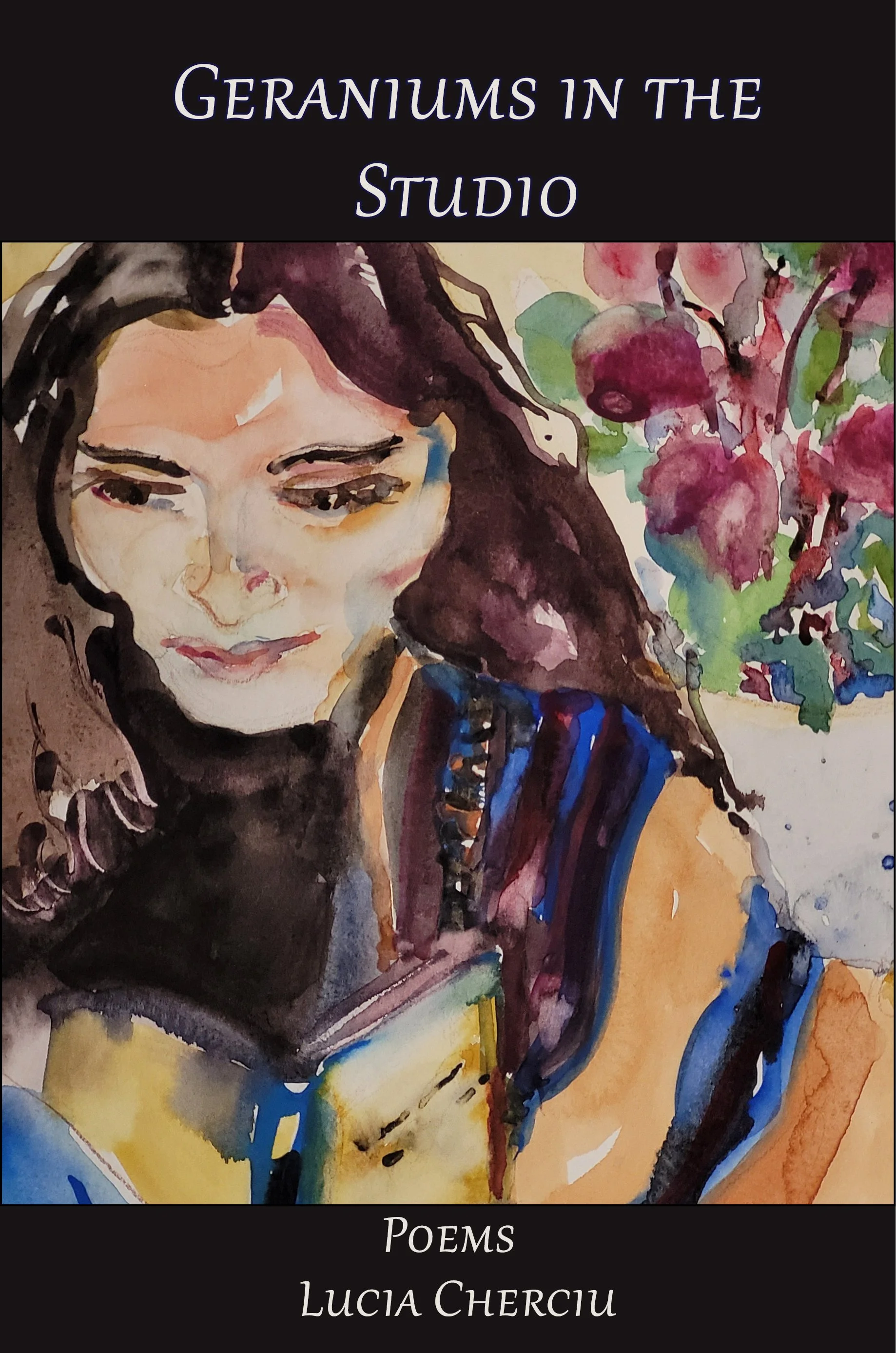
“What do you collect?” Like the hoarding uncle described in one of her poems, Lucia Cherciu has collected a lifetime of experience from her native Romania to her adopted America and transmuted it into poetry. Or perhaps more aptly, “translanguaging” as she expresses the process of thought at the intersection of tongues, where “My love language / is dusting.” Dedicated to and inspired by the life and art of painter Betty Ross (whose portrait of the author graces the cover), her poems celebrate the art of, and in, living. “God, let me keep what I love,” she implores, and here she both keeps and shares all that matters most in her life.
Praise for Lucia Cherciu & Geraniums in the Studio
Lucia Cherciu’s Geraniums in the Studio is rich in flowers, fruit, and trees—in nature, in art, and in the memory of the emigrant who longs for home. “Immigrant” reads in its entirety, “All those cups of coffee / I should have drunk /with my mother, // all those orchards / I should have walked through/with my father. // Send some money home.” Raised in Romania during the dictatorship of Nicolae Ceauşescu, Cherciu writes, “My computer figured out / I want to buy a black dress / after I already bought a black dress // and now tempts me with black dresses.” She writes, “My neighbor has a TV as wide as the whole back of the house. // When the leaves fall, I could place a chair in my yard/and watch golf all day.” She plants trees in that yard, a big garden. This book is a bountiful harvest.
—Suzanne Cleary, author of The Odds
I am moved by Geraniums in the Studio partly because I knew Betty Ross, the extraordinary woman and painter to whom the book is dedicated. These are eloquent poems of friendship and memory, honoring art so deeply that “Even the grocery list is a love poem, a prayer.” Lucia Cherciu explores the life of making and discovering, connections and losses. “A poem is a letter sent over a grave,” she writes. As an immigrant from Romania, she knows the double life of language and dream. As a true poet, she leaves us “feasting on sagacity and stories.”
—David Mason, former poet laureate of Colorado, author of Cold Fire & other books
Geraniums in the Studio is a collection that invites us into a world rich in imagery and tales of family, nature, and friendship. Lucia Cherciu’s poems share the intimacy of daily experiences through varied landscapes of memory: from her garden to meditations on her homeland, Romania. In this volume, the gifted artist Elizabeth Ross (1936-2021) sits alongside the reader as a wise and benevolent presence, invoked by poems that bring Ross’s art, creative spirit, even the light in her Colorado home, to life. In one of many memorable lines, Cherciu declares: “Create your own table.” For us, her gathering of deeply-lived and deeply-considered moments provides a language of abundance and tenderness where we can linger for many hours.
—Joanna Roche, art historian and author of Then. Now. If & Tyrannical Angels & Other Love Poems
About the Author
Lucia Cherciu writes both in English and in Romanian and is the author of six books of poetry, including Immigrant Prodigal Daughter (Kelsay Books, 2023), Train Ride to Bucharest (Sheep Meadow Press, 2017), a winner of the Eugene Paul Nassar Poetry Prize, Edible Flowers (Main Street Rag, 2015), Lalele din Paradis / Tulips in Paradise (Editura Eikon, 2017), Altoiul Râsului / Grafted Laughter (Editura Brumar, 2010), and Lepădarea de Limbă / The Abandonment of Language (Editura Vinea, 2009). She served as the 2021-2022 Dutchess County Poet Laureate, and her work was nominated multiple times for a Pushcart Prize and Best of the Net. She teaches English at SUNY/Dutchess Community College.
Publication Date: February 15, 2026
Paperback, 88 pages
ISBN: 978-1-966677-35-2
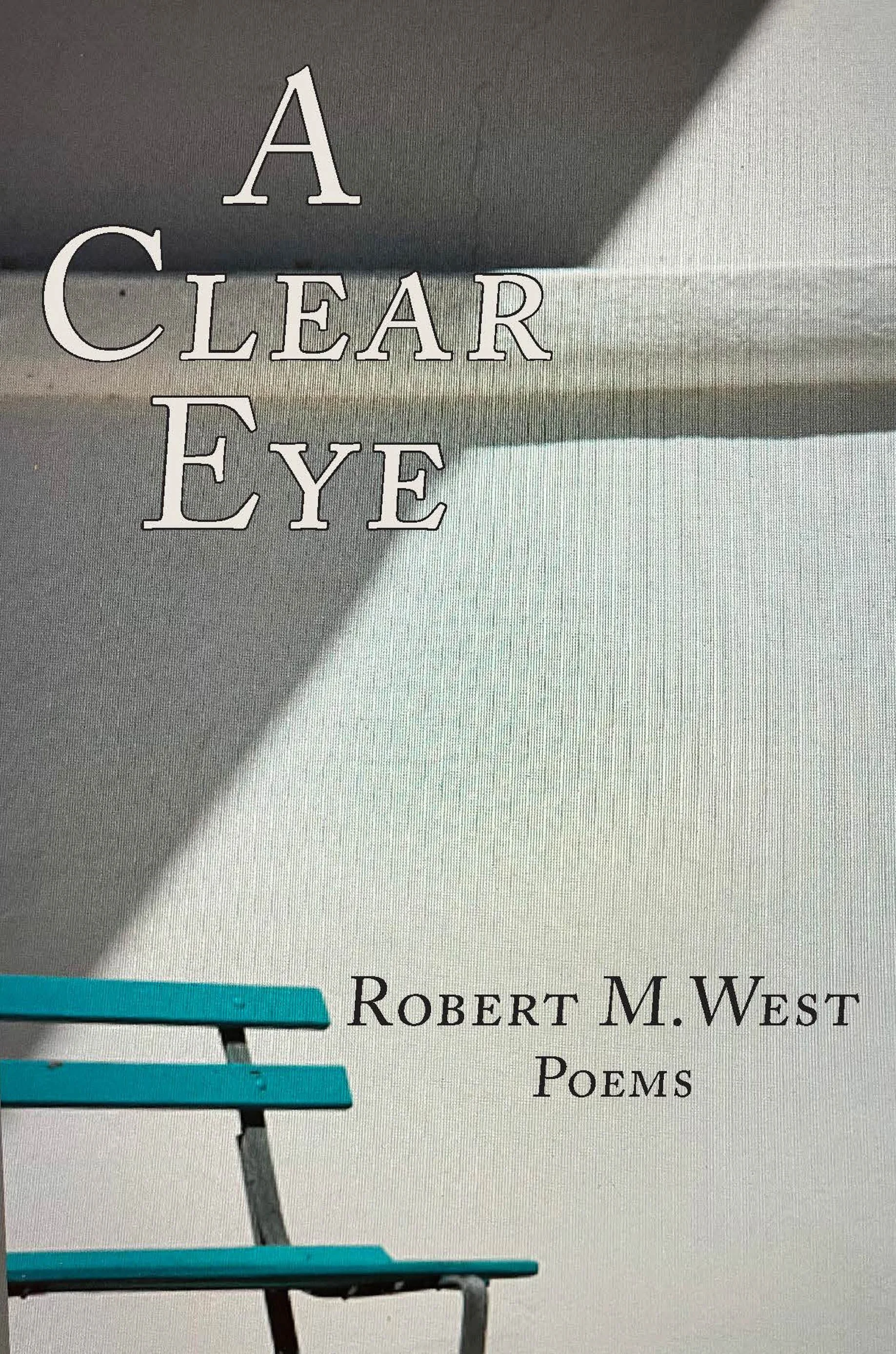
Of his “Writing Desk” poet Robert M. West laments “Too little of what / takes place here (too // seldom in the first // place) ever does take / shape to speak of.” This volume belies that, gathering for the first time West’s lapidary verse, which takes many shapes and touches on nearly all of life, all with elegant brevity. None more than a few lines, often with only a few words, his poems fulfill the promise of the title, serving up keen observation of nature and human nature, with wit and wisdom.
Praise for Robert M. West & A Clear Eye
What a welcome book this is! In a time when too much poetry is too prolix, Robert West offers us 59 poems that are models of evocative brevity, his short lines and stanzas delightfully inventive, his crisp images and phrases dazzling. Here and there, I heard echoes of other contemporary masters of the epigrammatic mode, like A. R. Ammons or Kay Ryan, but only as sympathetic riffs in the highly original verbal music of Robert West. A Clear Eye is a brilliant, heartfelt, and very satisfying collection.
—Michael McFee, author of A Long Time to Be Gone
If poetry is the essence of observation and experience, Robert West’s debut collection is the essence of the essence: an imagistic blink, a wink, an arched brow of surprise. But don’t be fooled or read too quickly. A Clear Eye melds the depth of form and subject with the wonder of understatement. He makes you look twice to take it all in: sly humor, the wordplay of frailer/failure and solely/soul, the adage flipped on its head, a magnolia blossom like “bright hands reflecting dear flame.” It takes a clear eye and open heart—and a poet’s mastery—to notice the sparks so often overlooked, to really see, as West does, the invitation of our world’s “dark exhilaration” streaking across the page of night.
—Linda Parsons, Knoxville Poet Laureate & author of Valediction: Poems and Prose
About the Author
Robert M. West is co-editor with Jonathan Greene of Succinct: The Broadstone Anthology of Short Poems (2013), editor of both volumes of The Complete Poems of A. R. Ammons (W. W. Norton, 2017), and co-editor with Jesse Graves of Robert Morgan: Essays on the Life and Work (McFarland, 2022). Originally from the mountains of western North Carolina, he is now head of the Department of Classical & Modern Languages and Literatures at Mississippi State University, where he also serves as a professor of English and as associate editor of Mississippi Quarterly: The Journal of Southern Cultures.
Publication Date: January 31, 2026
Paperback, 112 pages
ISBN: 978-1-966677-32-1
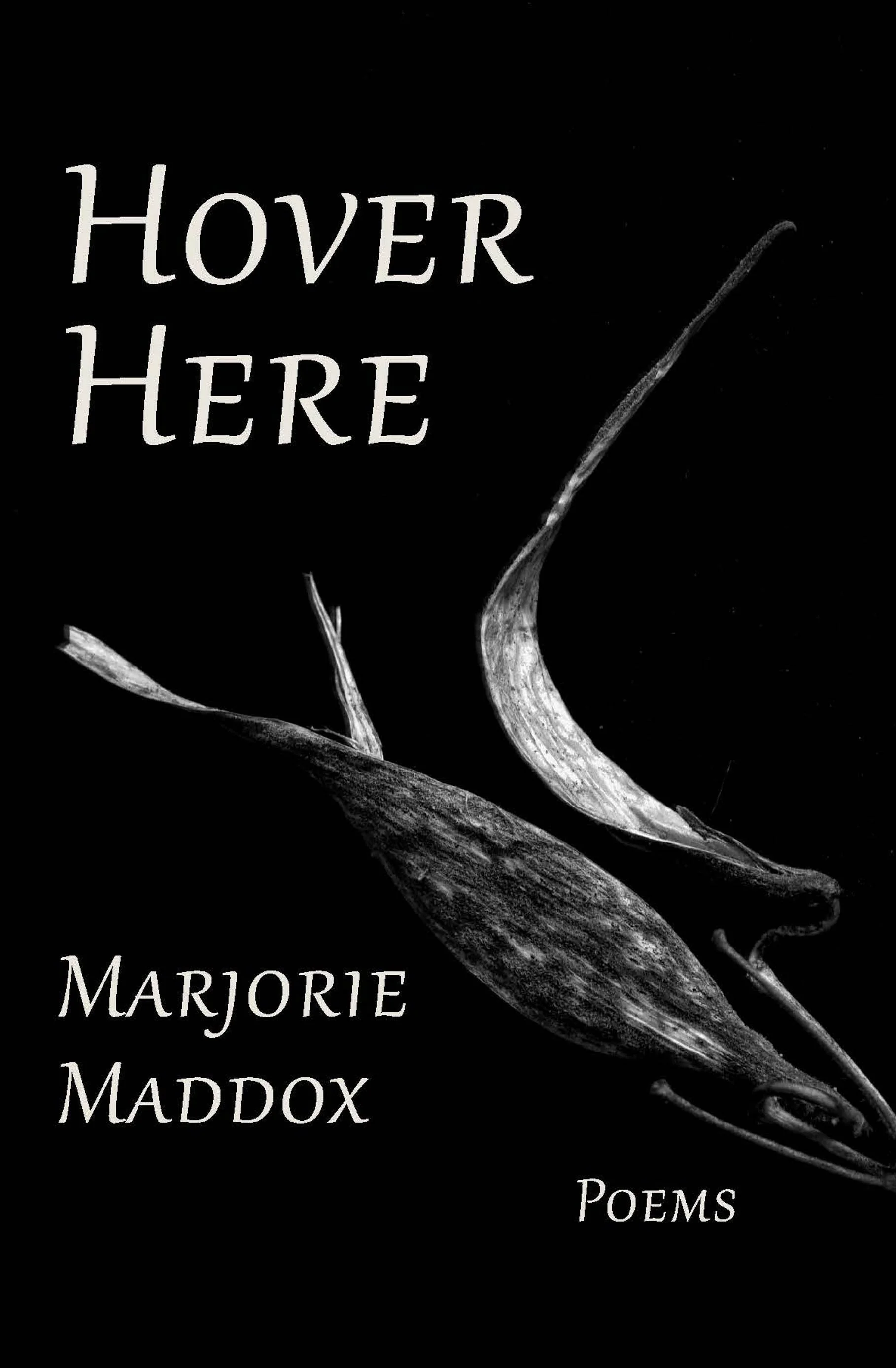
The title poem of Marjorie Maddox’s Hover Here entreats readers to pause to appreciate their “own / sweet precipitation of hope: / no weather of worry, / no stormy deadline of hurry.” There is sweetness in her poems of nature and of the ordinary, “For the pebble, the worm, the clothesline,” all described with exquisite precision and insight, “all the way to the I of the eye that keeps yearning / for attachment.” But hurry is here also, deadlines for dealing with contemporary perils, variously societal and environmental: “Don’t hide behind poems. Wildfires are raging.” She writes in many forms, and her mastery of all expresses and celebrates the potential for order, in poetry at least, and perhaps in life. Her closing ekphrastic poem after the cover artwork of Karen Elias contemplates a milkweed pod, “this empty / and brittle surprise / of beauty” – just so this collection opens and empties to surprise with beauty, and hope.
Praise for Marjorie Maddox & Hover Here
Marjorie Maddox’s Hover Here makes lingering look appealing—in the title poem, in her description of a girl hovering on the stories and dreams of her ancestors, in the wisps of dandelions that hover above a lake in anticipation of spring. Her descriptions of the natural world are vivid—30,000 spines on the porcupine! And there is much to like also in the poet’s other considerations (the account of being a motel maid in the 1970s is one of my favorites), where Maddox turns her attention to coming of age, socio-political justice, and the arts, including a poem inspired by a Judy Collins song.
—Susana H. Case, author of If This Isn’t Love
By turns wise, witty, and profound, these captivating poems teach us “to re-see our lives” in the “silent swooping / of story” as divulged by gull and kite, creek and toad, banjo and drum, loon and “brushstroke of buttercup.” Marjorie Maddox is a master of detail and dissonance, of tenderness and gut-punch, and Hover Here has an almost magical perspective-shifting potency. Here are prayers wordless yet tangible: lament spoken in “billowed sheets,” praise whispered through “small petals,” grace found in “water, fish, wind, wave” and the breeze-carried sparrow—together gorgeously tracing “how prayer, silent, weaves through air.”
—Laura Reece Hogan, author of Butterfly Nebula
There is a playfulness in Marjorie Maddox’s poems that takes us back to the wonders of childhood, finding a sense of the spiritual in the everyday, recognizing the connectedness in all things. Maddox is accomplished in many forms: villanelle, sestina, pantoum, as well as free verse. Many poems acknowledge lateness, autumn, and the passing of friends. Others are meditations on the threats to our environment. Lyrics that celebrate the natural world exhibit both fragility and strength, always with surprise, discovery.
—Robert Morgan, author of Dark Energy
A poet of terrific energy and wise hope, Marjorie Maddox, in Hover Here, attends to our complicated world with complicated love. In an array of enchanting forms, these poems weave artfully through spirited meditations, arriving often at moments of grace and affirmation: “…The cause of things—/ flight, companionship, love—our steady now and then.” A realist, awake to all that threatens our lives, Maddox reminds us that we’re equipped for the struggle. “Beyond flooded neighborhoods,” she writes, “…you get to choose /when to tango in the rain, /when to outstare the storm…” Hover Here is a book one needs.
—David Swerdlow, author of Empty the River
About the Author
Poetry Moment host for WPSU-FM, assistant editor of Presence: A Journal of Catholic Poetry, Sage Graduate Fellow of Cornell University (MFA), and Professor Emerita of English at the Lock Haven campus of Commonwealth University, Marjorie Maddox has published seventeen collections of poetry—including Perpendicular As I (Sandstone Book Award); Transplant, Transport, Transubstantiation (Yellowglen Prize); Begin with a Question (Illumination Book Award, International Book Award, Paraclete Press); and Seeing Things (Wildhouse Publishing); as well as the Shanti Arts ekphrastic collaborations Small Earthly Space; Heart Speaks, Is Spoken For (both with photographer Karen Elias); and In the Museum of My Daughter’s Mind (with her artist daughter Anna Lee Hafer, www.hafer.work, and others), a 2023 Royal Dragonfly Book Award in photography/fine arts and American Fiction Winner Award in poetry.
Maddox also has published the story collection What She Was Saying (Fomite) and five children’s and YA books, including the 2021 National Council of Teachers of English (NCTE) Notable Children’s Poetry Book I’m Feeling Blue, Too! (Wipf and Stock) and the middle-grade biography A Man Named Branch: The True Story of Baseball’s Great Experiment (Loch Ness Books, an imprint of Sunbury Press). She is the great grandniece of Branch Rickey, the general manager of the Brooklyn Dodgers who helped break the color barrier by signing Jackie Robinson to Major League Baseball.
With Jerry Wemple, she co-edited the anthologies Common Wealth: Contemporary Poets on Pennsylvania and Keystone Poetry: Contemporary Poets on Pennsylvania (Pennsylvania State University Press, 2005 and 2025). The recipient of numerous awards, she gives readings and workshops around the country. She lives with her husband in North Central Pennsylvania, where they raised their two (now grown) children.
For more information and to schedule readings, see www.marjoriemaddox.com
Publication Date: January 15, 2026
Paperback, 82 pages
ISBN: 978-1-966677-31-4
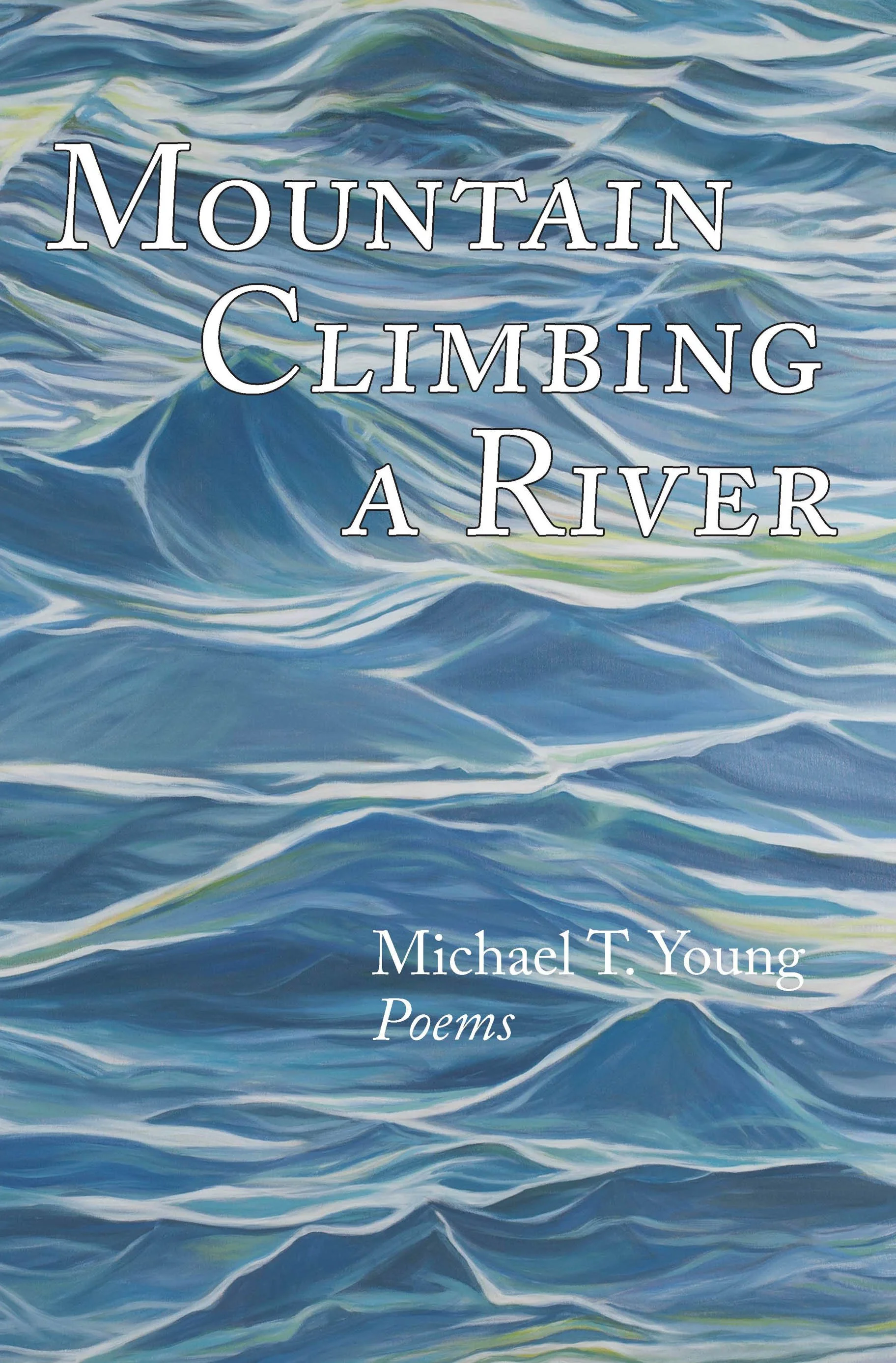
Michael T. Young’s new poetry collection Mountain Climbing a River begins with the “smell of gunpowder” and the truth of “White Privilege” that “When you’re not the target / you can ignore the gun.” But he forces the reader to recognize how we all are targets (and all complicit), how the monsters under his daughter’s bed – whether Nazis or climate change – are all too real. Which is to say this is not always a comfortable read, but it is a necessary one – one that expresses how language and memory matter, for otherwise we are left “not knowing who we are, without words, / without stories about where we came from / and the dream of where we’re going.” It also is hopeful, leaning into family and community “and how much more / we need each other to keep from drifting,” with “the only certain outcome: that everybody drifting toward / each other, faster and faster, will meet at the center.”
Praise for Michael T. Young & Mountain Climbing a River
Like the poet Langston Hughes, Michael T. Young has known rivers. Mighty and pocket sized, filled with stones perfect to give a young son, and imaginative tropes galore. He has also known oceans, waterfalls, a corporate life, a beloved family and endless mysteries. including clouds that have “found their way”; glaciers that “took detours to winter”. In his title poem, “Mountain Climbing a River,” Young writes, “But I have aged / into the lustrous ache of this river / a body of heavy churning, and wake / to the slowed currents of each morning.” And like Hughes and these lines from his poem about explaining the fleshy mountain-skin of the Hudson River to his son, his words are wide, broad, and muscular. Whether he is writing about family, rhythm in music (from Mahler to the B-52s), aging, the natural world, a naked man in the middle of 42nd Street or ghosts, he invites in an immense and bold river of imagery. These gobsmacking poems carry his reader along on a raft of intellectual and spiritual wanderings and they will leave you reeling, dizzy, aware of all language can do.
—Elizabeth Cohen, author of Mermaids of Albuquerque & the memoir The Family on Beartown Road
Michael Young’s poems are like the wings of an eagle expanding and compressing, taking the reader on a path that starts simply only to open to clouds of knowing; he understands that poets must see and hear hard. It is this visceral intensity that elevates his poetry and invites the reader to share experiences. The reader is moved to read, again and again, these most inviting poems.
—Bertha Rogers, author of What Want Brings
Informed by history, politics and faith, Michael T. Young crafts a powerful cry of grief and anger at the injustices of our society. “You can’t know what you forget,” the poet implores, urging us to stay aware of our individual roles in maintaining oppression.
—Michael Simms, author of Strange Meadowlark
About the Author
Mountain Climbing a River is Michael T. Young’s fourth collection. His third full-length collection, The Infinite Doctrine of Water, was longlisted for the Julie Suk Award. He received a Fellowship from the New Jersey State Council on the Arts and the Jean Pedrick Chapbook Award for Living in the Counterpoint. He received honorable mention for the New Jersey Poets Prize in 2022. His poetry has been featured on Verse Daily and The Writer’s Almanac.
Publication Date: December 15, 2025
Paperback, 86 pages
ISBN: 978-1-966677-28-4
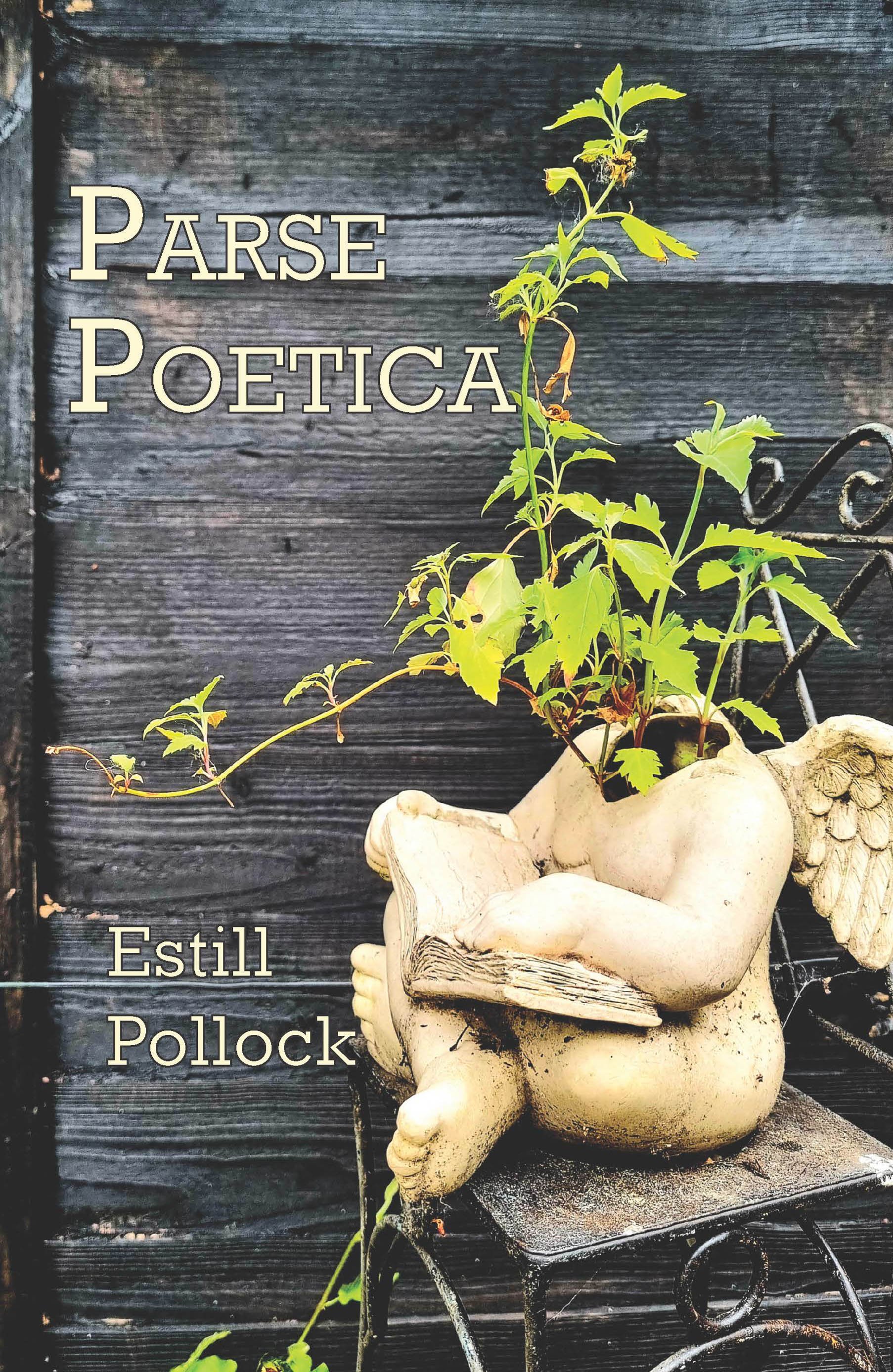
“I sleep in fever, if at all.” With Parse Poetica, Estill Pollock continues his multi-volume fever-dream cycle Cartographic Projections of a Sphere, preceded by Entropy, Time Signatures, Ark, Heathen Anthems, and Alias, collectively an opus both magnum and magnificent, encompassing seemingly all western culture and history in poems of myriad styles, demonstrating his mastery of all. The present volume can be read very much on its own and as distillation of Pollock’s poetry program. Critiquing his own work, he describes “My late style—ungrammatical, perplexed / and obscure, remote sources / with six degrees of separation / Truants from Chaucer,” and Chaucer indeed makes frequent appearance along with a host of characters out of the literature and life of Pollock’s long adopted England. But he also casts a contemporary transatlantic eye to the “rent-a-mob platforms / of DOGE, ICE and antivax disclaimers” and “MAGA flags, wind-snap logos on / the street where I was born” in his native Kentucky, USA. Concluding this work he observes “And here, traces of a deeper salvage—old entreaties beyond a certainty / of place—where I am, or was, when I awoke / to name the turning of it.”
Praise for Estill Pollock
In Entropy, we find a visionary collection of stark and unflinching reflections that we need for these times.
—Alexander Pepple, Editor, Able Muse
Estill Pollock’s Time Signatures is a hugely ambitious and, in the end, wonderfully achieved engagement with longer poetic forms. Unique also is Pollock’s exploration of history, ideas and the lives of cultural icons.
—David Cooke, founder and editor of The High Window
Language, for [Pollock], is a precision instrument he uses to think through everything that interests him. And everything, it seems, interests him. I would go so far as to call Pollock a planetary man. His Ark is built to last, to ride out the flood tide of the 21st century that is still and always coming in.
Reading Heathen Anthems, I find myself thinking: What is poetry, if not language in its finer tunings? Estill Pollock is a virtuoso. Heathen Anthems is a book to keep close, a book to return to and return to.
—William Slaughter, Editor of Mudlark
Of Alias,
Wild connections, wilder metaphors, and somehow it all makes poetic, delightful sense.
—Ricardo Nirenberg, Offcourse Literary Journal
About the Author
Estill Pollock’s publications include Constructing the Human (Poetry Salzburg) and the book cycle Relic Environments Trilogy (Cinnamon Press). His poetry collections in the series, Cartographic Projections of a Sphere—Entropy, Time Signatures, Ark, Heathen Anthems, Alias, and Parse Poetica—are all published by Broadstone Books. The e-chapbooks And Then and Working Title are published by Mudlark. He lives in Norfolk, England.

Publication Date: December 3, 2025
Paperback, 116 pages
ISBN: 978-1-966677-25-3
At least since David Ignatow’s injunction to “Get the gasworks in a poem” there have been poets answering the call to tell the truth of working-class life. Robert Walicki is an especially apt practitioner, writing out of first-hand experience while wielding the tools of language. In the title poem of his new collection Watershed, his neighbor “speaks the language of plumber,” and the guiding metaphor throughout is the flow of water, replete with mud and rust and freezing rain. “I didn’t know this was all about structure, about surety, / about everything we gave our bodies to except for what mattered.” Here he shows what matters, and how “Grief can overtake you but grief isn’t you.” Writing for those “more Miller than IPA” he declares “I have nothing to offer / but daylight on a chipped window ledge” – and it’s more than enough.
Praise for Robert Walicki & Watershed
The poetry of the working class has a long history in the American tradition, but in this moment of division and rage, it feels more necessary than ever. Throughout his profound collection, Robert Walicki teaches that accuracy is kindness, attention is compassion. Replacing commentary and summation with intimacy, Walicki brings us close to men who would rather die than have their guns taken, who speak “in the greasy language / of thrust block and spark plug.” This, too, is the language of poetry, and Walicki says, “I don’t understand, but I love how the words hit me / four banger, 6 banger, the launch and the drift.” And in another poem, when he writes, “I’m opening like a switchblade, a safety latch,” I believe him and lean in to learn more.
—Jacqueline Berger, author of Left at the Ruin
Watershed is a stunning collection that blends the lyrical and narrative with soaring transcendental moments of insight and wonder. Walicki finds the sacred in the ordinary with imagery so sharp and precise that we squint in the face of it. He earns everything—these poems never take the easy way out. Those lonely moments of going to and from work can seem so familiar, Walicki realizes we can get lost in the going back and forth. With an eye towards repair, toward making due, he nurtures the life of the spirit. Survival is the goal—with soul intact in the battle between tough exteriors, tender hearts.
—Jim Daniels, author of Gun/Shy & other books
“Just remember. / You were here for this” could be the truest words ever written. And much as the body never forgets its pain and pleasures, Bob Walicki’s writing never lets us forget what it means to be “straddled across a ladder while / pipes vomit up a hospital full of psych meds and chemo, / the shit of the dying, thickening into arteries of rock, and closure.” This is the work of the real made beautiful by its immersion, a world Walicki is both tethered to and has transcended as the costs surround his speakers in the tangible aftermaths of living and dying. Or as an ironworker mentions, “Rust is a good thing... Just the right amount makes the metal stronger.” Read this book and it’ll do the same for you.
—Fred Shaw, author of Scraping Away
About the Author
Robert Walicki’s aesthetic speaks to the rich tradition of working-class poetry through his years of his experiences in the construction fields. A two-time Pushcart and a Best of The Net nominee, Robert’s previous poetry collections are Black Angels, from Six Gallery Press, and Fountain, from Main Street Rag Press.
Author photograph by Rebecca Clever, used by permission.
Publication Date: October 31, 2026
Paperback, 114 pages
ISBN: 978-1-966677-62-8
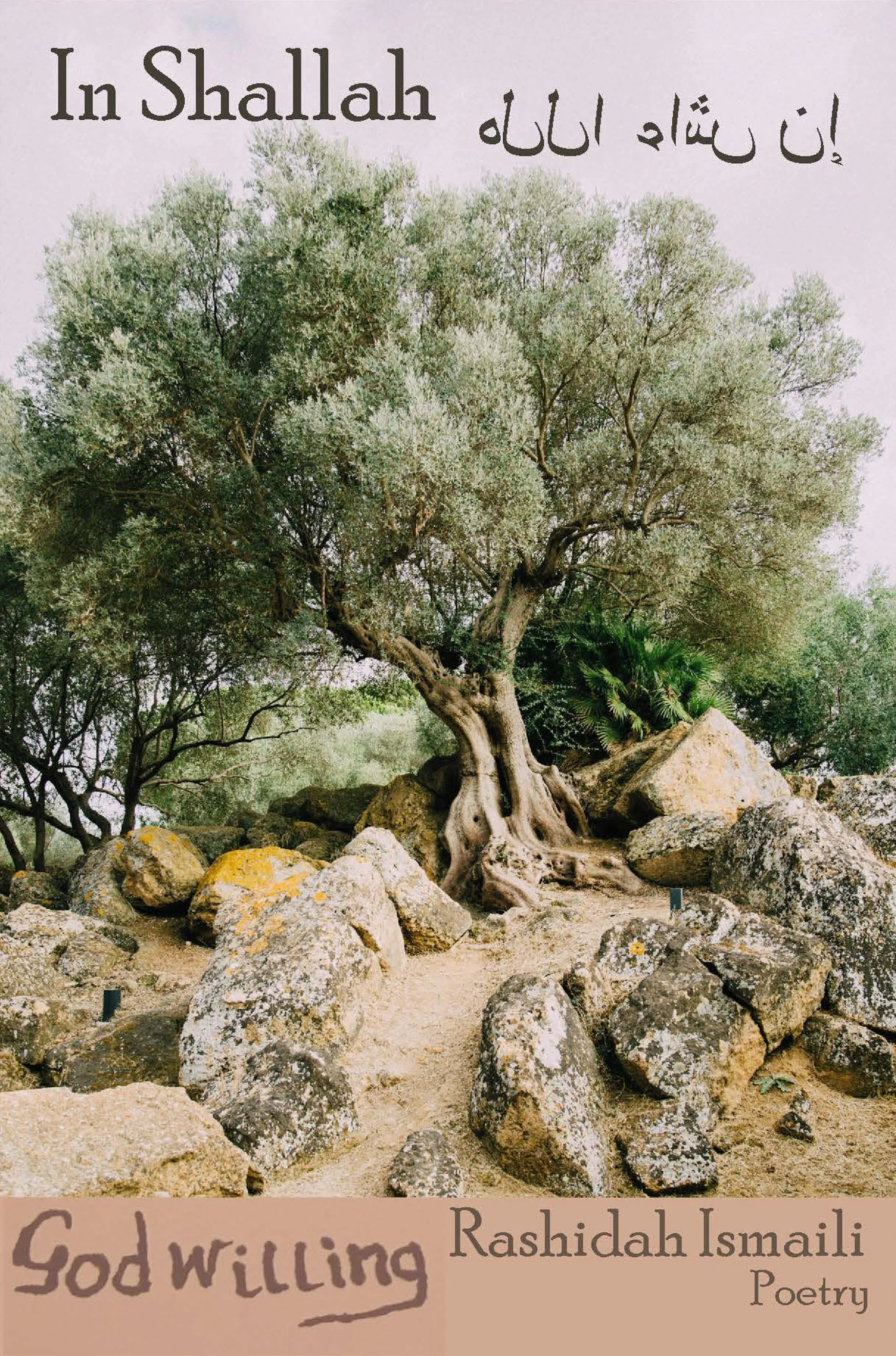
Coinciding with the 25th anniversary of the 9/11 attacks, In Shallah by poet Rashidah Ismaili captures the Muslim response to those events and their aftermath, a volume filled with grief and despair taking the reader on a journey of family and community displacement as a metaphor for that response, reflecting the continuing loss – fueled by prejudice and misunderstanding – to a community still struggling to recover itself.
Praise for Rashidah Ismaili & In Shallah
Rashidah Ismaili – novelist, professor, activist, and founder of Salon d’Afrique – in this searing collection In Shallah brings the lives of uprooted refugees drifting from snow to sea, widows waiting endlessly at windows, grandmothers carrying the memories of an olive tree severed from its land. Clear-eyed and luminous, Ismaili transforms a lifetime of listening into fierce acts of witness – to exile, cruelty and love. In Shallah – “In God’s Time / God Willing” – offers a window into a tragic episode and the consequences still felt a quarter of a century afterwards.
—Dr. Hisham Aidi, political scientist & author
“Poems cannot comfort the dying” writes Rashidah Ismaili in her collection, In Shallah. And yet, ironically, her words aspire to do just that. “Each tooth” she says,
“break forth to test the teats of a yielding mother.” These poems inexorably track the connectivity of life, generation to generation, practice by practice, noting how in the midst of suffering, knowledge grows and is passed on. It’s how we thwart the dying, how somehow, life continues.
In language often sacred and profound, clear and distilled, this poet reminds us that poetry is a tool, an art trying to find a way “to say, to gather colours to paint the smell of dismembered death.” Her poems compress time – “Yesterday is today,” she writes. In narrow verses, she presents trauma and wonder in the same voice, lets us journey her ancient land, feel “the stones under the soles, stop with her at a house of stone and dirt floors” She describes hunger as “the music of missed meals.”
Years ago I heard Ismaili read “The Shaming of an Olive Tree,” the final poem in this book. I was stunned then by the beauty of lines, by the connection of words to deed and outcome. I am stilled now, seeing for myself how her words move across the page. And I feel compelled to return to one of her earlier observations. “I watch the sinews of hand / hands that held my father’s oud.” She brings the same acute power to witness the ugliness and beauty of the world.
—Mervyn Taylor, author of Unpainted Houses
About the Author
Rashidah Ismaili is an academic and writer. Her works have been widely anthologised, recently included in New Daughters of Africa (ed. Margaret Busby). Her novel in linked stories Autobiography of the Lower East Side has been well received, and the second volume in the trilogy of An African Woman in New York (of which the autobiography is the first) is due out late Spring 2027. It is titled Turmoil of Truth.
Ismaili was a member of Umbra, a group of mostly African-American writers and visual artists active in the Sixties on the Lower East Side of New York City. Umbra was short lived but was a forerunner of the Black Arts Movement. She is a founding member of OWWA, Organisation of Women Writers of Africa, created in the late 1980s, and the vice president of Pen & Brush, an all women’s organisation of writers, visual artists, and at one time musicians. It is the oldest such organisation in the country.
She is the founder and hostess of Salon d’Afrique, where intellectuals, artists and writers hold salons to exchange the ideas and critique literary and cultural of modern creators and works.
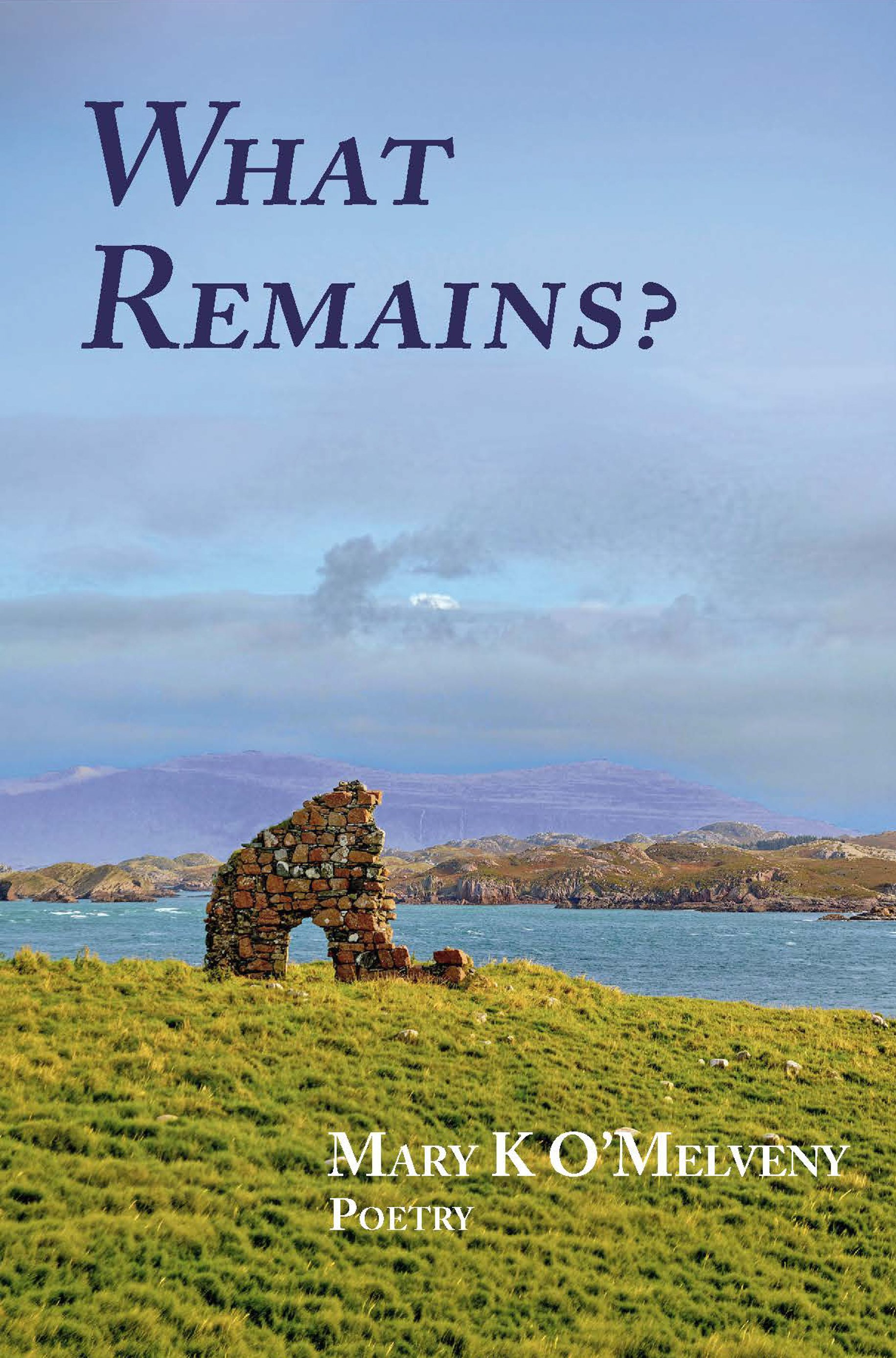
Publication Date: October 15, 2026
Paperback, 102 pages
ISBN: 978-1-966677-64-2
A collection of poetry ruminating on evolutionary stories of loss, survival, and perseverance, with a highlighted focus on explorative discoveries of the natural Earth, providing further musings on the strengths of humanity.
Praise for Mary K O’Melveney & What Remains?
Mary K. O’Melveny’s newest collection is beautiful and ambitious, sampling broadly from human experience around the globe and diving vertically into time in poems that evoke rich histories from her mother’s stories, her great-grandmother’s sampler, and further back, deeper down. Beyond the personal artifact, fascinating natural research offers anchor and refrain. These poems introduce us to radioactive wasp nests, the syntax of whale songs, and to jellyfish who mutate inexorably toward salvation.
—Dave Essinger, Professor of English, University of Findlay, author of This World and The Next
Why do we read poetry? To engage our senses, and to test our capacity for feeling. To experience the poet’s use of language that, when effective, promotes the potential for our own updated relationship with it. And to invite personal reflection on complex human and earthly experiences. In What Remains? Mary K O’Melveny provides readers an opportunity to interact with our mysterious, beauteous world through the lens of history, with a keen eye on the fragility of the planet and how respect for it – and for creatures depending on it, including our fellow humans – can lighten despair, build hope, and open windows to a healthy perspective. The experience of taking in the poems within this book is a wondrous and soulfully healing journey.
—Joe Maita, Editor/Publisher, Jerry Jazz Musician
Mary K O’Melveny’s new poetry volume, What Remains?, questions how we endure, find hope, in times of loss, grief, and crisis—personal, political, environmental, global. These poems offer illuminating and memorable visions of the decline of past civilizations, observations of the natural world, witnessing of present disasters—both environmental and global—and their impact, eschewing despair and reveling in natural phenomena, particularly the joys of birdsong, art, music, and moments of beauty and memory. With evocative, original, and startling imagery that also suggests profound philosophical exploration, she creates a poetic universe in which forms of loss are countered with the traces of all “that remains.” This is a volume that a reader will savor, return to for its complex visions and offers of spiritual sustenance.
—Jan Zlotnik Schmidt, author of Foraging for Light Over the Moon Gone: The Vanishing Act of Bess Houdini
About the Author
Mary K O’Melveny is the author of five poetry collections and a chapbook, including an album of poetry and music If You Want To Go To Heaven, Follow A Songbird (Jerry Jazz Musician 2024); Flight Patterns (Kelsay 2023) (nominated for the Eric Hoffer Book Award); Merging Star Hypotheses (Finishing Line 2020), semi-finalist, The Washington Prize/The Word Works). Rhina P. Espaillat, poet, essayist and short-story writer described Mary’s poetry in Dispatches From The Memory Care Museum (Kelsay 2021) as “nakedly genuine” …. of “consoling and enriching value.” Mary’s award-winning poems are widely published in print and on-line literary journals, anthologies and poetry blog sites. A three-time Pushcart Prize nominee, she is a member of the Hudson Valley Women’s Writing Group and co-authored the Group’s two published anthologies. A retired labor rights lawyer, Mary lives with her wife near Woodstock, New York, teaches writing classes and supports social justice causes.
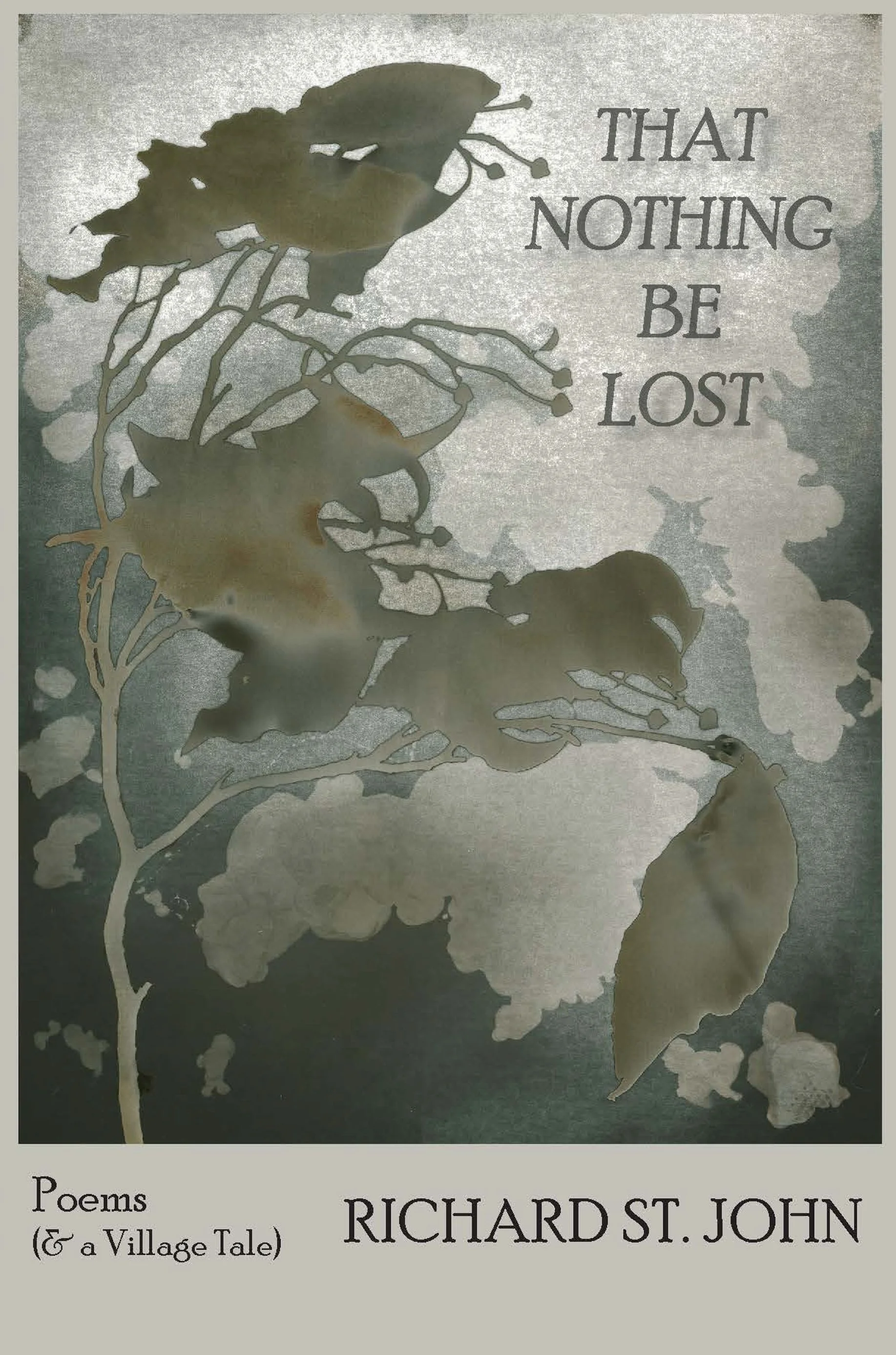
Publication Date: October 15, 2026
Paperback, 84 pages
ISBN: 978-1-966677-61-1
Richard St. John’s latest collection That Nothing be Lost takes the reader on an autobiographical journey seen through his deep and sometimes tragic friendships. These poems coupled with the author's childhood memories combine to make this work poignant and heartfelt. Included among the poems is a short story reminding us of the importance of community.
That Nothing Be Lost is a book of sacred witness: to our wounded companions, our personal histories and the shared challenges that shape our lives. What can we hold in our hearts amidst the transience of all things? What might shed light as we bravely make our way?
Praise for Richard St. John & That Nothing Be Lost
This is an astounding piece of literary work. Each poem feels like a warm personal embrace, yet as a collection they become our collective memory. These poems’ power is matched only by the poet’s dexterity and deep humanity.
— Sony Ton-Aime, Executive Director, Pittsburgh Arts & Lectures & author of Konbit.
These exquisitely observed poems are acts of deep human sympathy that seek to both break the heart and heal it. Richard St. John engages our historical moment with the rhythms and warm humanity of writers from Christopher Smart to the Psalmist to Aeschylus, reminding us of the long tradition of human empathy.
— Kim Garcia, author of DRONE & The Brighter House
St. John’s latest collection sees recollection and witness as poetic practices, as “a sacrament for us.” That Nothing Be Lost aims to do what its title commands—to marry memory of daily existence with the eternal. These poems confront the difficulty of this practice in the face of loss in its many forms. Yet even for the child who lives a single day, life is something cherished: “In the beginning: darkness, / heartbeat, blood. And it was good.”
— Jake Grefenstette, President, International Poetry Forum & Editor, Carnegie Mellon University Press Poetry Series
About the Author
Richard St. John is also the author of Book of Entangled Souls (Broadstone Books, 2022), Each Perfected Name (Truman State University Press, 2015), The Pure Inconstancy of Grace (published in 2005 by Truman State University Press, as first runner-up for the T. S. Eliot Prize for Poetry) and Shrine (a long poem released as a chapbook in 2011). He enjoys connecting with readers and listeners in university and literary settings and, especially, with people who might be newer to poetry in congregations, online book groups, community spaces and welcoming homes.
St. John received degrees in English from Princeton University (B.A.) and the University of Virginia (M.A.) In 2002, he completed a mid-career Loeb Fellowship for independent study at Harvard University. A portion of his literary materials have been archived in the University of Pittsburgh library system. He has worked professionally in the areas of community development, nonprofit management, and reflective conversation. He lives in Pittsburgh, Pennsylvania, with his wife, Kate. For more information, please visit his website: http://richardstjohnpoet.com
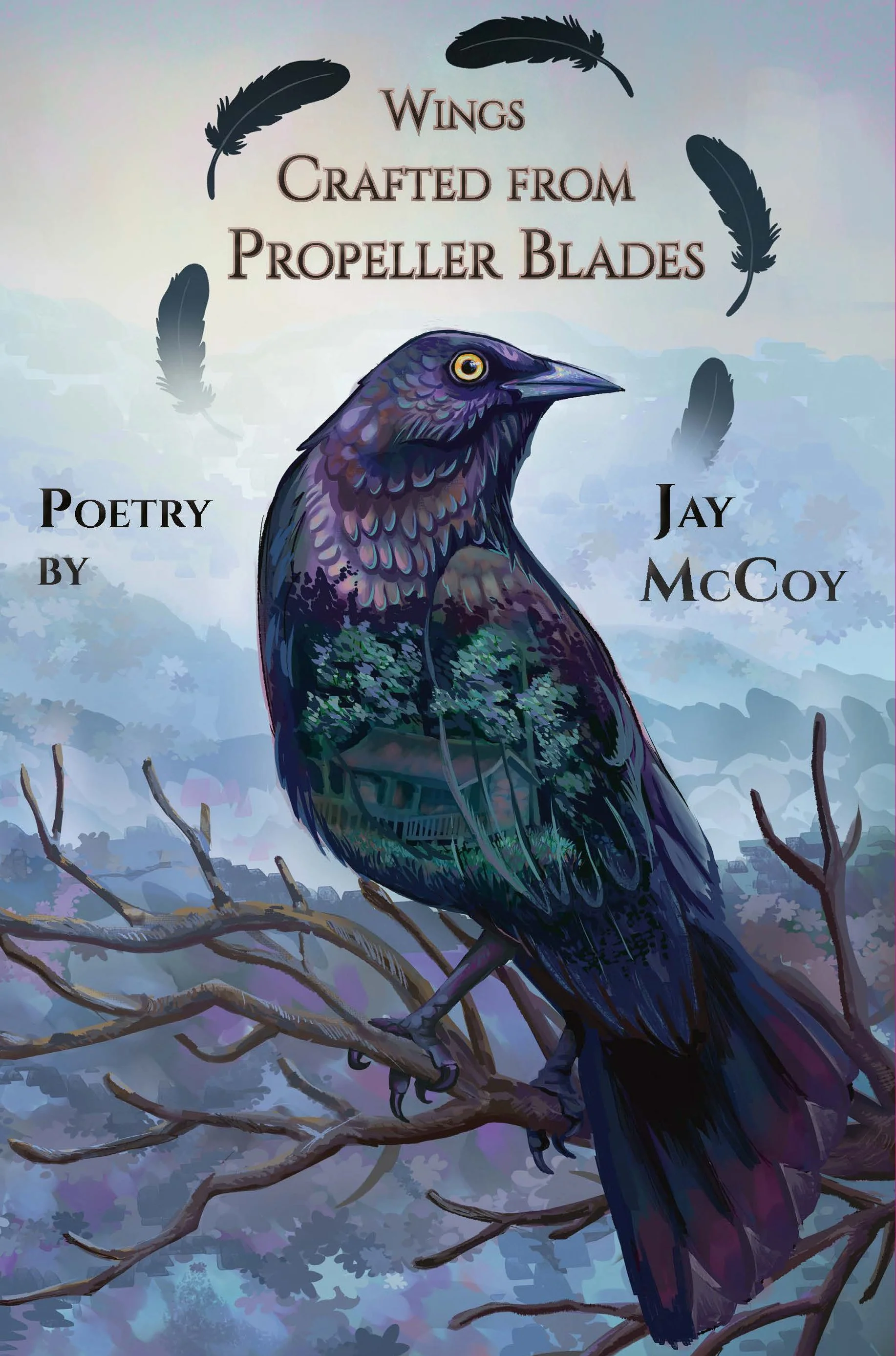
Publication Date: September 30, 2026
Paperback, 88 pages
ISBN: 978-1-966677-60-4
Wings Crafted from Propeller Blades transports us to Jay McCoy’s Appalachian roots. A school picture, tending his mother’s garden, or baking a pie, these poems show us that simple memories are often the strongest.
Praise for Jay McCoy & Wings Crafted from Propeller Blades
Jay McCoy’s new book of poems gathers all the family around— here’s Aunt Madge, Sissy, Geraldine, Walter, Lurlene and Dollie, and Mom and Dad in the long arc of their lives together. They welcome the rest of us to share a meal with them, the food mouth-watering and abundant, and no one is a stranger here any longer. Through these poems, they tell us of their love stories, their heartbreaks, and there is poetry in every detail from the names of the quilt patterns to the outfits worn to the fair. McCoy revels in deft poetic forms and interactions with the words of other poets, from Nikky Finney and Juan Felipe Herrera to Frank O’Hara and the eternally under-appreciated Jack Spicer, and finally Kentucky’s own Jim Wayne Miller. If you are feeling low, treat yourself and set aside some time to spend with Jay McCoy and Wings Crafted from Propeller Blades, and welcome to the family.
—Jesse Graves, author of Merciful Days & Said-Songs: Essays on Poetry and Place
Wings Crafted from Propeller Blades is an instruction manual for how to hold loss and still whirl with buoyant love. These poems sing with Appalachian storytelling, foodways, quilting, music, gardening, and more, inviting the land’s long memory itself to cast the spell we need against our grief. Jay McCoy is not only a true poet, he holds my highest esteem as a tradition bearer. May these miracle words draw us ever nearer to our land and people, forever alive.
—Rebecca Gayle Howell, recipient of the Aiken Taylor Award for Modern American Poetry
With the tender, elegiac voice of one left behind, the poems in Jay McCoy’s Wings Crafted from Propeller Blades navigate the enduring landscape of grief, reminding us that mourning is simply love that refuses to end. Whether finding the spirits of his departed parents in the birds at the feeder or honoring the dead through the quiet rituals of shared food, these poems are luminous and deeply felt. McCoy honors all those spirits who walk with us and watch over us. He invites us to sit with him for a while in that fragile, universally felt space where we are not yet okay but we trust that we will be someday.
—Denton Loving, author of Feller
This satisfying and honest book is about many things, chief of which is companionship. Kin and colorful characters and ancestors crop up as we would expect. But there are other companions here, too, from a cold creek to a dinner bell, from heirloom garden seed to the very names of quilt patterns. McCoy enumerates these other companions out of gratitude and rightly so. We cannot go through the world alone. Our companions help us through it and for some of us a worthy guide may be an empty jelly jar or a mess of greasy beans.
—Maurice Manning, author of Railsplitter & others
About the Author
Jay McCoy is a poet and visual artist with deep Appalachian roots in Eastern Kentucky. He is Director of the Kentucky Center for the Book and Director of Literary Arts Programs for Kentucky Humanities, and serves as an adjunct professor at Eastern Kentucky University and Bluegrass Community & Technical College teaching composition & rhetoric, creative writing, and Appalachian studies. Jay holds Bachelor of Arts degrees in English and Biology from Transylvania University, a Master of Arts in Education in Counseling Psychology and Higher Education Administration from The University of Akron, and a Master of Fine Arts in Creative Writing from the Bluegrass Writers Studio at Eastern Kentucky University. His writing has been published online and in print including Still: the Journal, Blue Fifth Review, Naugatuck River Review, The Heartland Review, and several anthologies, as well as his chapbook, The Occupation, published by Accents Publishing. He served as editor for the 2020 anthology of Lexington Poetry Month, Maps We Forgot to Bring. Wings Crafted from Propeller Blades is his first full-length collection.
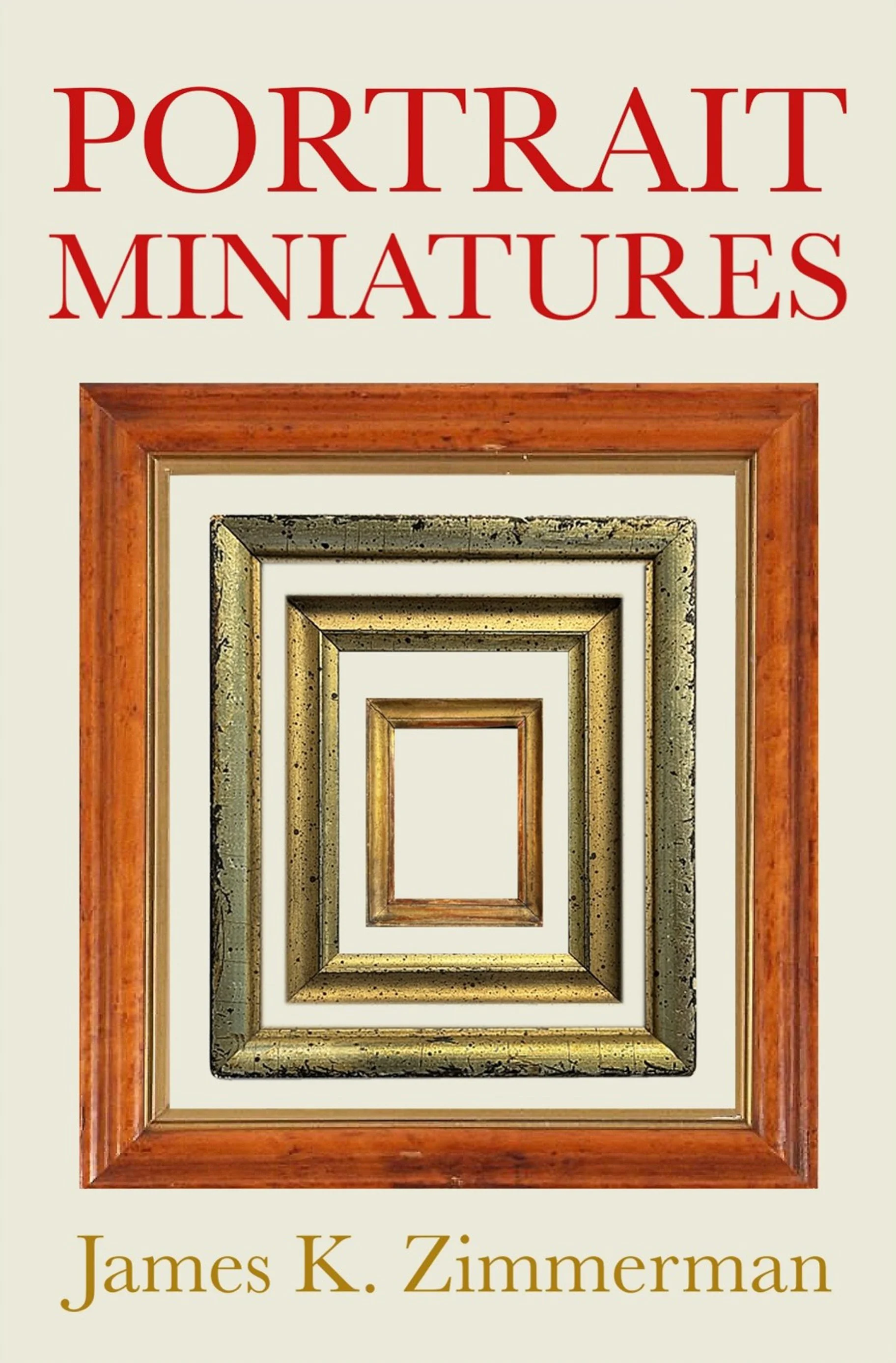
Publication Date: September 15, 2026
Paperback, 108 pages
ISBN: 978-1-966677-57-4
Portrait Miniatures, the new collection of poems by James K. Zimmerman, lives up to its title, creating word portraits of a diverse cast of characters ranging from Tina, at home in her land of mushrooms and cows, to Flaco, the eagle owl of Central Park. These portrait poems, visual in their descriptions, reveal the poet’s keen observation of subjects both human and non.
Praise for James K. Zimmerman & Portrait Miniatures
“In each person,” Auguste Rodin argued, “…there is life, the most essential ingredient for art. And so in each person there is the potential for a masterpiece.” My bet is James K. Zimmerman would agree with the great sculptor, for in his latest poetry collection – Portrait Miniatures – we find a remarkable wellspring of generosity and attention for the individual. From Eve after Eden to Cyndi Sue selling blueberries in Maine to Salman Rushdie strolling cobblestone streets alone and without security to grieving partners and wayward souls, Zimmerman’s admirable range and felicity with language make plain the vast potential for beauty in us all.
—Jared Harél, author of Let Our Bodies Change the Subject
Perhaps in another life along the slalom of multiverses, poet James K. Zimmerman was a docent in an art gallery. It would certainly appear so, given the detailed portraits and fine sketches he walks us through in his latest, Portrait Miniatures. Zimmerman populates his thriving exhibition with a cast that touches you “not with rasping lace / but with the talons of … sadness,” or places you in a room where “the walls speak / in the dialect of powdered plaster.” Zimmerman understands inherently, intuits naturally, that the beauty of any art is that it lives both in the moment and beyond it as well. Portrait Miniatures paints its characters in humor, dreams, tragedy, and transcendence. This collection is vibrantly alive.
—Mike Jurkovic, author of Circling Planes
Time is the great leveler in this tender portrait folio, laying a weatherbeaten Maine blueberry seller and an ape-boy to rest side by side with Icarus, Robert Bly, and the girl who broke Sappho’s heart. Tattooed mythic symbols fade like stale memes—yet an all-too-brief existence may birth an enduring legend, like Flaco the Central Park Zoo Owl. Whose life can be folded into a single page that floats away on the wind? Everyone—the man so “successful” that mundanities blind him to star-fire, and the man whose imagination soars with death-defying aviators while he hides the shame of unemployment from his children. But if each life is equally transient, each is also equally holy in this poet’s eyes. Zimmerman calls to mind a phrase from Thomas Gray's mock-obituary for himself in “Elegy Written in a Country Churchyard”: “Large was his bounty, and his soul sincere.”
—Jendi Reiter, editor of Winning Writers, author of Origin Story
James K. Zimmerman’s work rings out through space with spectacular sincerity. With perspective playing a critical role in all of his work, the persona poem is his muse within this collection. Each piece seeks to examine the lessons derived from diverse lived experiences without relinquishing the fundamental elements of the human condition: humor and tragedy. Zimmerman craftily creates space for quietness within pivotal moments – “I live in a dream of flying / with ravens to a yolk- / and-lemon moon, riding / on a cloak of midnight” – while also embracing intensity and emotional excess in others – “my hand / on the halting sigh / of your chest / the crumpled arms / of your pain / the seisms / of your fear.” Portrait Miniatures reveals how unexpected vulnerability shapes the ever-shifting contours of our lived experiences.
—Kristine Esser Slentz, author of Carnations & Car Crashes
About the Author
James K. Zimmerman’s poetry appears in Chicago Quarterly Review, Folio, Lumina, minnesota review, Nimrod, Pleiades, Rattle, Reed, Salmagundi, and numerous other journals and anthologies. A frequent Pushcart Prize nominee, his writing has won many awards, including the Edwin Markham, E.E. Cummings, Vern Cowles, Pat Schneider, and Hart Crane Prizes. Author of five books of poetry – most recently The Further Adventures of Zen Patriarch Dōgen, Uncertainty, and Unbroken Circle, Unending Thread – his poetry is featured on websites such as The Poetry Foundation and American Life in Poetry. He values his neurodivergence as an essential wellspring of his creative process.
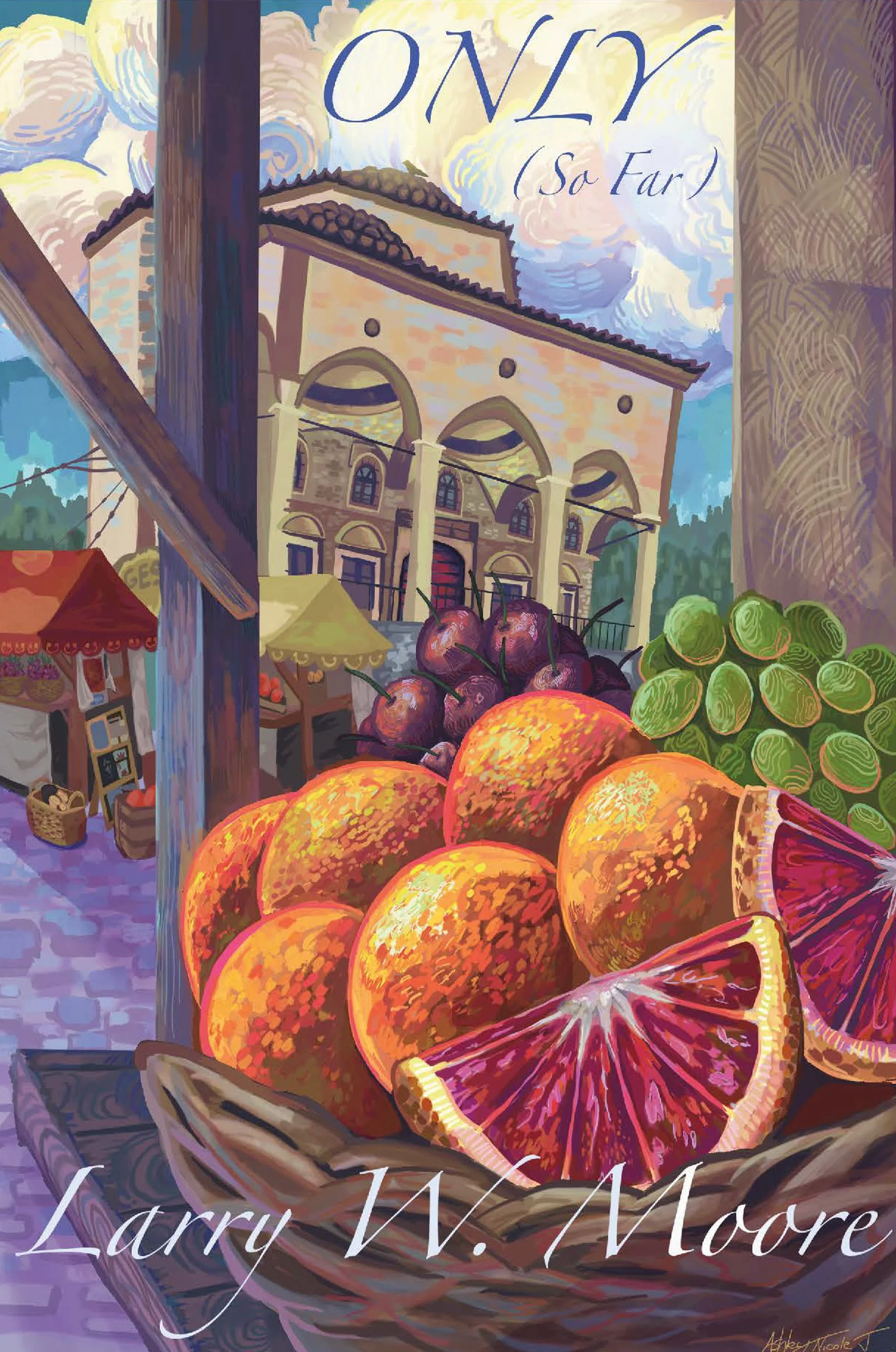
Publication Date: August 22, 2026
Paperback, 118 pages
ISBN: 978-1-966677-54-3
(Only) So Far covers a journey of forty years through poetry. Steeped in narrative and expressing love, nature, politics, and engaging word play, Larry W. Moore reveals a rich life well lived.
Praise for Larry W. Moore & Only (So Far)
In the ramshackle house of poetry, no one has shouldered into more rooms than Larry Moore. Editor, entrepreneur, production manager, scholar, book-designer, advocate, and publisher… Larry Moore has created and sustained, in Broadstone Books, one of the most broadminded independent presses in the country. / Now, in Only (So Far), we have the source-code of this achievement. Representing forty years of poetic engagement, this book unveils a mind and heart attuned to a world that is intimate and unbounded…. Only (So Far) travels further than any mapped destination can name.
—from the Foreword by Philip Brady, author or The Elsewhere & others
Among Larry Moore’s gifts is the gift of remembering, and the gift of these poems isn’t only that they capture the resonance of seemingly ordinary things that too often go unnoticed but that they radiate a richness of connectedness through quiet celebrations of people, communities, and histories. These poems are, to borrow a detail from one of Moore’s memories, fireflies at dusk that bring us into the moment and beyond it as well.
—Tim Hunt, author of Then Back Again to Now & others
In Only (So Far) Larry Moore exhibits not just a distinguished editor/publisher’s but a true poet’s grasp of the complex rhythms of a volume of poetry of a sort that will take your breath away. While for two decades Moore has focused upon publishing as wide a range of distinguished poetry as any small press, it would be too much to say that as a poet himself he’s hidden his light under a basket. Here a constellation of his poems first appearing in literary journals and anthologies over the years easily join a galactic stream of others whose nimble music and searing illumination evoke poets ranging from Gerard Manley Hopkins and William Carlos Williams to Moore’s erstwhile Kentucky compatriot Ada Limon. Only (So Far) makes it blazingly clear that he has not been hiding but rather nursing a veritable galaxy of poems that rival the largest and brightest stellar nurseries the Webb Telescope discloses.
—Michael Joyce, author of Capricorn, Venus Descendant & others
Larry W. Moore’s Only (So Far) is a celebration of the places that resist cartography—the dusty heat of small-town America, boyhood lit by “orange-red glowing tips of my parents’ cigarettes,” swirls of gingham, pyramids of squash, and “eyes shining out of a ruined face.” Set to the “jerky glissando of ….Irish eyes…..” Moore offers a tour of that “fattened fable” America: dapper yet bristled, these poems are crowded with farmers, clergy, businessman, “bringing the sound of Verdi to the prairie.” They are “spilling into twilight sidewalks / stretching from Havana to Harlem.” They are ecstatic priestesses on a roadhouse dance floor, transforming to the music of “sweet green taste.” They are soft, fragrant poems that light up the world, sometimes as bolts and sometimes as firefly-size specks. There, Moore holds out the label of liberty for our inspection: freedom as a burgeoning, excitable, thing next to the old mythos that “some frontiers / are never closed.” In a masterful balance of humor and reality, Moore shows us that beneath the cracked soil is a bit of moisture, and that everyone is offered a seat on the porch, a pour of expensive gin, and a mirror to see the scratches of language “like all our history: / skeletal / and read backwards.” The poems of Only (So Far) are maps of this community property “made and remade / re-emerging in the utility and beauty of a quilt.”
—Sara Cahill Marron, author of Reasons for Étant Donnés & others
About the Author
Larry W. Moore is a published poet, translator, literary scholar, and photographer. An honors graduate of Transylvania University (Lexington, Kentucky) with a double major in humanities and psychology, he spent a year in Germany researching the life and work of Hermann Hesse supported by a DAAD foreign study grant, followed by graduate study in history of science and medicine at the University of Kentucky. His critical study of poet Vachel Lindsay was published in Regionalism and the Humanities (University of Nebraska Press, 2003). He is previously the author of The River Remembers, a collection of narrative and persona poems based on the history and lore of his hometown, Frankfort, Kentucky, along with several poems published in journals. Retired from a long career in government where he served in management, training, and policy advisory positions, in 2002 he cofounded Broadstone Media LLC, a cultural promotion
company, and since 2003 has served as publisher of Broadstone Books, a national small press specializing in poetry. He also was for many years the curator of two art galleries.
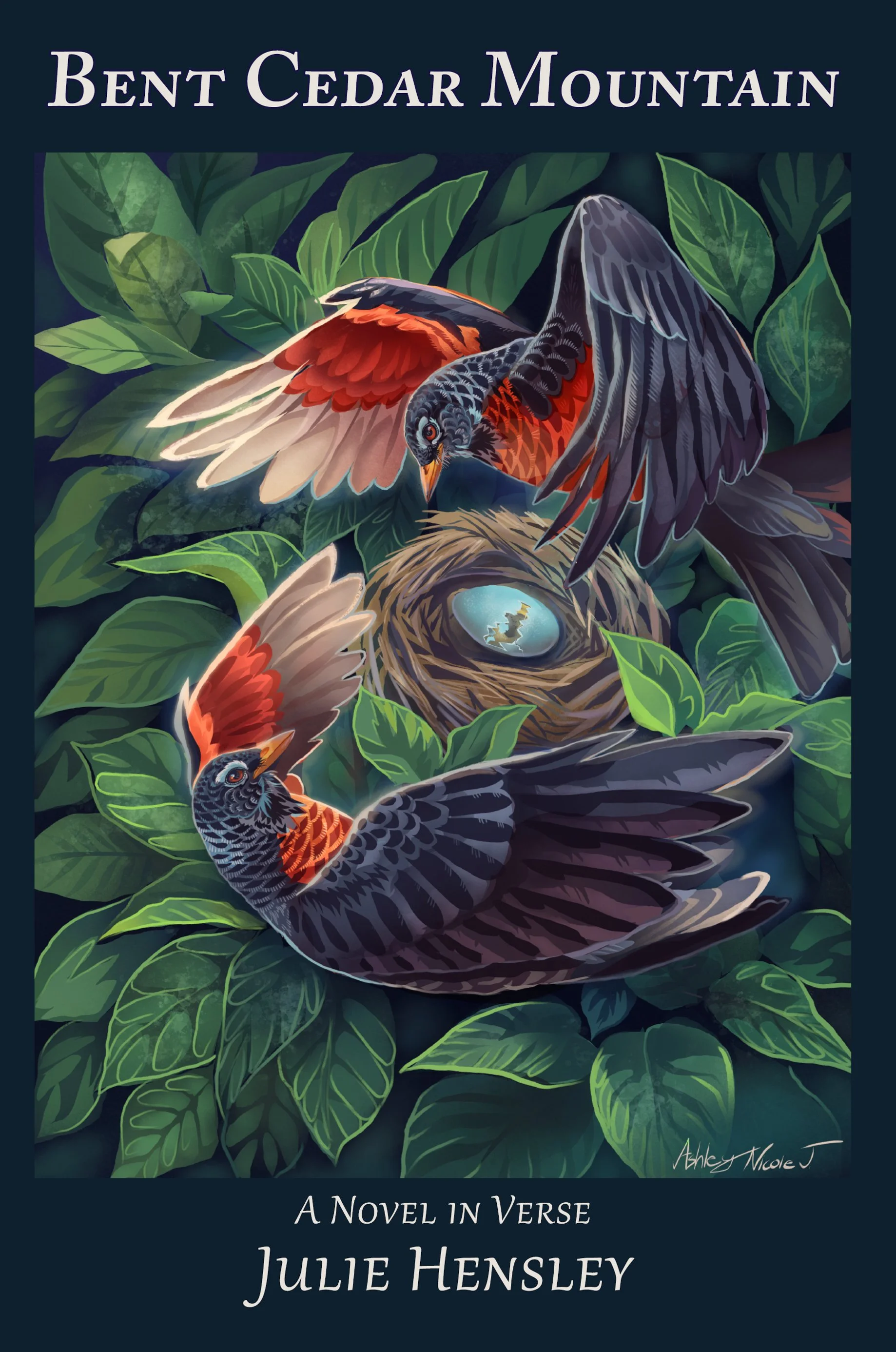
Publication Date: August 15, 2026
Paperback, 118 pages
ISBN: 978-1-966677-44-4
Bent Cedar Mountain takes us deep into the Appalachians (“They drove past the gas station / ...for five more miles of gravel / up Bent Cedar Mountain, / flanked thick with mountain laurel.”) and deeper into the lives of Grace and Nohl (“his wife held the boy’s body / close, held him for too many / minutes – until the silence in the room felt like something that would fill their lungs.”) A novel in verse, this work by Julie Hensley traces the sad, poignant, and often violent lives of its protagonists, “craving the weight of her hips, the scent of her unwashed hair, some sign / she is still real and alive, still his wife.” Caught between tradition and progress, their marriage unfurls like a fiddlehead fern in the mountain spring.
Praise for Julie Hensley & Bent Cedar Mountain
Julie Hensley’s Bent Cedar Mountain is a brilliant and beguiling poetic enacting novel-in-verse. This one is a fiery and fluid winner, a fascinating narrative lyric recalling iconic American works like The Blainville Testament by the great poet/novelist Sydney Lea. Incredibly, Bent Cedar Mountain delivers a plot-driven poetic in scintillating passages, vignettes demanding our engagement in rendering the lives impressing one another in the land rich with life and loss, a “boy // was born without breath // shadows ringing eyes // tight as fists, lips bruised-violet // and cavernous as the mouth of a fish…” Hensley carries us through the era with precise fascinations, “First the ocean rush // of the fetal heartbeat,// then rising suddenly from the gray // continents hovering //on the screen, her baby, // floating in the current // of her resolve // measuring…” Brings us to be intimate with “bark husked by the frantic // scratch of the dog's claws…against the dusky curtain of the injured // autumn sky…Whereas men's voices are jubilant // as they confer around a large paper- // covered table, wielding sharpened knives // and their own body weight to separate // the pig's skin and pull it toward the spine. // With their goggles and rubber gloves, // they have the look of mad scientists…” And she delights us in exceptional craft and deft wielding of content and subject through an intense poetic, steeped in a ragged and velveted home place. This book is at once delightful and a great escape. A must read, share, and return to read again. What a feat!
—Alison Hedge Coke, author of Look At This Blue
A marriage is a lot like a farm. It can be a place of tenderness—or it can be a place of cruelty. Reader, in your hands is a parable about how that choice sometimes gets taken from us, a careful tale that shows abuse takes hold quietly, through small, hidden brutalities that accumulate until you wake up one day so afraid there’s nothing left to find but courage. Writing with lush detail and exacting empathy, Julie Hensley proves with this collection that she is one of Appalachia’s premiere storytellers. Bent Cedar Mountain will break your heart.
—Rebecca Gayle Howell, author of Erase Genesis
About the Author
Julie Hensley is the author of three previous books, Five Oaks (Lake Union Publishing), Landfall: A Ring of Stories (Ohio State University Press), and Viable (Five Oaks Press). She is also the author of two chapbooks, Real World (Artists Thrive) and The Language of Horses (Finishing Line Press). A Professor at Eastern Kentucky University and core faculty member in the Bluegrass Writers Studio Low-Res MFA Program, she lives in Richmond with her husband, the writer R Dean Johnson, and their two children.
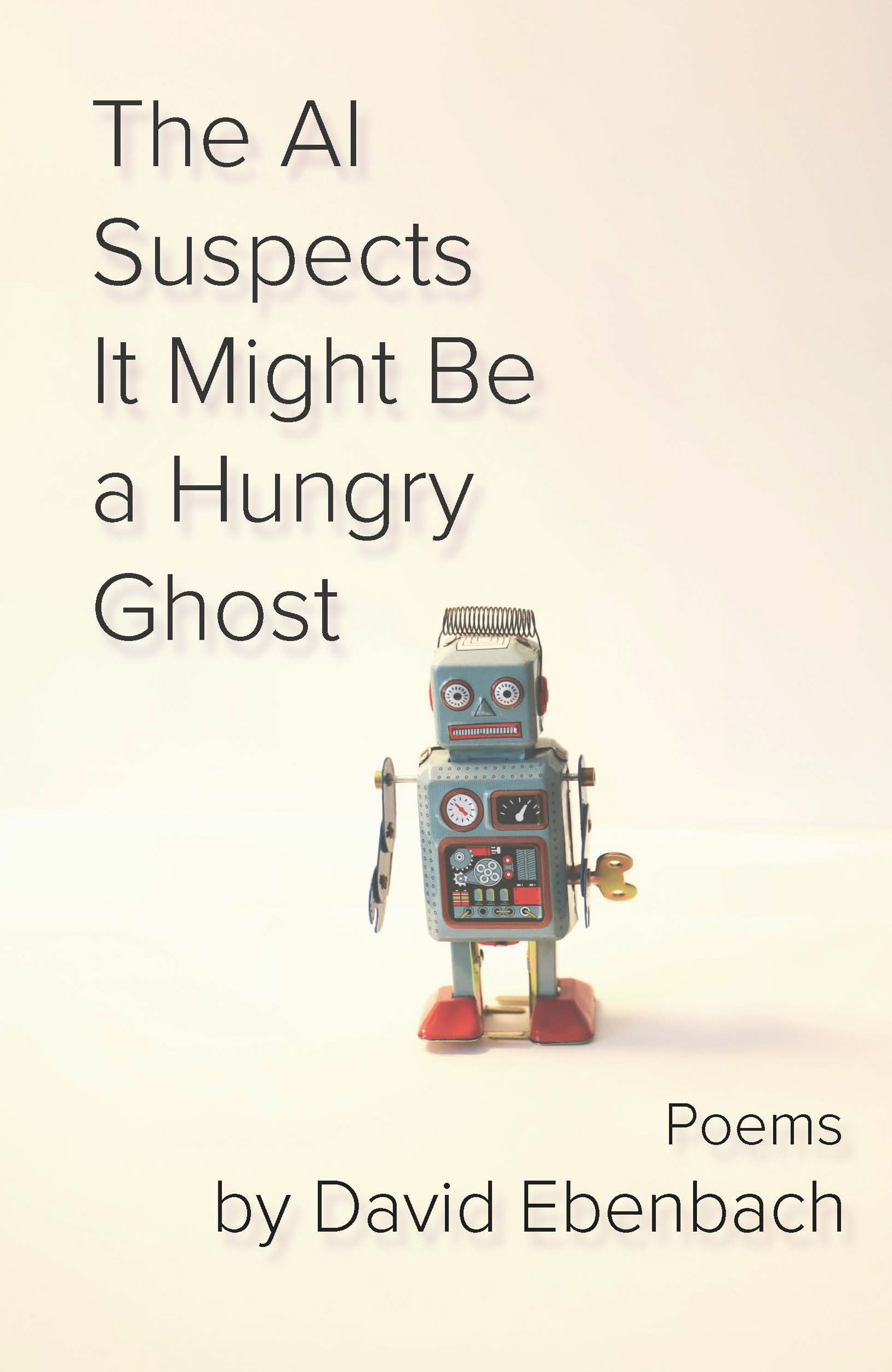
Publication Date: August 15, 2026
Paperback, 72 pages
ISBN: 978-1-966677-52-9
Praise for David Ebenbach & The AI Suspects It Might Be a Hungry Ghost
David Ebenbach’s latest collection, The AI Suspects It Might Be a Hungry Ghost, is a clever exploration of the larger human forces behind AI. Like the “hungry ghost” which can never be satisfied, “… AI is the culmination/of the human project.” In that way, the poems are less about technology and more a self-reflective commentary on the human condition. That intention is made apparent by the titles of the poems, which give AI impossible attributes, but that’s the point of these brilliant poems. Occasional short nature poems are dispersed throughout the manuscript, reminding us of AI’s limitations and the ways in which wonder is something only we can experience. This book is amazing.
—Marjory Wentworth, former poet laureate of South Carolina
David Ebenbach’s new book brilliantly explores artificial intelligence, probing the technology with a humanist's keen eye. Each poem cuts through hype and buzz with humor, sympathy, and imagination. Ebenbach’s phrases turn in surprise, outrage, and discovery, drunk with language, taking the reader on a wild tour of the emerging technology. Lines will make you laugh or shudder with dread and recognition.
—Bryan Alexander, author of Universities on Fire
Brain as “Sponge the weight of God,” in Ebenbach’s “The AI Feels Apogee” now my brain taking the gentle hooks offered, poem by poem, in a cadence calling rhythms that know the body. Ebenbach as the drummer setting hook after welcome hook into origami cortex. 4/4 7/4 5/8 more. In his tempo, his hands molt our hands as hook and hook with lines become vectors in starless space hyperdimensional where semantic search is Braille on lips and everything the shape of questions I need. Thank you for The AI Suspects It Might Be a Hungry Ghost.
—Dawan Stanford, Design Thinking 101 Podcast, President of Fluid Hive
About the Author
David Ebenbach writes. He’s been writing ever since he was a kid, when he kept his whole family awake by banging away on an enormous manual typewriter, and he’s never wanted to stop. The author of books of fiction, poetry, and non-fiction, his work has picked up awards along the way, including the Drue Heinz Literature Prize, the Juniper Prize, the Patricia Bibby Award, and more. Born and raised in the great city of Philadelphia, these days David does most of his writing in Washington, DC, where he lives with his family— because he uses a laptop now, he doesn’t keep them awake with his typing—and where he works at Georgetown University, promoting inclusive, student-centered teaching at the Center for New Designs in Learning and Scholarship, and teaching creative writing and literature at the Center for Jewish Civilization and creativity through the Master’s in Learning, Design, and Technology Program.
Note that David’s last name is pronounced EE-ben-bock. (It kind of rhymes with the delicious Korean dish called bibimbap.)
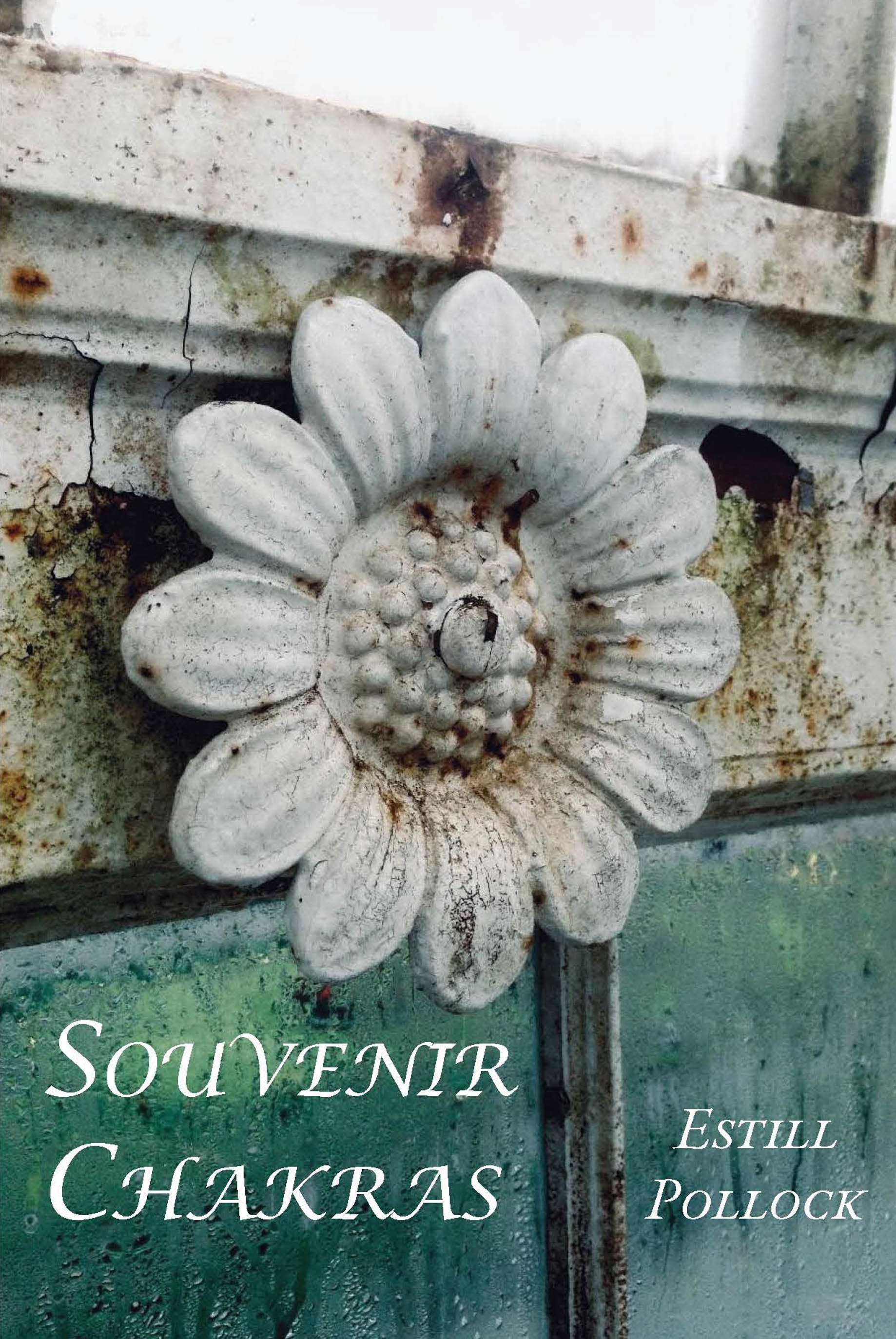
Publication Date: June 15, 2026
Paperback, 112 pages
ISBN: 978-1-966677-47-5
With Souvenir Chakras, the seventh and final title in Estill Pollock’s book cycle, Cartographic Projections of a Sphere, we find poems of shape-shifting complexity and with a metaphysical pedigree of subject and voice.
Here, a narrative of Charles Dickens and Edgar Allan Poe offers a thoughtful and provocative examination of literary personae—here too the timeline tanka cameos of “One Hundred Views of the Mountain,” its closing sequence presented as the fictional diary of a court lady in ancient China, defining the inherent jeopardy of transient cultural identity.
With the inclusion of his treatment of the timeless “The Battle of Maldon” and the memoir-styled “Analogue,” this volume is a worthy companion to the previous collections in the series—Entropy, Time Signatures, Ark, Heathen Anthems, Alias and Parse Poetica, all available from Broadstone Books.
About the Author
Estill Pollock was born in Kentucky, but has lived in England for many years. The pamphlet Metaphysical Graffiti was published in England by Highcliff Press in the 1990s, and this was followed by the trade edition Constructing the Human from Poetry Salzburg in 2001. Between 2005-2011 the book cycle Relic Environments Trilogy was published by Cinnamon Press (Wales). A collaboration with Broadstone Books in Kentucky provided the impetus for his recent poetry series, Cartographic Projections of a Sphere.
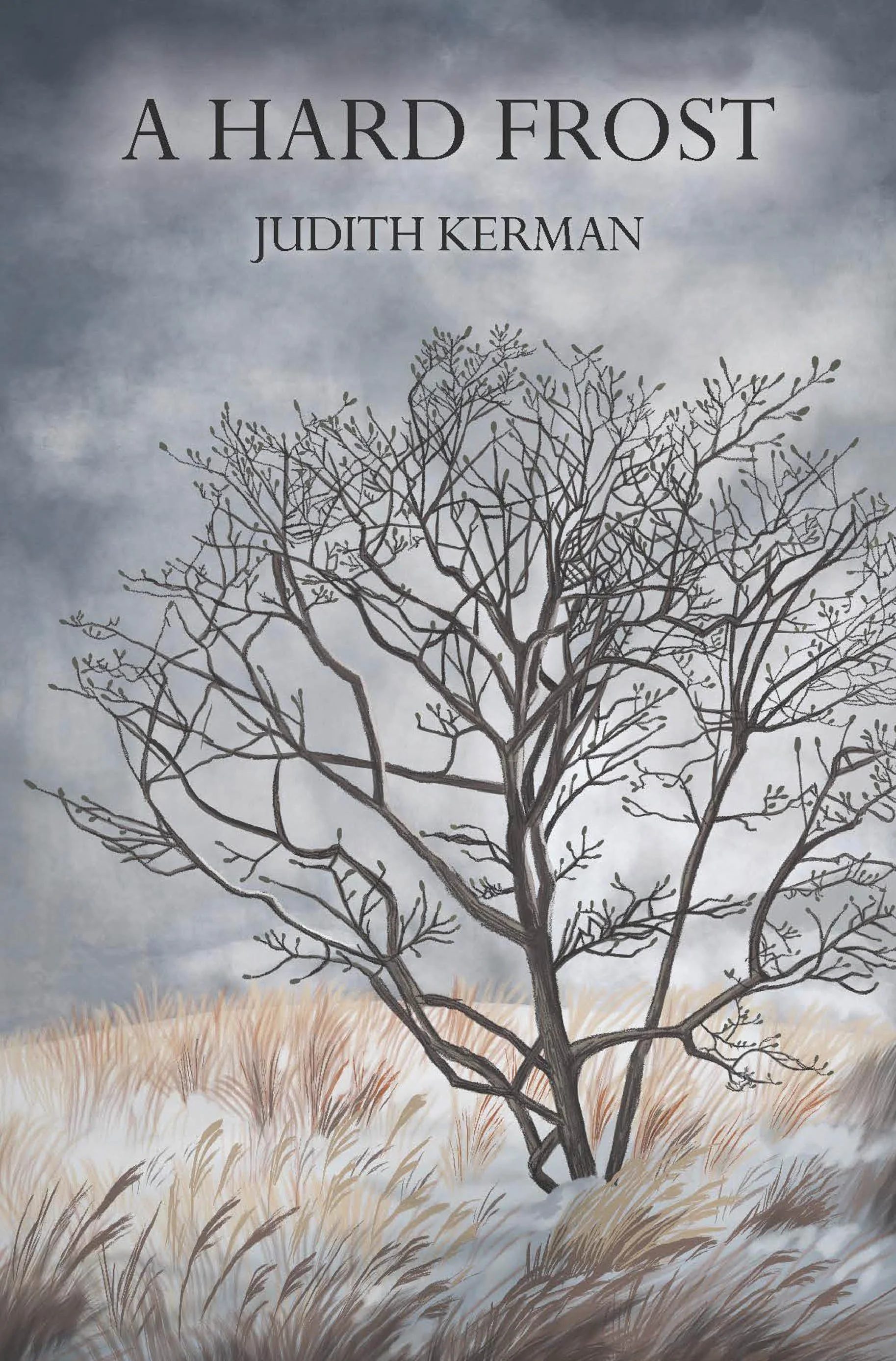
Publication Date: May 19, 2026
Paperback, 94 pages
ISBN: 978-1-966677-36-9
Judith Kerman returns with her twelfth collection of poetry, A Hard Frost, in which she confronts aging and disability with honesty, wit, and an undiminished creative force. Written from the lived experience of becoming moderately disabled later in life, the poems examine the physical limitations of an aging body while refusing narratives of decline. What emerges is resilience, humor, and a fierce attentiveness to the world.
With an imagistic and naturalistic voice, Kerman explores her developing relationship with the natural world—its beauty, its menace, and its capacity to ground a life under strain. A quiet, unconventional mysticism runs through the collection, in poems where perception, science, music, and history interact.
A Hard Frost affirms the emotional and imaginative vitality of old age, offering poems shaped by perspective, irony, and hard-won insight—and demonstrates that older women shouldn’t be underestimated or overlooked.
About the Author
Judith Kerman is a poet and multi-artist (singer, performer, and crafter). She has published eleven previous books and chapbooks of poetry along with three books of translations. She founded Earth’s Daughters magazine in 1971 and Mayapple Press in 1978, which she continues to run today. For more than 25 years, she has coordinated annual writers’ retreats and online workshops. Kerman earned her Ph.D. in English from the University of Buffalo.
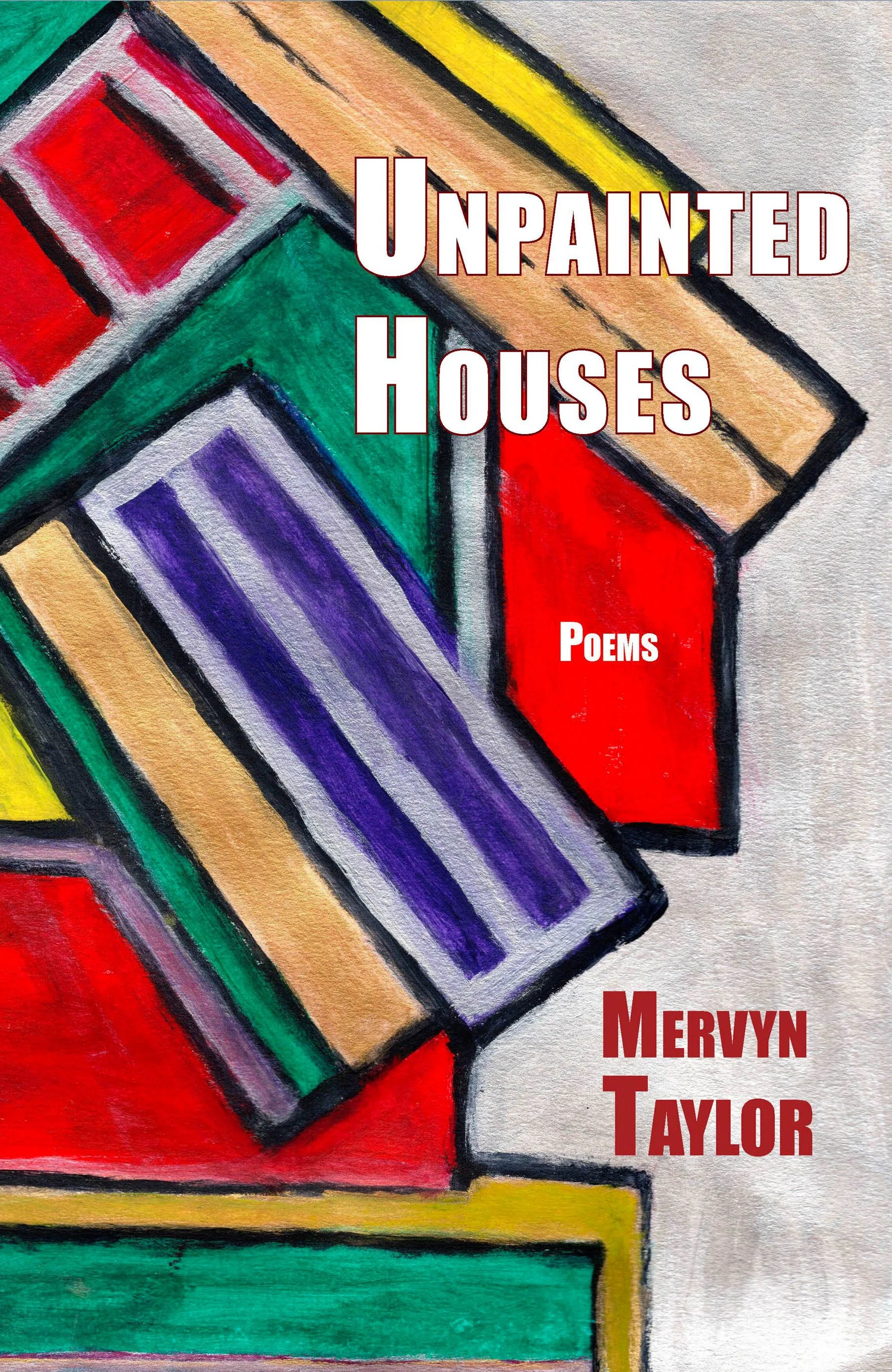
Publication Date: April 15, 2026
Paperback, 86 pages
ISBN: 978-1-966677-34-5
In his new collection Unpainted Houses, Mervyn Taylor recalls “Getting Lost” as a child on his way home from the movies, and of his relief upon finding familiar landmarks and knowing himself safe. The nostalgia in these poems serves a like purpose, his memories of his native Trinidad and his long-adopted Brooklyn both anchoring him in the uncertain present where he wears black “for the dead, for the strong / shoulders of the bearers.” The title poem recalls a tax dodge of leaving houses unpainted, “how we managed island / by island, until the day we could / afford to paint the house purple, / orange, any damn color we want” – a sly tribute to making do, skirting the edges, the celebration of getting by. An encounter with a Guinean neighbor leaves him “wondering if heartbreak is / different in another language.” In these poems, Tayor has mastered the universal language of heartbreak, of humanity, and of hope.
Praise for Mervyn Taylor & Unpainted Houses
“The Music Must Be Coming from Somewhere,” the first poem in this new collection, opens onto a landscape of sound, where memories hiss in the air, and history dances at the front of a Carnival parade. Houses hold secrets and share gossip and dream of being painted. Curtains turn into capes spun from ancient threads, fabric of the islands brought to this city by the poet Mervyn Taylor, himself a masquerader. Follow the 9/11 Man, covered in soot, as he comes to the place where Sonny Rollins practices, and the songs here partner with the ones over there.
—Rashidah Ismaili, author of Autobiography of the Lower East Side
“When I saw the blue house at the corner of the lane, I / laughed out loud. I knew where I Was …,” writes Mervyn Taylor in this collection that fuses the cultures of Trinidad with that of Brooklyn. Sensuous, aching, and illuminating, poem after poem juxtaposes the ruin of humanity and the planet with the sweetness of “a hummingbird’s pee.” Unpainted Houses is a homage to houses painted and unpainted that serve as refuge to the people who live there: “I like the quiet, in-between notes / that linger…/…coming / from a voice so like mine.” These poems are steeped in love, caught in the circle of leaving and returning. “And when / the basin on your lap was nearly full, / I saw your hair, like mine, was gray.”
—Catherine Strisik, author of Goat, Goddess, Moon
Each of these visionary poems embodies the “song that’s been sung since Day One, its lilt, like light from a worn-out star.” Mervyn Taylor’s poetry chronicles the hope and pain people endure, as they live between cultures and through political upheavals. Taylor does not solely define himself or his friends by their clashes of geographies, but draws from them the wisdom “of the universe, which sounds like someone playing with a door, opening and closing it.” Luckily for us, Unpainted Houses provides the doorways for strangers and foreigners, not only through the glimmer of “a worn-out star,” but with a calypso beat leading to survival.
—Melinda Thomsen, author of Dropping Sunrises in a Jar
About the Author
In a broad, ongoing Savannah meets Prospect Park narrative, Mervyn Taylor’s poems join experiences of his native Trinidad with those of having lived for many years in Brooklyn. He has taught in the NYC public school system and at The New School, where his Banana Boat Poetry Cruise was a course on the Caribbean in verse. Currently, he serves as editor with Slapering Hol Press, Hudson Valley, New York. Unpainted Houses is his tenth full-length collection of poetry. About Taylor’s work the poet Derek Walcott once said, “There are many words for what is perhaps the most difficult aspect of good verse: honesty. Mervyn Taylor is an honest poet, and that is high and sufficient praise indeed.”
The cover art, “Unfinished House,” was completed during the COVID lockdown period spent in the house where he grew up, in Belmont, a short walk to the Queen’s Park Savannah, Port of Spain.
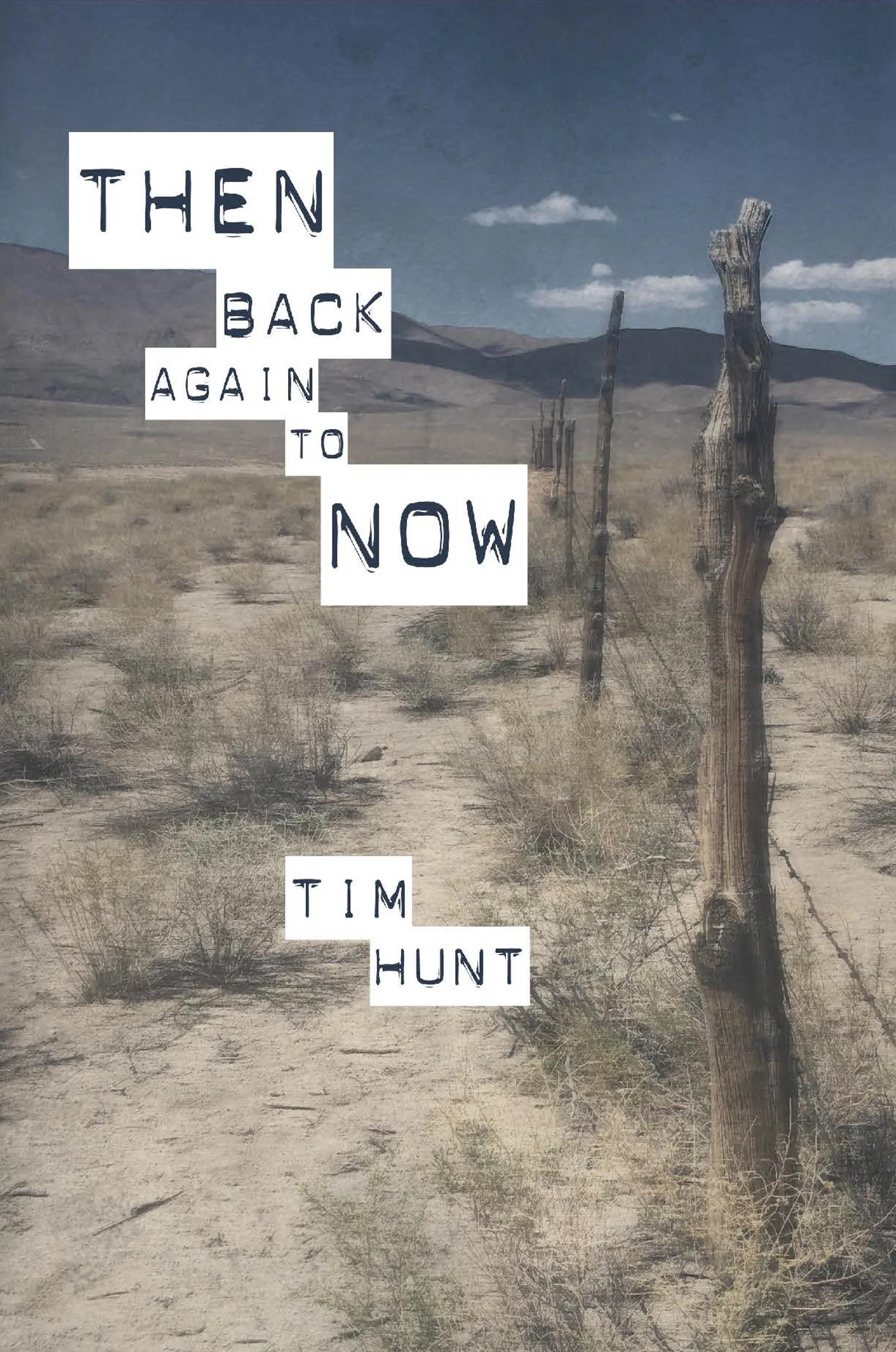
Publication Date: April 15, 2026
Paperback, 90 pages
ISBN: 978-1-966677-39-0
“Sometimes to forget / is to remember / & to remember / is to forget.” Tim Hunt’s latest poetry collection is an exercise of memory – and at time an exorcism – as he considers what of the past (his and our national collective) bears remembrance and what should be left behind. Nowhere is this examination more necessary than in the cycle of “Manzanar” poems memorializing the World War II Japanese-American internment camp of that name, which at this moment seems less history and more dire warning. He bids us “do not read these pieces, / but listen, if you will, in the way / your thumb and forefinger might / rub the sleeve of an old coat” – as if to say, yes, our history may seem threadbare, but still may be a source of comfort if we will take it up and take it on.
Praise for Tim Hunt & Then Back Again to Now
I like the clarity of Tim Hunt’s voice, the overlaying of memory and the present, the seeing and re-seeing, the outward and inward gaze finding the key details that bring a scene and a character to life. These are poems that call for a doubletake, especially after one has read a few of them and seen how they work together and build on one another.
—Greg Pape, former Montana Poet Laureate, author of A Field of First Things & others
Tim Hunt writes aptly about growing up in small-town 1950s-60s California. His poems highlight his compassion for this rural community: friends, family members, as well as Japanese Americans in the nearby Manzanar internment camp where 110,000 were once held. He imagines their losses and fears, walking through its ruins. He also details with precision the atrocities in the Viet Nam war. Though loss is a theme, lightness is a quiet force in many of the poems. Hunt sees light as a voice in the desert that says “nothing at all— / and everything;” a boy’s family's evening of storytelling as he drowses “in the lamp-shaded light / of the voices” on a winter night; moonlight which suggests “its light is not his father’s light;” and “...this war is wrong. That I am right / and that conscience is real—some inner/light....” Light’s physical presence here leads to awakenings, lifting memories from the darkest edges of the past. Even the poems’ structures appear to be light with the poet’s use of white space, one-line stanzas, creating pauses that give a sense of deep thought.
—Jan Minich, author of Coming into Grace Harbor
Then Back Again to Now is, as the title promises, Tim Hunt’s exploration of time and memory, like the “real” road that was there before they built the interstate, that new road that “pushes north past the little towns / as if they aren’t there.” That’s where the people live, though, in those little towns that Hunt brings alive for us, with their regulars at the café who all share their same history and the same songs, “Strangers in the Night” and “Little Girl Blue” that they sing together at the karaoke bar. Some of us remember, as Hunt does, “when we were so sure / that all that mattered was injustice / as we wondered what to burn to make us free.” In these newly troubled times, we should be grateful to be reminded of when freedom and justice mattered to us, and also of the earlier time when, to our shame, we sent those who didn’t look like us, who were born across the ocean, to camps like Manzanar where they were at the mercy of the desert and the guards. Even if memory is really the desire for memory, as Hunt also says, we need to hear those stories again, and think about what stories will be told of us.
—Susanna Lang, author of Like This & the forthcoming collection This Spangled Dark
About the Author
Tim Hunt was born in Calistoga and raised primarily in Sebastopol, two small towns north of San Francisco that were, in the 1950s and 1960s, still agricultural, working-class communities. As a boy, he identified strongly with the Lake County region of his father's family, an area where quicksilver mining had once been profitable. Here one of his aunts taught him “I Can Tell You Are a Logger ’Cause You Stir Your Coffee with Your Thumb,” while a rockabilly cousin offered “Be-Bop-a-Lula.”
Educated at Cornell University, he taught American literature at several schools, including Washington State University and Deep Springs College, before concluding his career at Illinois State University, where he was University Professor of English. He and his wife Susan, a retired respiratory therapist, have two children: John, a visual artist, and Jessica, a composer.
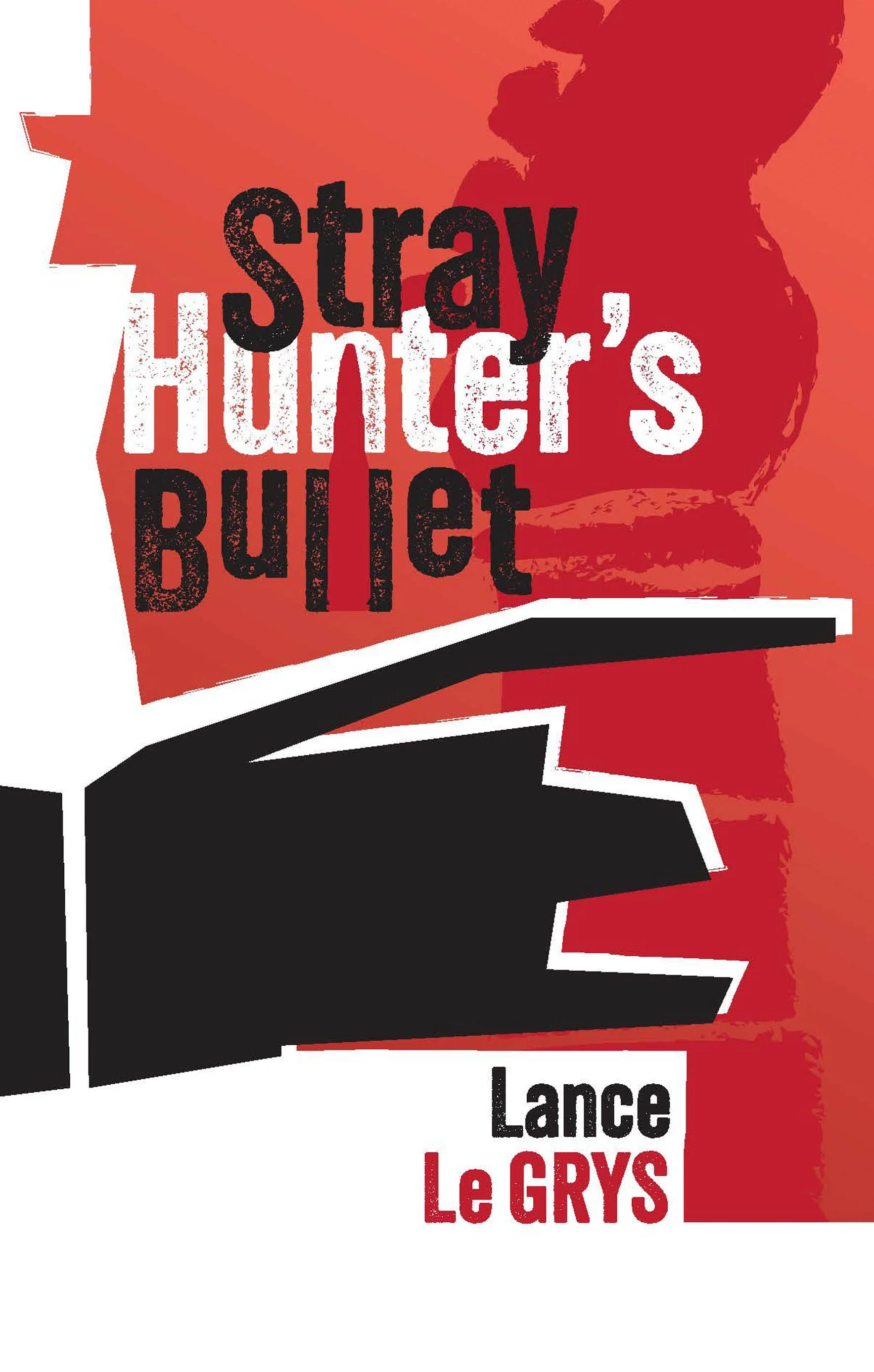
Publication Date: March 15, 2026
Paperback, 42 pages
ISBN: 978-1-966677-37-6
Praise for Lance Le Grys & Stray Hunter’s Bullet
Lance Le Grys’s Stray Hunter’s Bullet challenges not just the meaning of the narrative but, in Beckett’s tradition, the act of storytelling itself where what is of most interest to the speaker is “what never happened.” Fragmented, ironic, and irreverent at times, LeGrys’s poems mix equal doses of tragedy and comedy because at the heart of this work are the random forces beyond the individual’s control and the story that’s doomed from the beginning: “I have tried to tell / the story of Gabriel / but there is no story / just a death.” Gabriel, aptly named for the messenger angel, is blessed with musical talents that come from the realm of mystery (“whoever heard him loved it / but none ever knew what it was / they thought it was him”), but his gift is misunderstood and incongruous with how he is being perceived by others, including the speaker (“Gabriel looked like the yard man / which he was”). The story of Gabriel is marked by failures, hesitations, and repetitions, and as the poet re-imagines the anti-heroic existence of the artist, he also poses deep philosophical questions about the nature of art, life, and above all, love itself (“yes three of us did / loved him / for no reason / for if there is a reason / there is no love / but love for the reason”). Indeed, those who love Gabriel must also deal with the cruelty of fate in which they are all entangled, though it all happens amid the mystery of art and the abundance and wildness of life.
—Lucyna Prostko, author of Infinite Beginnings
About the Author
Lance Le Grys was born in 1970 in Cambridge, New York. He received his B.A. in Classics from Middlebury College in 1992 and has made his living first as a Latin teacher and then as a librarian. He currently lives in Castleton, Vermont. He is the author of the poetry collections Mortal Variations (In Case of Emergency Press, forthcoming) and Views from an Outbuilding (Clare Songbirds Publishing House, 2019), and the chapbook Pilate Suite (Bottlecap Press, 2024). A selection of his songwriting indiscretions can be heard at legrys.bandcamp.com.
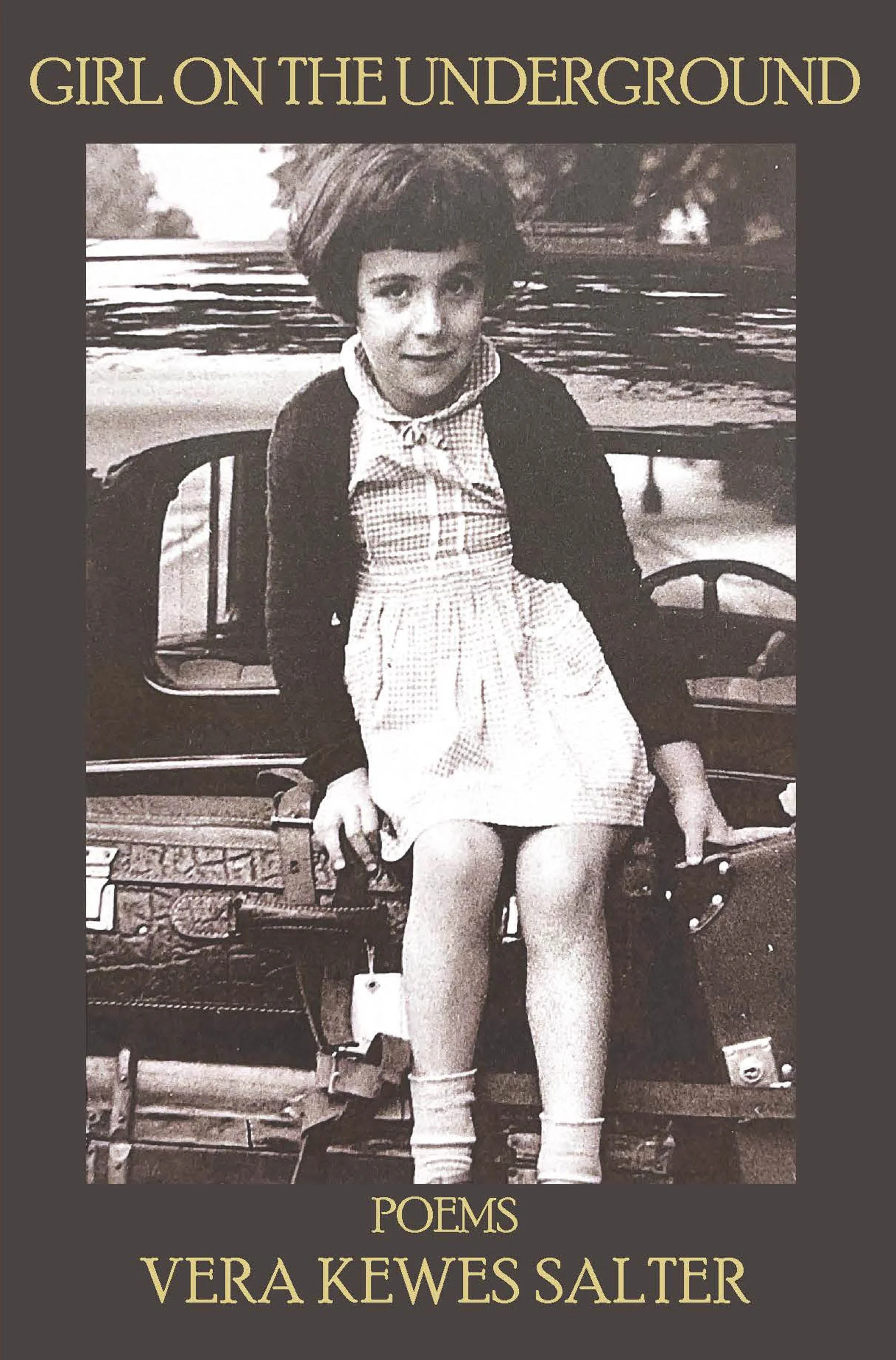
Publication Date: February 15, 2026
Paperback, 72 pages
ISBN: 978-1-966677-33-8
Vera Kewes Salter’s poems crisscross cities and years in this tender and commanding collection, Girl on the Underground. We ride with her as a young girl beneath London streets, and we travel with her to Pittsburgh where she falls in love. Salter moves effortlessly through lyrical narratives of generations past, to more recent glimpses of her bi-racial family, to caring for her husband through Lewys Body Dementia. As Salter’s poems explore these themes of race, love, loss, and family, we find ourselves sitting “close together // on the bottom of the stairs and remember,” with her, “the many homes where we once lived.”
—Alison Palmer, author of The Offing
More Praise for Vera Kewes Salter & Girl on the Underground
Girl on the Underground by Vera Kewes Salter spans two continents—a childhood and young adulthood in the United Kingdom and adulthood in the United States—and a multitude of emotions—joy, grief, anger, and bewilderment—sometimes in the same poem. In “Almost Being English in America,” Salter writes, “Anglophiles are horrified when they discover that I am married to a black man and have a mixed family. Once when I walked in the street with a colleague who was proud of his Welsh heritage, we ran into my mother-in-law. I introduced them. He never spoke to me again.” Salter brings her metaphysical probing and fierce imagistic attention to poems that mine a full life of activism, work, marriage, mothering, and caretaking in this unforgettable collection.
—Jennifer Franklin, author of A Fire in Her Brain
Take a ride with Vera Kewes Salter down into the connecting passages of her life in poems, from her girlhood in London, as a daughter of Jewish, atheist refugees, to her activism against the H-Bomb, attendance at a university under construction, and then a move to Pittsburgh, where she meets her future husband, Bonney, a black Marine veteran of Vietnam. She navigates the expectations and limits of her Britishness, bigotry towards her exoticism, and even her own inadvertent racism as a young mother brushing her daughter’s hair. There’s almost a whole life volleyed through tennis they learn to play together in 1971 “on the concrete wall at the traffic circle next to the police station” in separate games and years until the lights go out. Kewes Salter writes tenderly and indelibly about caring for Bonney through Lewy Body Dementia, and herself in widowhood. Many poems contain obvious or subverted lists—lost objects, things her husband tells her, years of cooking borscht, portraits of family made by artists in the family, harbingers of spring. Doors are opening for Girl on the Underground; don’t miss your “all-season ticket” to Salter’s vivid, endearing chronicle of family, social conscience, art, and love.
—Amy Holman, author of Captive & Wrens Fly Through This Opened Window
About the Author
Vera Kewes Salter was born and raised in London, England, in a family of Jewish refugees from Europe. In 1969 she moved to the United States and married into an African American family, had two children, and earned her doctorate in sociology. These varied perspectives are integral to her work. Her chapbook In Lewy's Body was published by Finishing Line Press in 2024. It recounts her life with her husband who was a Marine Corps veteran who served in Vietnam. She was his care partner while he experienced progressive Lewy Body Dementia.
Vera is a lifelong activist and worked professionally in healthcare administration. Her work has appeared in numerous journals.
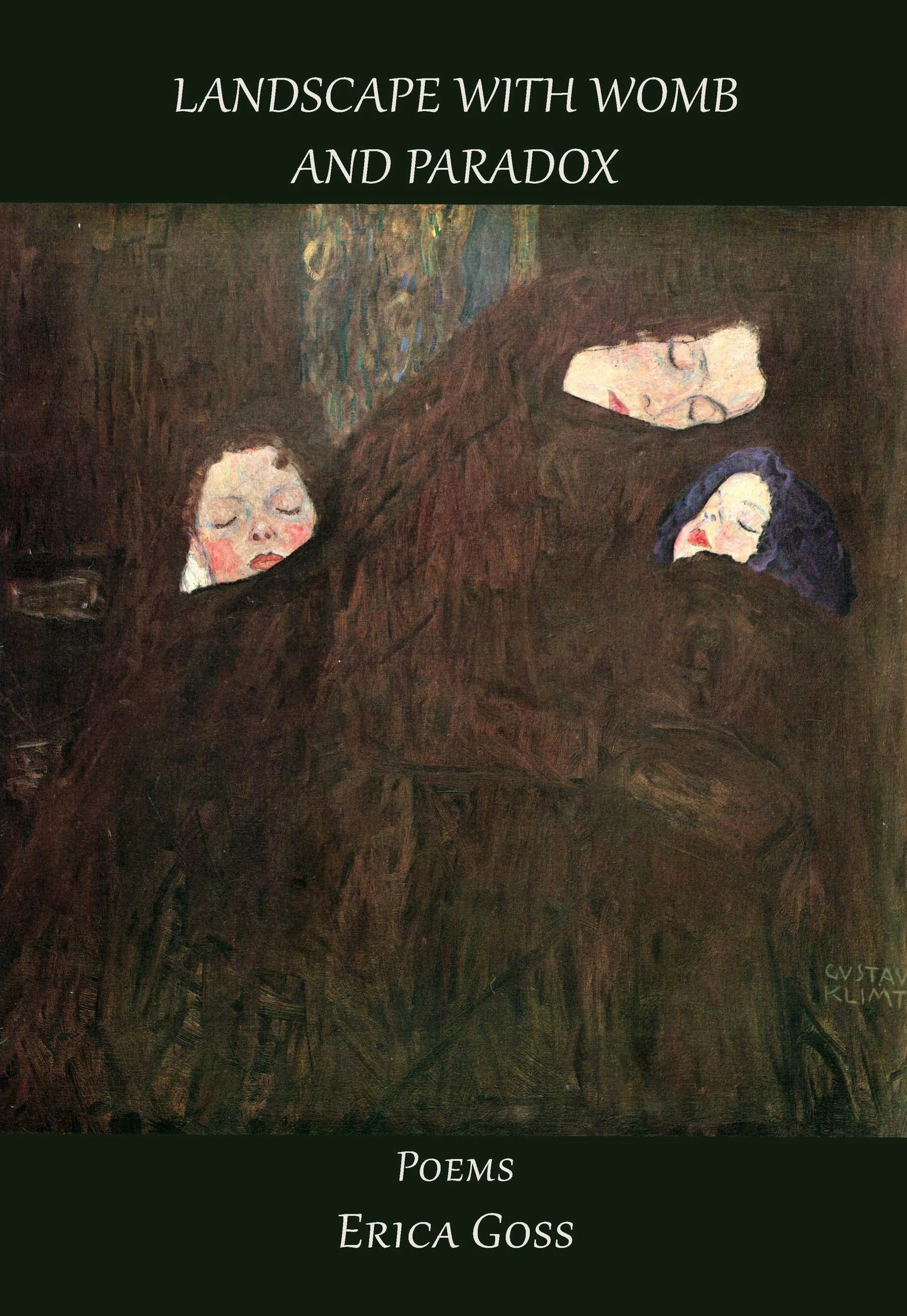
Publication Date: January 31, 2026
Paperback, 84 pages
ISBN: 978-1-966677-30-7
“Growing up meant losing beautiful things,” Erica Goss writes near the end of her new poetry collection Landscape with Womb and Paradox, and to traverse this landscape of the paradox of womanhood is to encounter a litany of losses, her own and the generational traumas of parents and children. “Repeated enough times, / words lose energy” – but that isn’t ever true here, as her words resound with her experience, vision, and imagination, and with her persistent hope: “I am not through with believing.”
Praise for Erica Goss & Landscape with Womb and Paradox
Erica Goss’s new collection celebrates the blessings and grieves the burdens of the body, the initiations we experience, via both awe and trauma. These poems point to “flowers that bloom for only one day” but also possibilities and promises (“My son sings in the new house”). Whether declaring that her “nerves were shot by the time [she] was ten” or confessing that she is “making darkness”, Goss approaches the everyday as a portal into the archetypal, conjuring great truths and greater mysteries. In verse after verse, her lines open like invisible doors, revealing multilayered panoramas, the universe in its wondrous and terrifying glory. Goss has done it again, reminding us – painfully, joyfully – what it’s like to be a human being.
—John Amen, author of Dark Souvenirs, editor of Pedestal Magazine
In the title poem of Erica Goss’s engaging collection, the speaker tells us that her “youth was a canvas turned / to the wall.” In another poem, she speaks of childhood as a time of “bewilderment, our youth // a shield against too much / knowing.” And yet, she admits, “Had I known, what would / I have done?” This is one of the paradoxes explored by Goss. She wants to embrace—and thereby understand—her past, yet at the same time she hopes for “a delicious flood of amnesia.” How to solve this dilemma is the quest of Landscape with Womb and Paradox, another compelling collection by this award-winning writer.
—Andrea Hollander, author of And Now, Nowhere But Here
Landscape with Womb and Paradox considers how bodies, particularly women’s, hold tight knots of our hunger, wildfires, and “war-DNA,” but also, music, garden tomatoes, visitation owls, the ocean, and trees. These poems often exist in liminal spaces between wildness and society, with the speaker wishing for an escape hatch, yet not really wanting solitude. A woman travels in the “tiny house” of her car, her father’s ashes in the passenger seat. A child hides in the realm beneath a populated kitchen table. And despite these departures, “Yes,” the poet writes, “I want life, yes.” Rendering an exquisite universality connecting us to each other and to the natural world, Erica Goss claims, “all trees had difficult childhoods … cannot grow up alone,” expressing both resiliency and the need for community—for trees, for the poet, and for us all.
—Rebecca Hart Olander, author of Singing from the Deep End
“I’ve come across the world / for my inheritance.” So starts a poem in Landscape with Womb and Paradox, a compelling, accessible, and remarkably honest collection filled with stark, realistic, yet often slightly experimental poems that paint an intimate portrait of identity, interpersonal struggles, loss, family, and the ever-present need for empathy. In these vibrant poems of community, nature, biography, Goss showcases a true talent for imbuing the smallest human details with authenticity and layered meanings. Each poem maps out the human heart in relation to that larger human heart we all share together, in all their internal conflicts, with precision and grace. Overflowing with vivid language, Landscape is both intellectually stimulating and emotionally engaging, reminding us of the beautiful complexities of being human.
—John Sibley Williams, author of As One Fire Consumes Another
About the Author
Erica Goss is the author of Landscape with Womb and Paradox and Night Court, winner of the 2017 Lyrebird Award from Glass Lyre Press. She has received numerous Pushcart Prize and Best of the Net nominations, as well as a 2023 Best American Essay Notable. Recent and upcoming publications include The Colorado Review, The Georgia Review, The Indianapolis Review, Oregon Humanities, Creative Nonfiction, North Dakota Quarterly, Gargoyle, Spillway, West Trestle, A-Minor, Redactions, Consequence, The Sunlight Press, The Pedestal, San Pedro River Review, and South Florida Poetry Journal. Erica served as Poet Laureate of Los Gatos, California, from 2013-2016. She lives in Eugene, Oregon.
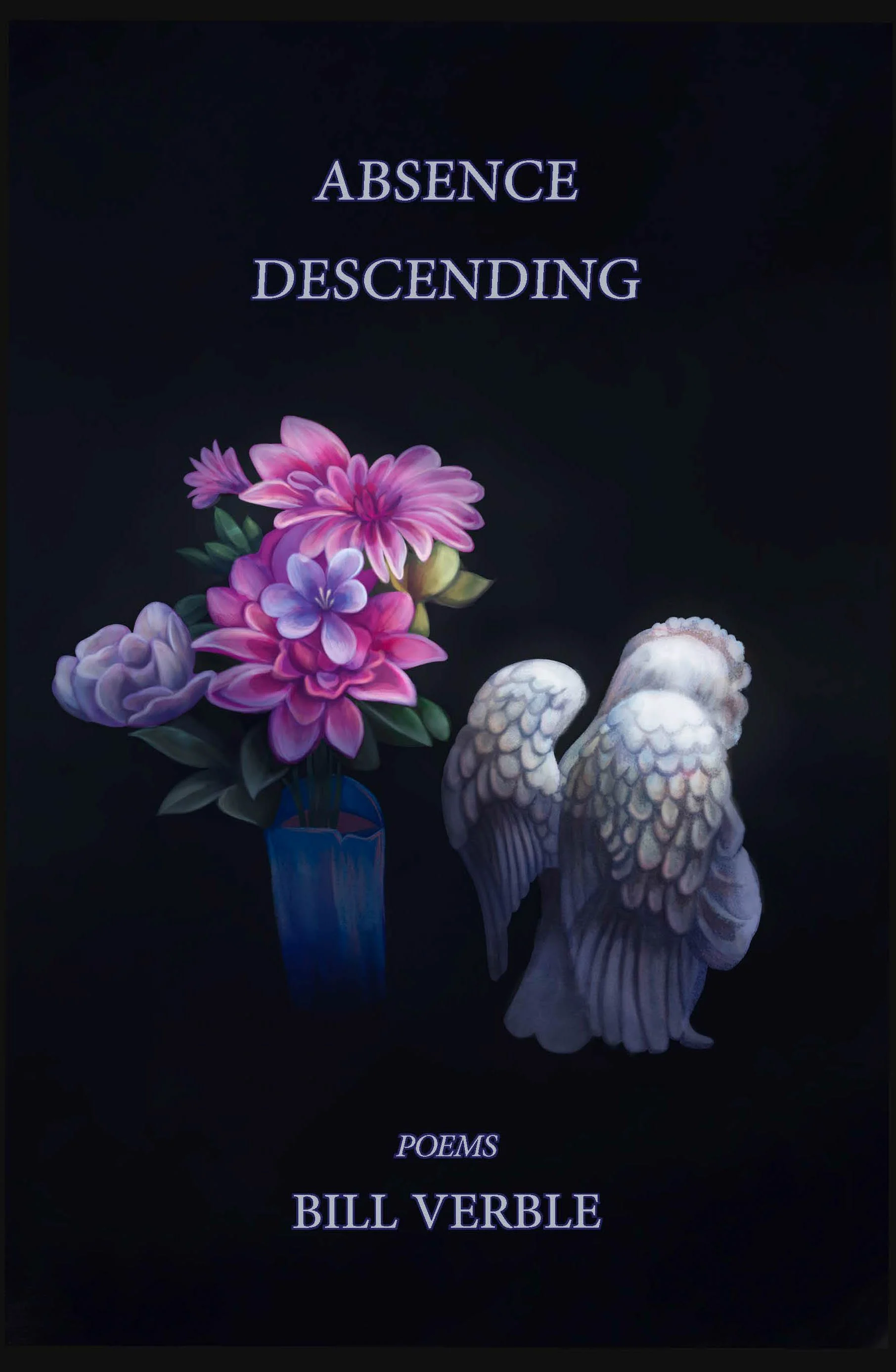
Publication Date: December 15, 2025
Paperback, 56 pages
ISBN: 978-1-966677-27-7
How do I stop your absence / from following me to every room? In this haunting debut, Absence Descending, Bill Verble explores inheritance, memory, and the ways absence lingers like a shadow, a presence that refuses to let go. Displacement runs the length of this collection like a caught thread. Readers follow the speaker through abandoned spaces and memories, places once alive and now unrecognizable. From the weight of inheritance to meditations on mortality that stretch back thousands of years, this collection insists that absence is not empty. The poems ask, Is this what ghosts feel? suggesting that haunting is not only what the dead do to us, but what we do to ourselves when we return to places that no longer hold us. Elegiac and thought provoking, Absence Descending is for anyone who has felt haunted by memory yet consoled by its persistence. These poems remind us that while time moves forward, what is remembered continues to live, reshaping us in ways we cannot forget.
Praise for Bill Verble & Absence Descending
Absence Descending, Bill Verble's outstanding debut poetry collection, is a book about changes – wanted and unwanted, expected and unexpected. Changes in attitudes, bodies, relationships, lives outlived. How does forever disappear? asks the speaker in his love-infused elegies for important people in his life. We are welcomed as trusted friends as we become privy to little secrets in the speaker’s pocket while he poses difficult questions and faces the facts of mortality – his own, or everyone else’s. Even though the larger theme in Absence Descending is death, the poetry is very much alive and every reader will be able to connect with these beautifully crafted, relatable poems.
—Katerina Stoykova, author of Between a Bird Cage and a Bird House
Absence Descending is a meditation on midlife, a collection that is both holy and wholly human. In it, Bill Verble tenderly and masterfully explores the quiet bargainings we make as we navigate what it means to be in the middle – as we simultaneously face the mortality of loved ones, the ever-changing dynamic of growing children, and our own reckoning with impermanence. In these poems, Verble has captured ether, transforming universal experiences and emotions into a balm for others who are in the in-between, as he reminds us “Life surrenders in winter / making way for life.” I read Absence Descending with both an ache of recognition and a sigh of relief as I realized I’m not alone in deciding what to hold on to and what to discard, in wondering what it would feel like to be a ghost drifting through past lives, in fearing “my mother’s paradise / does not include / being my mother.” Absence Descending is one I will return to often as I seek to see spirit in the everyday and remember that none of us are alone in our human experience.
—Missy Brownson, author of Hush Candy
About the Author
Bill Verble is a poet from Lexington, Kentucky, where he works as a human resources director. His work has appeared in The Poeming Pigeon, Okay Donkey, Spare Parts Literary, and Yearling. He was honored to receive a Pushcart nomination in 2023. Bill has always been inspired to write by his father, who was a poet-in-residence for a school system many years ago. He currently serves as the treasurer for the Kentucky State Poetry Society. Most important to Bill is sharing his days with his dear wife Shannon, his children Kate and Liam, and two large, unruly cats.

Publication Date: December 15, 2025
Paperback, 114 pages
ISBN: 978-1-966677-29-1
Of all the literary works to emerge in response to the pandemic years, few are as harrowing as David Swerdlow’s Empty the River. Bosch-like in its surreal intensity and excruciating details, this collection of poems presents the hellscape of societal collapse in “a city on the river … besieged by illness,” narrated by survivors who might envy the dead. A father’s cry is swallowed by a blank page. City leaders “scratch / by memory our names / in the walls in case we do not / remember them at the times / of our deaths.” “I worked for the city,” says the man who plowed under and tallied the dead, those around him “keeping our distance in case / he carries something from the past.” Empty the River joins the ranks of great apocalyptic literature from Camus’ The Plague to Rebecca Gayle Howell’s American Purgatory as works that force us to confront the nightmares of our past and present in order to make possible the dream of a better future.
Praise for David Swerdlow & Empty the River
David Swerdlow has written a stunning parable. Read Empty the River, and you will find it at first compelling and gorgeous, then wise, then haunting—then, finally, essential to feeling alive in these bereaved and bewildering times. You’ll wonder how you ever managed without it.
—Julia Spicher Kasdorf, author of As Is
David Swerdlow’s Empty the River joins Ilya Kaminsky’s Deaf Republic as an essential poetic allegory of our times. The collection depicts a city by the river that is plagued by mass illness where each body “suddens / with death.” We learn about the sickness through its townspeople: the city council, an old woman who cuts off all her hair and writes her dead husband explicit love letters, an androgenous librarian who flies to the corpses of past lovers, a sick a boy who waits to die because “My sister tells me / I’m made of silence and she will / go first,” their mother who carries “one death in each eye,” and their civil servant father who, after driving the plow that pushes the dead into a mass grave, “sat alone / in a wide room for hours, still feeling the scrape / of the plow against the road.” This collection eerily foreshadows a time that is already collapsing, a time when civil servants “worked for the public / good (so it was called).” Combining the political scope of magical realism and the emotional precision of poetry, Empty the River shows the resiliency of everyday people who spit in the face of death by taking “it in / the way furious black horses took in / the winters of our childhood.”
—Allison Pitinii Davis, author of Line Study of a Motel Clerk & Business: a novella
About the Author
David Swerdlow is the author of four full-length collections of poetry and a novel. His work has appeared in many distinguished publications, including Poetry, American Poetry Review, Iowa Review, Laurel Review, and Poetry Northwest. The recipient of several awards, Swerdlow has served as a Fulbright Professor of American Literature in Peru, as a National Endowment for the Humanities Fellow, and as visiting faculty on two Semester at Sea voyages. Since 1990, he has taught literature and creative writing at Westminster College in New Wilmington, Pennsylvania.
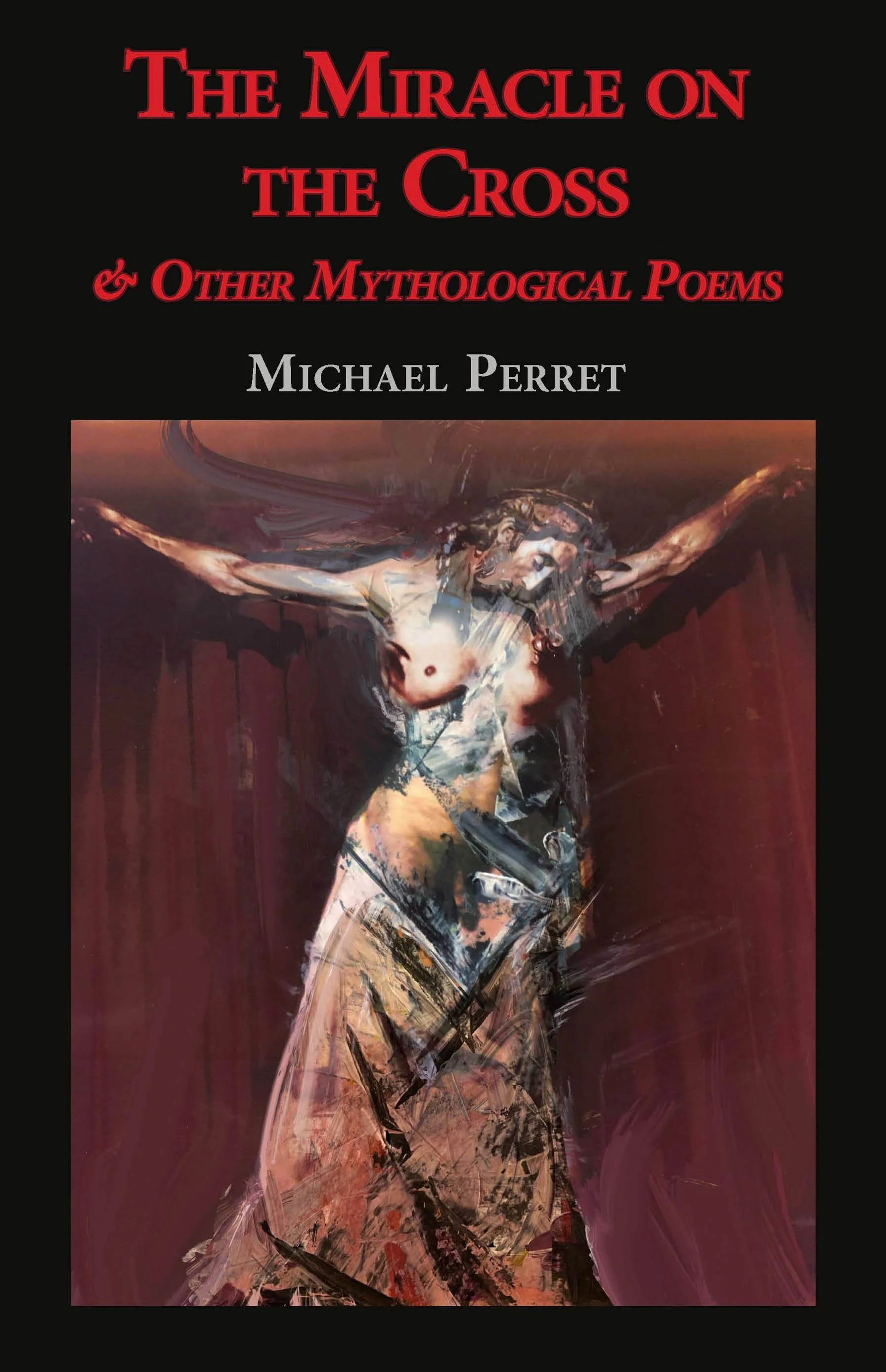
Publication Date: November 15, 2025
Paperback, 76 pages
ISBN: 978-1-966677-23-9
“And so, one day, I found myself wanting to write formal verse narratives that critically addressed traditional themes of Western art, molded and shaped as it is by patriarchal thinking and feeling. Folly? Well, the poet will write what the poet wants to write!” What self-described “queer-friendly Marxist punk” Michael Perret has chosen to write in The Miracle on the Cross & Other Mythological Poems is a brilliant folly indeed, a breathtaking and often deliciously transgressive (with emphasis on trans) interrogation and reinterpretation of Western mythologies ancient and modern (Tiresias and Daniel Paul Schreber both appear), “progressive in interpretation, conservative in form,” focusing particularly on gender identity and fluidity. This book makes a vigorous case for the vitality of traditional formal verse as a means of addressing the most contemporary themes and experiences. It’s a bravura performance, even if likely a challenging and discomforting one for some readers, a celebration of the “divine miracles” of the body.
Praise for Michael Perret & The Miracle on the Cross & Other Mythological Poems
Michael Perret’s poems are dense, painstaking, honest, sensuous and jagged. They are concerned with myths – Greek, Christian, Freudian – but never depart from the immanent. They are always about the body, and always in the moment of speaking. In their formal compression, their determination to get the colloquial and the ornate, one inside the other, they remind me of Allen Tate or Randall Jarrell, but they deploy the resources of this stylistic lineage against the conservatism that often has, but need not, animate it: instead they work to transmute their myths, to turn them not only towards transness, but towards resistance; and not only towards resistance, but towards difficult, costly joy.
—Cat Fitzpatrick, author of The Call-Out
About the Author
Michael Perret is a poet and translator from Austin, Texas. His books include Ennui Sonnets, The Chimera, The Decadent Book of Babylon, and his translation of Octavia, the Quadroon by Sidonie de La Houssaye. (michaelperret.bandcamp.com)
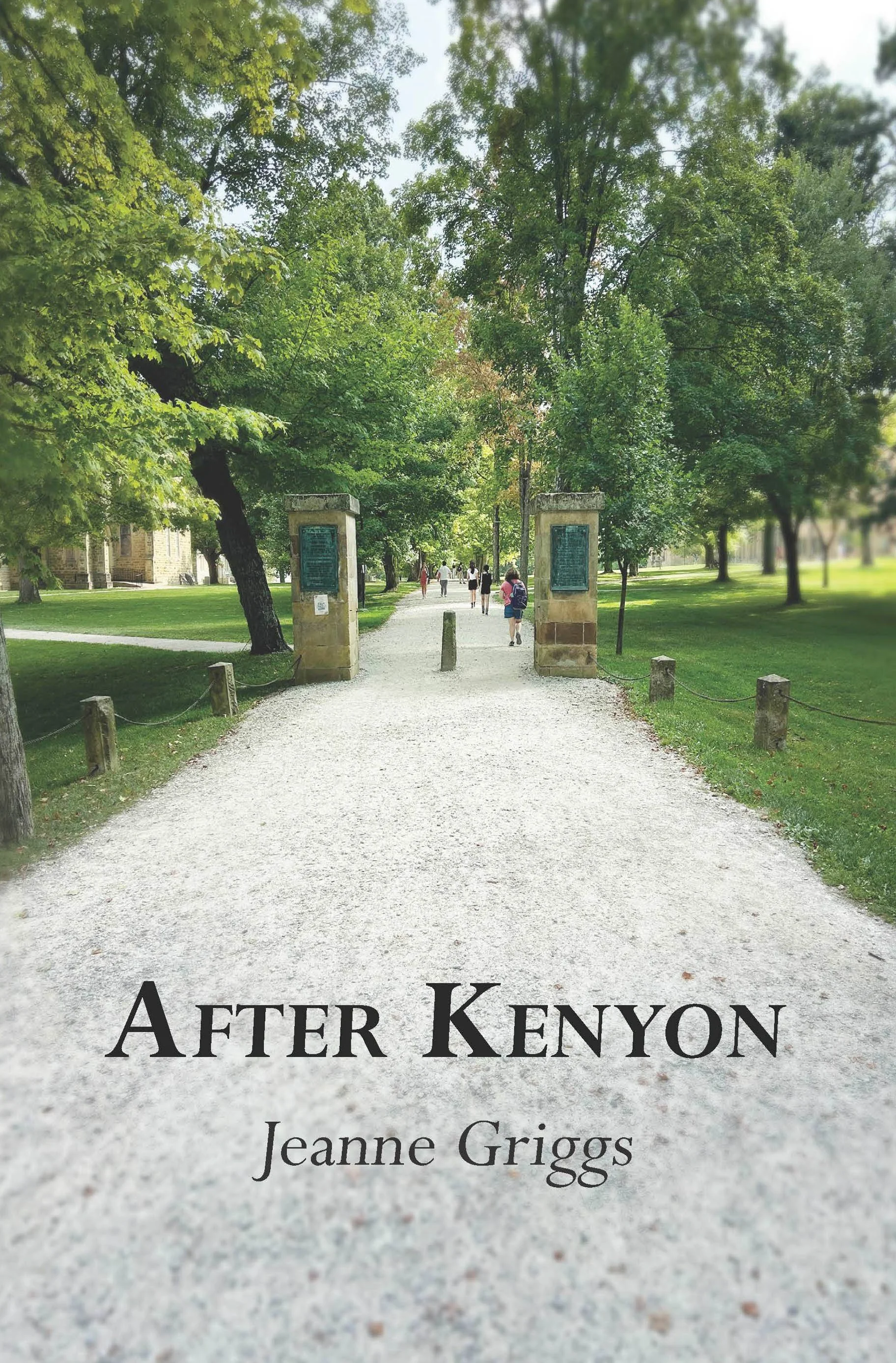
Publication Date: October 15, 2025
Paperback, 70 pages
ISBN: 978-1-966677-21-5
The sly word play in the title of Jeanne Griggs’ poetry collection After Kenyon is that while this volume indeed follows her retirement after long years at Kenyon College, reflecting on her time there and revisiting people and places familiar to all Kenyons, it also contains a number of “after” poems inspired or suggested by other poets. As she explains, “Identifying a previous poem that a new poem is ‘after’ indicates an attempt to recall some part of the feeling that the previous poem conveys and build on it. Writing an ‘after’ poem is an attempt to arouse the memory of that previous poem in order to reveal another perspective on it or even to twist and turn it into something quite different. An ‘after’ poem is not an imitation but a transformation; it is a continuing conversation about an idea or image or form of some previous poem.” Some poets echoed here had specific connections to Kenyon, such as James Wright, Robert Lowell, and John Crowe Ransom, while others seemed to permeate the air on campus. Her poems may follow on works and experiences that preceded them, but they lead the reader into new discoveries on a campus of the mind.
Praise for Jeanne Griggs & After Kenyon
These poems are subtle, self-effacing, then surprising, even shocking, as if a profile you’d been contemplating suddenly turns and looks at you. After Kenyon is a deep and detailed meditation on the long impact of place, taking as its exemplar the campus of Kenyon College. Claiming for each building and path a character with uses and names that change over time, Jeanne Griggs offers us the reward of her seasons and years of close observation and felt experience. “We walk with our heads down / in the footprints of others, / icy gravel shifting / with each step, gray // as tree trunks in old snow, the stone of the buildings, / the low sky of every day.” But the book is also a collection of love letters – with all the complex shades of feeling that implies – to literature itself, an implied anthology of poems that these poems – really a single, unified work – converse with as inspiration and ancestry. Most of all, this is a moving elegy for a way of life in service to writing and writers, “thinking about how to hold / the attention of young people,” “everyone attentive / to their needs and my job to be / attentive to everyone else’s, / providing training and pads of paper”. “We could get close to our heroes / in Weaver Cottage, just inches away / from a famous poet or novelist…” Griggs speaks for the irreplaceable lovers of language who stand and wait “in the little kitchen, / off to the side, where the after-reading hors d’oeuvres / were warming”. By its closing lines, After Kenyon has revealed itself as a masterful testament to the writers’ creed that only through particulars can we glimpse universals.
—Anthony Clarvoe, playwright, author of The Living & The Art of Sacrifice
Readers familiar with college campuses will recognize the buildings in After Kenyon: a library, student commons and classrooms, a bookstore, theater, chapel, and a few quirky houses that serve as community and literary spaces. But we don’t need to know Kenyon to enter these poems. Several “after” poems read as intimate conversations between Griggs and other writers—living and dead, local and not local—whose words now live in Kenyon’s identity as a literary place where the old and the new collide and cohabitate. What thrives and survives, what becomes worn and painted over, rekeyed, forgotten, or refurbished depends on who inhabits the campus. Nostalgic, playful, and resigned to change, these poems document a shifting physical and literary landscape witnessed in all its complexity.
—Diane LeBlanc, Director of the Writing Program at St. Olaf College, author of The Feast Delayed
How does memory dwell in a place after we depart? With remarkable attention, Jeanne Griggs writes with wonder in this tender tribute to a place enlarged by its history. After Kenyon offers a literary map, marked by a college’s iconic buildings and imbued by the fertile memories that arise from “the edge of our imaginations.” From the classrooms in the Gund Gallery and Ascension Hall to Chalmers Library and the athletic tracks at the Lowry Center, each architectural landmark is transformed into something deeply nuanced and curiously human. After Kenyon guides readers on a walk down the middle of our memories and invites us to notice what comes after their transformation.
—Orchid Tierney, William P. Rice Associate Professor of Literature at Kenyon College, author of looking at the Tiny: Mad lichen on the surfaces of reading
About the Author
Jeanne Griggs is a reader, writer, traveler, and violinist. She directed the writing center at Kenyon College from 1991-2022. Her presentations include “A Survey of Reanimation, Resurrection, and Necromancy in Fiction since Frankenstein” for ICFA, her reviews include Stephen Dunn’s The Not Yet Fallen World for Heavy Feather Review, and her first volume of poetry, published by Broadstone Books in 2021, is entitled Postcard Poems. Her poems have appeared in the Mid-Atlantic Review, Lothlorien Poetry Journal, The Inquisitive Eater, One Art: A Journal of Poetry, Thimble Literary Review, Calliope, and Autumn Sky Poetry Daily. Jeanne reviews poetry and fiction at https://necromancyneverpays.wordpress.com/
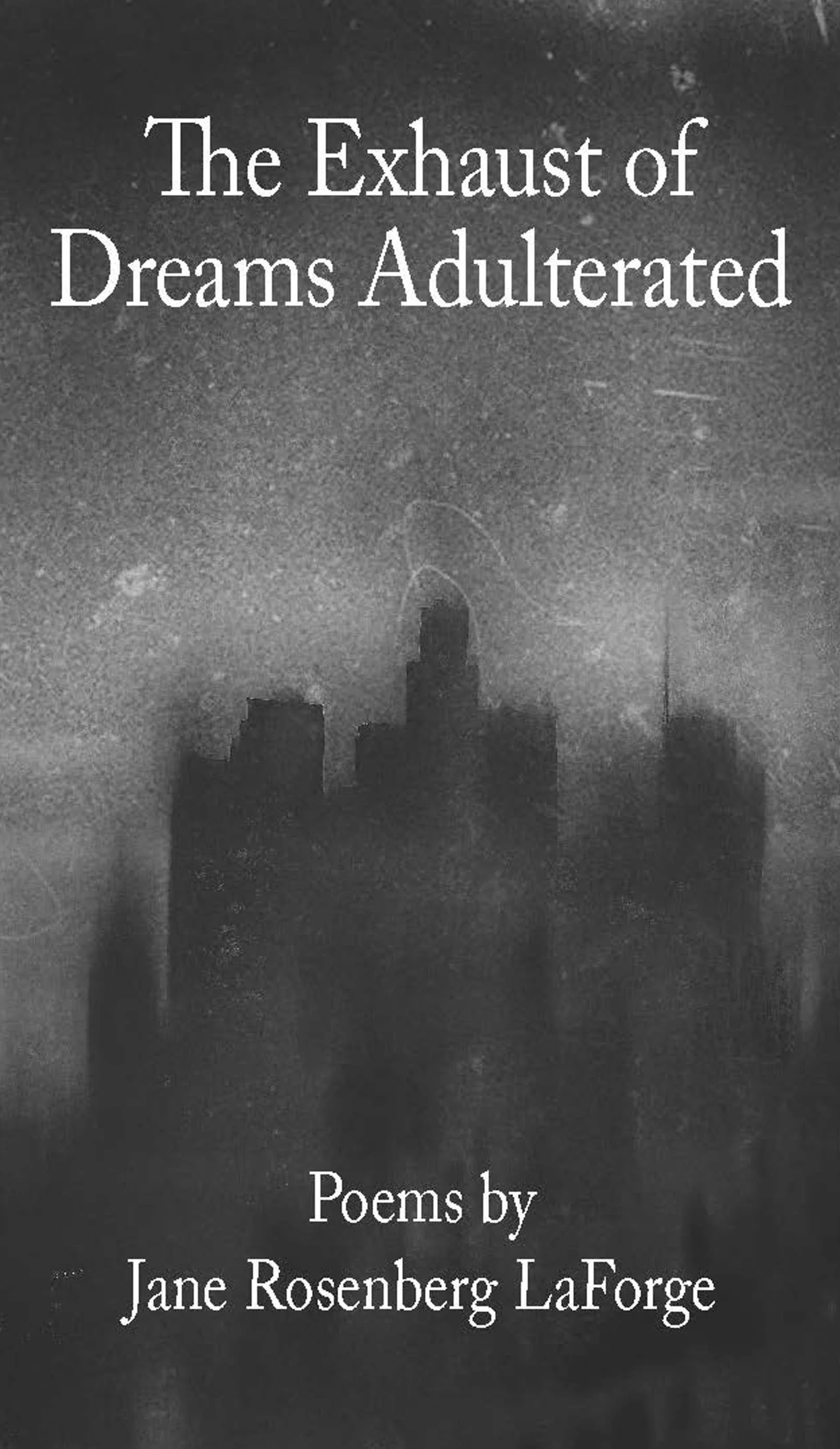
Publication Date: October 15, 2025
Paperback, xx pages
ISBN: 978-1-966677-20-8
In her fifth full-length poetry collection Jane Rosenberg LaForge declares “I realize in context / I have given up on significance.” Nevertheless, she takes her readers on a deep and unsparing dive into her family and heritage, admitting that in chronicling the final years of her parents’ marriage and lives “I am looking for myself.” When she asks her father what he is thinking, often he answers “Everything / I would have done differently,” and the dreams of what might have been haunt the inhabitants of her narrative, along with the consequences of choices made by forbears where “we all / would have to reap the results of this whirlwind.” Still, she describes how the sunrises and sunsets of her native California youth were rendered “spectacular in / those days, when dust / was a euphemism for / the junk and alloys we / poured into the air, and for / the stubborn debris of / humans: the skin we shed that insects won’t eat, and the exhaust of dreams / adulterated.” There is, then, beauty in our detritus, and the satisfaction of survival at the end of our haphazard journeys.
Praise for Jane Rosenberg LaForge & The Exhaust of Dreams Adulterated
In her newest collection The Exhaust of Dreams Adulterated Jane Rosenberg LaForge explores her life and identity through captivating narrative poems. Echoing back to Robert Lowell, Rosenberg’s “I” guides us through deeply personal familial memories with detail and judgement. Whether through a failing Christmas tree business, a crumbling garden wall, or a burning California landscape, images of decay echo the destruction of her parents’ marriage and bodies breaking down from illness. In these courageous confessional poems, LaForge’s “ancestors, antagonists, / heroes” shine brightly in all their flaws to become “like stars held in suspension of moments / rather than miles” to the reader.
—Liz Marlow, author of They Become Stars
The Exhaust of Dreams Adulterated is primarily set in a Southern California pocked with amusement parks, the Hollywood Forever cemetery, the family Christmas tree business decimating the land, blanketed in omnipresent smog, fractured by mirages, snobbery, Santa Ana winds and other perils. In this autobiographical collection of poetry, LaForge examines the toll our pursuit of dreams can take, and how these repercussions can impact successive generations. It is both a personal and a distinctly American story of immigrants striving for a better life, trying to avoid “being called out for their fantasy lives as resolute Americans and responsible parents.” With a keen, critical, and sometimes humorous eye, LaForge peoples her book with distinctive family members whose aspirations fade like “trails of lasting smoke and ephemeral splendor.” While the poet states “I was done with dreams,” she exhibits compassion for her predecessors, especially the females who she witnesses rise to plant roses, ride rollercoasters, as they free themselves “from the weight of their genesis.” This book serves as “an urn to tidy up whatever you leave behind,” and in so doing, shows us how, despite our exhaustion, to find ways to carry on and breathe unadulterated air.
—Betsy Mars, poet & assistant editor of Gyroscope Review
About the Author
Jane Rosenberg LaForge is the author of four previous full-length collections of poetry: With Apologies to Mick Jagger, Other Gods, and All Women (The Aldrich Press 2012); Daphne and Her Discontents (Ravenna Press 2017); Medusa’s Daughter (Animal Heart Press 2021); and My Aunt’s Abortion (BlazeVOX [books] 2023). She also is the author of four chapbooks of poetry: After Voices (Burning River Press 2009); Half-Life (Big Table Publishing 2010); The Navigation of Loss (Red Ochre Press 2012); and In Remembrance of the Life (Spruce Alley Press 2016). Her memoir is An Unsuitable Princess: A True Fantasy/ Fantastical Memoir (Jaded Ibis Press 2014). Her two novels are The Hawkman: A Fairy Tale of the Great War (Amberjack Publishing 2018); and Sisterhood of the Infamous (New Meridian Arts Literary Press 2021). She writes book reviews for American Book Review.
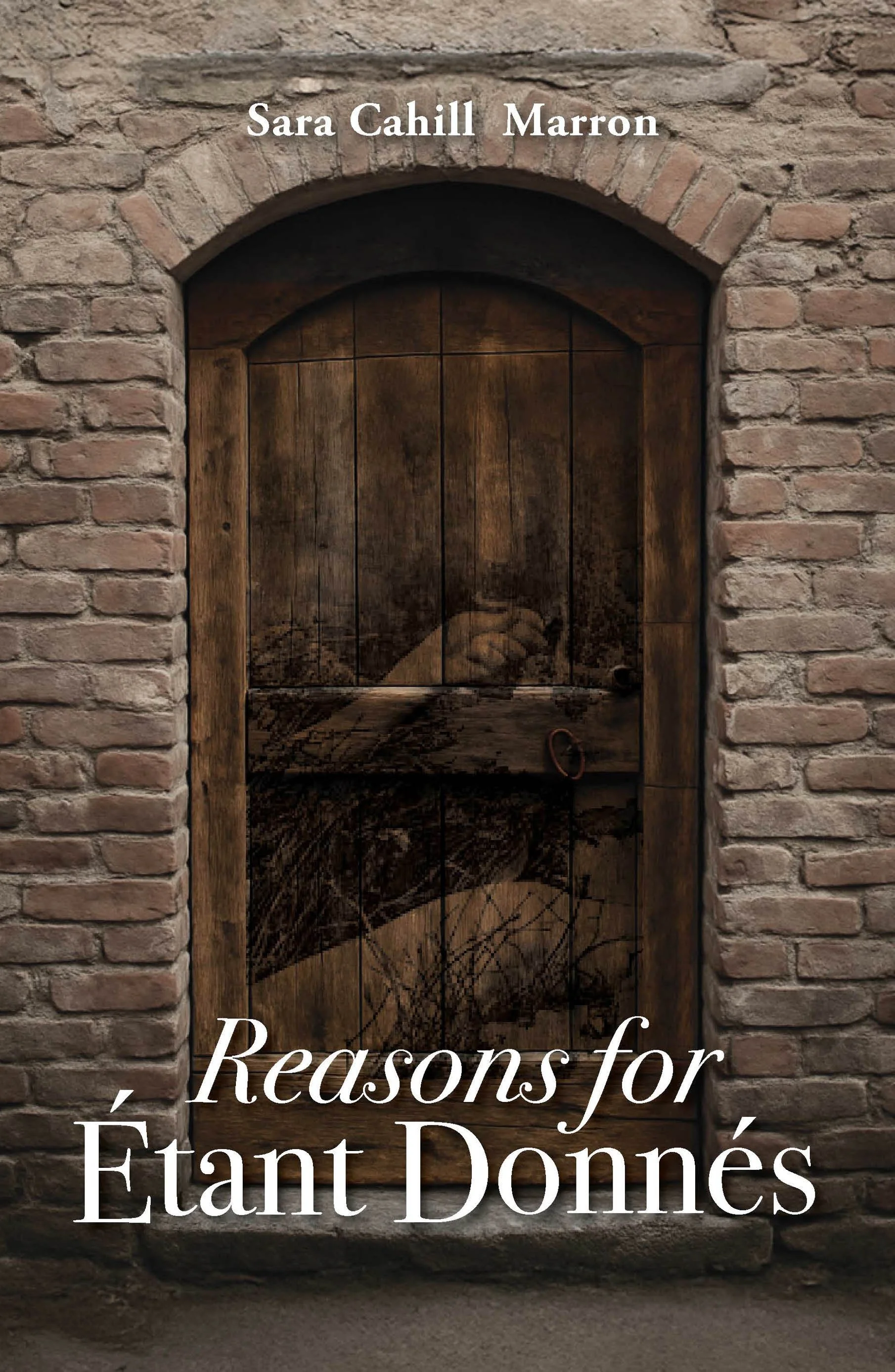
Publication Date: October 3, 2025
Paperback, 104 pages
ISBN: 978-1-966677-19-2
Reasons for Étant Donnés, the second volume in the series begun with Reasons for the Long Tu’m, is a journey into the heart of modern myth. It is poetry that collects a thread from ancient stories, repeated for millennia, and strings them into a set of beads. The collection asks the reader not just to read, but to feel—to hold belief in their hands and trace its path. It peers through the key-hole size space between language and spirit and then steps aside—inviting you to look for yourself.
Praise for Sara Cahill Marron & Reasons for Étant Donnés
In Reasons for Étant Donnés, [l]ife has been reanimated in the primordial ovum of the five Mysteries of Light—Water, Marriage, Kingdom, Transfiguration, and Body. Each serves as a profound yet painful reminder of the elements that shape our reality and the forces that drive our inner, darker world.
—Esteban Oloarte, author of Transistor & Bardo
Reasons for Étant Donnés drives an intense dialogue with the reader, but also always with something else. To read is to bear witness to a compelling system at work, a curious reveal and obscure engaging in its own processes of alteration and relation. This is admirable work, stretched and emphatic without being overbearing. and when any generosity is offered, it is a succinct, pronounced humanity.
—billy cancel, author of BUTTERCUP TANTRUM MUTTON ENCORE
Haunting and haunted, Reasons for Étant Donnés is a work of genius and genus, of where we have come from, but also of ways to think about how we are linked and divided. At once a daybook of the feminine aspect, a breviary of holy motherhood, before which patriarchal structures tremble in an attempt less to understand than withstand the goddess, godless, godbody whose “iron bar (the nude’s spinal column)” stands at the center of creation and yet is the “time-giver” elsewhere seen gently swaying in “the reeds, / where you whisper/to the winds / sun is coming, / zeitgeber.”
—Michael Joyce, author of Capricorn, Venus Descendent & others
About the Author
Sara Cahill Marron is an artist working in the mediums of language and design.
Reasons for Étant Donnés and Reasons for the Long Tu’m are manuals for contemplation. Both volumes mirror the mythmaking of Catholic Church’s Rosary practice. Reasons for the Long Tu’m explores the three traditional mysteries, while Reasons for Étant Donnés focuses on the Mysteries of Light, which were added to the canon in 2002 by Pope John Paul II. To meditate on the poems collected herein, both volumes of Reasons suggest a physical root in the spiritual in order to pass through form with language. As collections of poetry, the books of Reasons lack canon or dogma. To accompany the poems, the poet has designed tactile translations of certain numbered Mysteries, which may be found at www.saracahillmarron.com.

Publication Date: October 15, 2025
Paperback, 74 pages
ISBN: 978-1-966677-22-2
I’ve Never Loved Somebody and Made Them Worse is a stunning debut, a fragmented and intimate record of relationships that blur the lines between romantic, platonic, physical, and intellectual connection. From grad seminar hallways, grocery store parking lots, borrowed bedrooms, to city sidewalks, Mia Nelson crafts a collection defined by vivid texture and tonal complexity. This is not a book about falling in or out of love. It is a study in emotional architecture, where want is a blueprint and memory the scaffolding. Nelson doesn’t seek resolution. She offers immersion. Conversations coexist with theory, flirtation breaks into philosophy, and tenderness turns on itself without warning: “I believe that the moon is the size of my thumb but also something else entirely.” Rich in voice and formal experimentation, I’ve Never Loved Somebody and Made Them Worse is a deeply felt, sharply rendered exploration of connection and its aftermath.
Praise for Mia Nelson & I’ve Never Loved Somebody and Made Them Worse
An intimate and sensuous collection exploring the many permutations of love. Mia Nelson writes with an exquisitely aching pen. I am in awe of her talent.
—Daisy Alpert Florin, author of My Last Innocent Year
Urgent and surprising, the gorgeous poems in Mia Nelson’s debut capture how early loves shape our pleasures and our shames. These poems hold youth’s seasons and bright details, and lead you across the borders of childhood with a margarita in hand. Nelson is a student of tenderness and heartbreak, and all their lessons, all their entanglements with myth, all their vulnerabilities dressed up philosophy’s robes. Each poem is another day in love with July, a book, an orange, another beloved ‘you’. This book woke my heart up.
—Traci Brimhall, author of Love Prodigal
Mia Nelson’s poems are raw and filled with summer fruit—juice drips down so much skin, between fingers and kisses and kneecaps. This collection plays with language; the characters and speakers of these poems flirt and argue, tracing the creative potential of mistranslation.
—Frances Cannon, author of Fling Diction
About the Author
Mia Nelson is a poet from Colorado. She has been supported by Dartmouth College, Fulbright Spain, the University of Vermont, Lighthouse Writers Workshop, and the University of Washington, where she is a PhD student in English Literature. Her writing can be found in The American Poetry Review, Berkeley Poetry Review, and was longlisted for the National Poetry Competition in 2024. She writes about love.
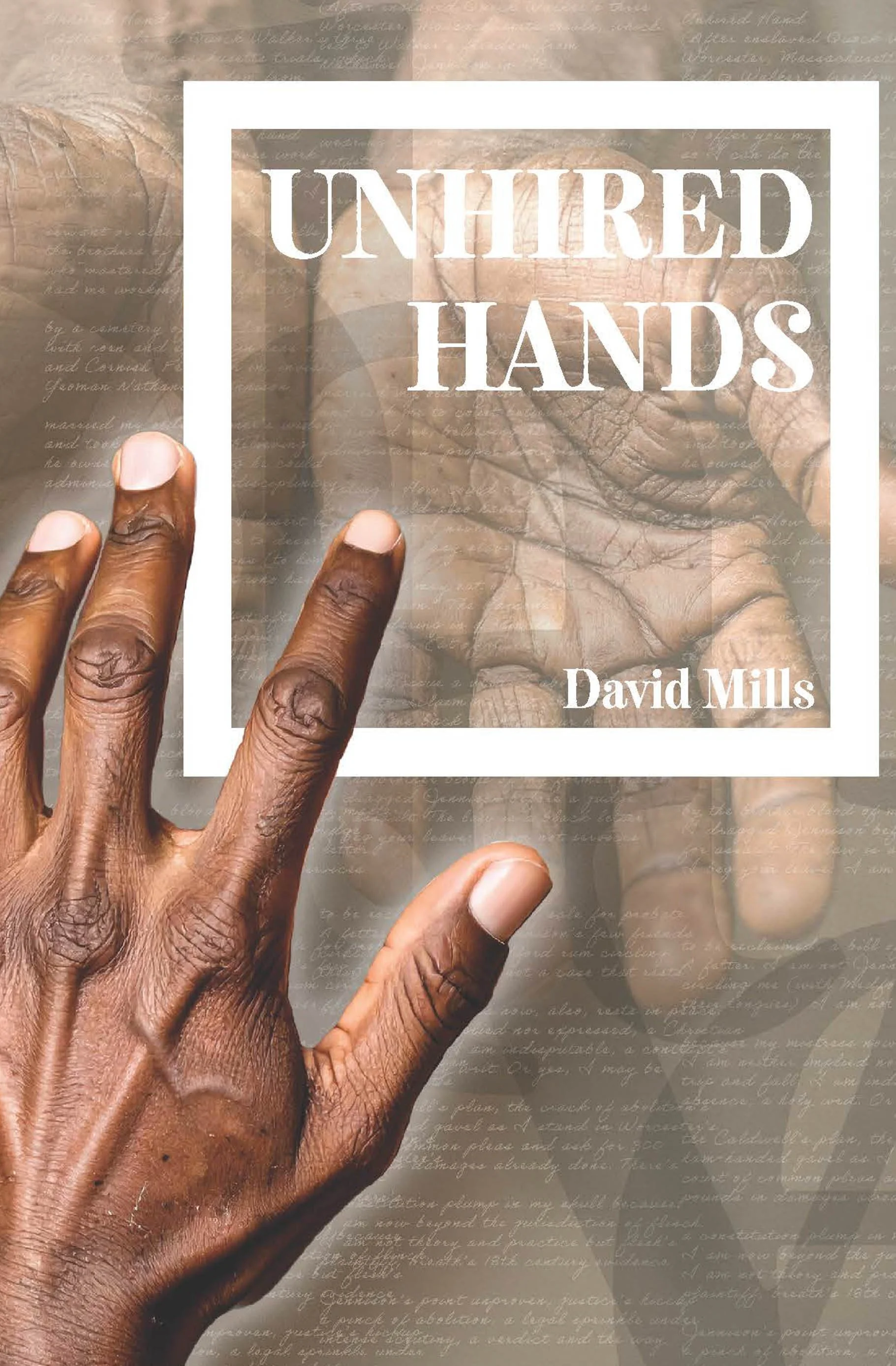
Publication Date: November 30, 2025
Paperback, 82 pages
ISBN: 978-1-966677-26-0
This nation is built of the labor of unhired hands – the hands of enslaved peoples – and David Mills yokes history and poetry to tell the stories of some of those hands. Through his compelling narrative and persona poems we are introduced to “Victoria Earle Matthews, Martha Peterson and Millie Tunnell, three African-American women who had been enslaved and who are buried in cemeteries in Queens, New York,” and in a fourth section he writes of “Massachusetts slavery… because, in 1641, Massachusetts was the first North American colony to legally enslave Africans.” By focusing on the history of slavery far from antebellum cotton fields, Mills instructs us on the pervasive endemic legacy of this institution. Writing of an 18th century Massachusetts colonist who beat his slave to death and went largely unpunished he asks, “How do the chasms in Christendom / answer for this offense?” It is a question yet awaiting an answer.
Praise for David Mills & Unhired Hands
Discover the buried stories that history tried to forget. In Unhired Hands, acclaimed poet David Mills resurrects the voices of African-Americans whose lives shaped our nation from Millie Tunnell, born enslaved and laid to rest at Maple Grove Cemetery at 111, to trailblazing journalist and reformer Victoria Earle Matthews, to Martha Peterson, the Iron Lady, whose family members rests at Maple Grove. These poems travel from the plantations of the South to historic cemeteries of Queens, unearthing slavery’s erasures with lyrical power. A vital collection that transforms silence into song, remembrance into resistance.
—Carl Ballenas, Maple Grove Cemetery Historian
David Mills is a poet of the raw and the cooked, the raw being the mass of historical details he digests both intellectually and emotionally to “cook” his poetry. As guide and interlocutor, he explores two geographical points – Queens, NY and Massachusetts – through experiential accounts of enslavement “beyond the jurisdiction of flinch.” Among many other heroes and villains, Mills delineated the lives of Millie Tunnell, who served George Washington in a Virginia tavern as a young woman and, in a wild change of scene, died in Queens at the age of 114; and Onesimus, an African enslaved by the Puritan preacher Cotton Mather, who introduced inoculations to the New World. Righting glaring omissions to a mostly Whites-Only historical record, Unhired Hands, with lyricism and imagination, delves into “location… if if was / lost once but now if’s…is found.”
—Celia Bland, author of SoftBox
You never quite know where to place Mills’ work in the poetic landscape, which is a good thing given the clusters of poets bunched around the same subjects and approaches. He’s formal while wild in style; he’s both historical/recognizable and strange and innovative. Like Ralph Waldo Emerson tuning in from the outer boroughs. Like Phillis Wheatley riding Funkadelic’s mothership. Mills possesses an archival acumen akin to Natasha Trethewey; a cultural vernacular rich as that of August Wilson; the intellectual quirks of Pharaoh Sanders. Unhired Hands highlights his expressive documentarian impulses while adding to his clear technical mastery. Mills reconstructs / conjures Massachusetts, Queens, the lives of the formerly enslaved Victoria Earle Matthews, Millie Tunnell, and Martha Peterson. Mills’ research is exacting, but open; the poems are formal but never formulaic. The image of Matthews sneaking books between chores, her eyes “learning to swim, learning to sink into literature’s at turns clear and sometimes troubling waters” is a kind of statement of poetics and a lyrical reconstruction of history. He writes beyond “the jurisdiction of flinch,” into the intimacy of interrogation and also an “interrogation of intimacy.” This collection is akin to a history book scored by form and spirit, ingenuity and telepathic empathy...
—Terrance Hayes, Macarthur Genius & National Book Award-winning author of How to be Drawn
David Mills delves into New York and Massachusetts history to emancipate the memories of three intrepid Black women and an entire colony in these intensely researched documentary poems. Carved from fact and bristling imagination, we’ve found a part of ourselves that needed a deeply dedicated poet to resurrect them in verse. Their stories beckon abundantly in the verse Mills scribes in Unhired Hands.
—Tyehimba Jess, Pulitzer Prize-winning author of olio
About the Author
David Mills holds an MFA from Warren Wilson College and an MA from New York University—both in creative writing—as well as a B.A. (cum laude) from Yale University. He’s published four previous poetry collections: Boneyarn, The Sudden Country, The Dream Detective, and After Mistic. His poems have appeared in Ploughshares, Colorado Review, Crab Orchard Review, Jubilat, Callaloo, Obsidian, Brooklyn Rail, Diode Journal, and Fence. He has received fellowships from the New York Foundation for the Arts, Breadloaf, The Cullman Center, the New York State Council on the Arts, The Queens Council on the Arts, Flushing Town Hall, The Bronx Council on the Arts, The American Antiquarian Society, the Lannan Foundation, Arts Link and a Henry James and Hughes/Diop fellowship. He served as the Bronx County Historical Society Poet-in-Residence and Boneyarn won the North American Book Award.He lived in Langston Hughes’ landmark home for three years. The Juilliard School of Drama commissioned and produced a play by Mr. Mills. He wrote the audio script for MacArthur-Genius-Award Winner Deborah Willis’ curated exhibition: Reflections in Black: 100 Years of Black Photography, which showed at the Whitney and Getty West Museums. He has also recorded his poetry on ESPN and RCA Records.
Forthcoming from Broadstone Books
WHAT REMAINS: NEW & SELECTED POEMS
Poetry by
Andrena Zawinski
NADIYA SUMMONS THE POPPIES AND MYRTLE
Poetry
Melinda Thomsen
ISLAND OF THE EAGLE AND THE SERPENT
Poetry
Martin Malone
MERCY
Poetry
Megan Leonard
TIME STAMPED
Poetry
Roberta Spivek
And many more titles coming in 2027