
 Image 1 of 2
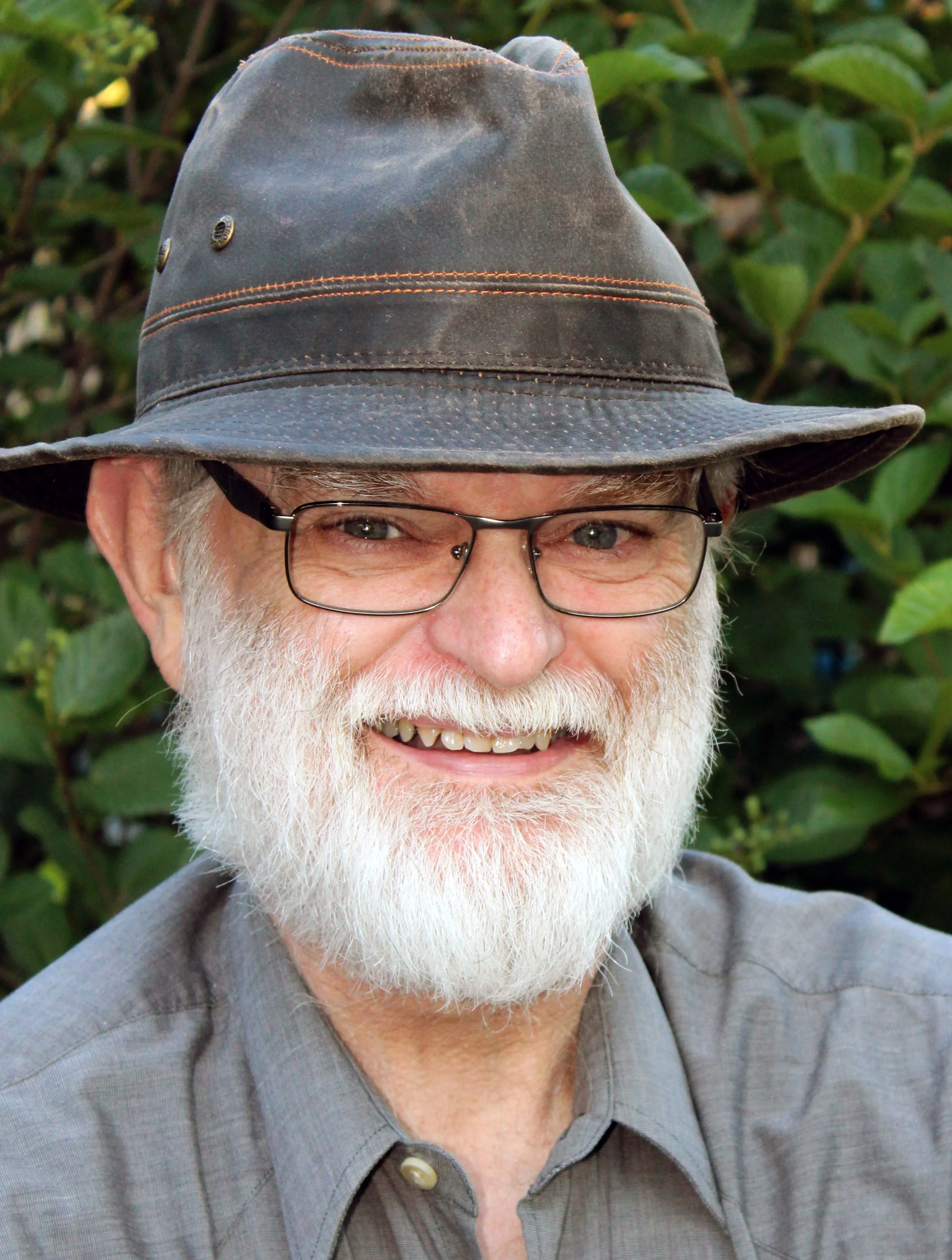 Image 2 of 2
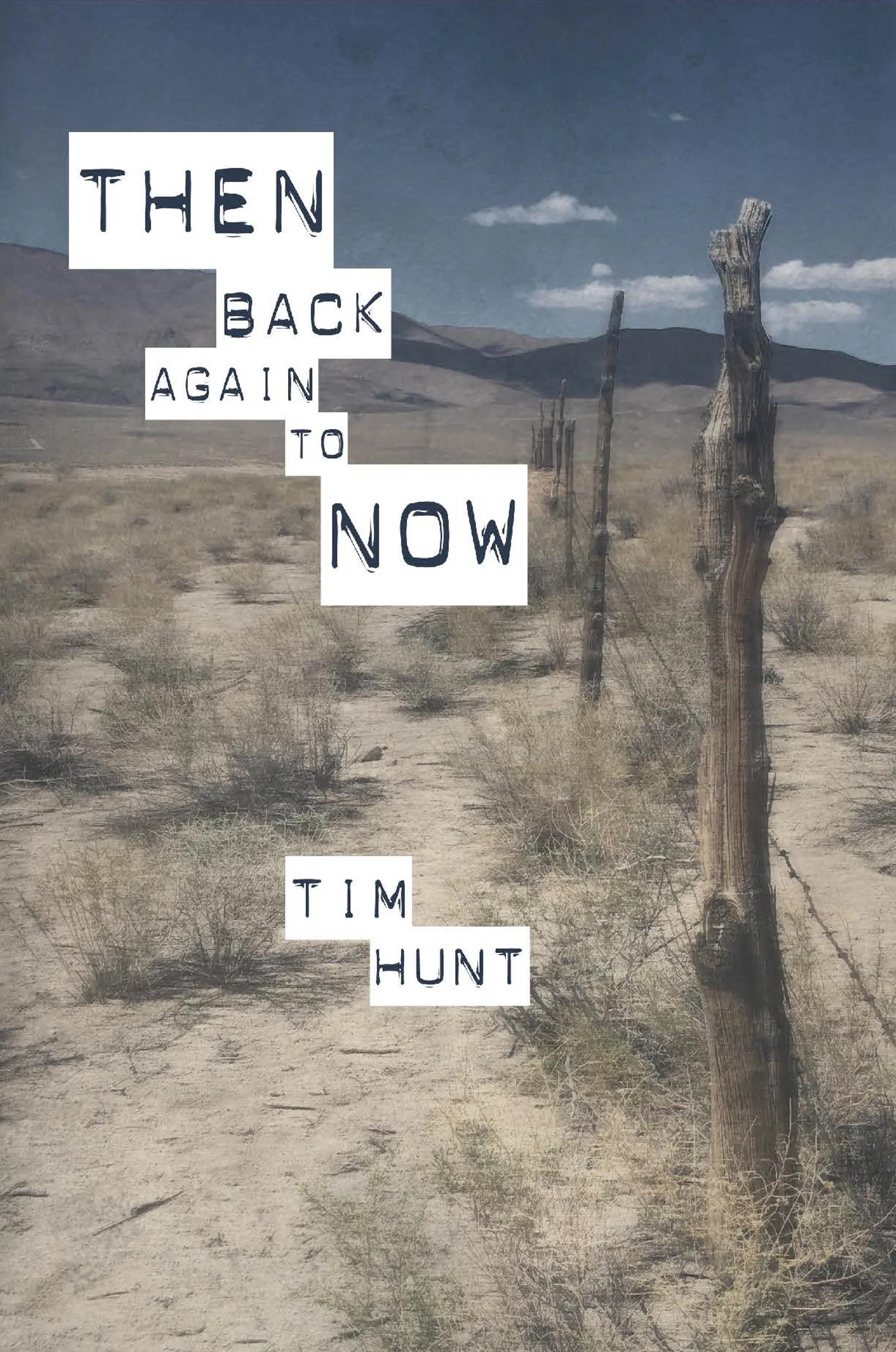
THEN BACK AGAIN TO NOW, poetry by Tim Hunt
Publication Date: April 15, 2026
Paperback, 90 pages
ISBN: 978-1-966677-39-0
“Sometimes to forget / is to remember / & to remember / is to forget.” Tim Hunt’s latest poetry collection is an exercise of memory – and at time an exorcism – as he considers what of the past (his and our national collective) bears remembrance and what should be left behind. Nowhere is this examination more necessary than in the cycle of “Manzanar” poems memorializing the World War II Japanese-American internment camp of that name, which at this moment seems less history and more dire warning. He bids us “do not read these pieces, / but listen, if you will, in the way / your thumb and forefinger might / rub the sleeve of an old coat” – as if to say, yes, our history may seem threadbare, but still may be a source of comfort if we will take it up and take it on.
Praise for Tim Hunt & Then Back Again to Now
I like the clarity of Tim Hunt’s voice, the overlaying of memory and the present, the seeing and re-seeing, the outward and inward gaze finding the key details that bring a scene and a character to life. These are poems that call for a doubletake, especially after one has read a few of them and seen how they work together and build on one another.
—Greg Pape, former Montana Poet Laureate, author of A Field of First Things & others
Tim Hunt writes aptly about growing up in small-town 1950s-60s California. His poems highlight his compassion for this rural community: friends, family members, as well as Japanese Americans in the nearby Manzanar internment camp where 110,000 were once held. He imagines their losses and fears, walking through its ruins. He also details with precision the atrocities in the Viet Nam war. Though loss is a theme, lightness is a quiet force in many of the poems. Hunt sees light as a voice in the desert that says “nothing at all— / and everything;” a boy’s family's evening of storytelling as he drowses “in the lamp-shaded light / of the voices” on a winter night; moonlight which suggests “its light is not his father’s light;” and “...this war is wrong. That I am right / and that conscience is real—some inner/light....” Light’s physical presence here leads to awakenings, lifting memories from the darkest edges of the past. Even the poems’ structures appear to be light with the poet’s use of white space, one-line stanzas, creating pauses that give a sense of deep thought.
—Jan Minich, author of Coming into Grace Harbor
Then Back Again to Now is, as the title promises, Tim Hunt’s exploration of time and memory, like the “real” road that was there before they built the interstate, that new road that “pushes north past the little towns / as if they aren’t there.” That’s where the people live, though, in those little towns that Hunt brings alive for us, with their regulars at the café who all share their same history and the same songs, “Strangers in the Night” and “Little Girl Blue” that they sing together at the karaoke bar. Some of us remember, as Hunt does, “when we were so sure / that all that mattered was injustice / as we wondered what to burn to make us free.” In these newly troubled times, we should be grateful to be reminded of when freedom and justice mattered to us, and also of the earlier time when, to our shame, we sent those who didn’t look like us, who were born across the ocean, to camps like Manzanar where they were at the mercy of the desert and the guards. Even if memory is really the desire for memory, as Hunt also says, we need to hear those stories again, and think about what stories will be told of us.
—Susanna Lang, author of Like This & the forthcoming collection This Spangled Dark
About the Author
Tim Hunt was born in Calistoga and raised primarily in Sebastopol, two small towns north of San Francisco that were, in the 1950s and 1960s, still agricultural, working-class communities. As a boy, he identified strongly with the Lake County region of his father's family, an area where quicksilver mining had once been profitable. Here one of his aunts taught him “I Can Tell You Are a Logger ’Cause You Stir Your Coffee with Your Thumb,” while a rockabilly cousin offered “Be-Bop-a-Lula.”
Educated at Cornell University, he taught American literature at several schools, including Washington State University and Deep Springs College, before concluding his career at Illinois State University, where he was University Professor of English. He and his wife Susan, a retired respiratory therapist, have two children: John, a visual artist, and Jessica, a composer.
Publication Date: April 15, 2026
Paperback, 90 pages
ISBN: 978-1-966677-39-0
“Sometimes to forget / is to remember / & to remember / is to forget.” Tim Hunt’s latest poetry collection is an exercise of memory – and at time an exorcism – as he considers what of the past (his and our national collective) bears remembrance and what should be left behind. Nowhere is this examination more necessary than in the cycle of “Manzanar” poems memorializing the World War II Japanese-American internment camp of that name, which at this moment seems less history and more dire warning. He bids us “do not read these pieces, / but listen, if you will, in the way / your thumb and forefinger might / rub the sleeve of an old coat” – as if to say, yes, our history may seem threadbare, but still may be a source of comfort if we will take it up and take it on.
Praise for Tim Hunt & Then Back Again to Now
I like the clarity of Tim Hunt’s voice, the overlaying of memory and the present, the seeing and re-seeing, the outward and inward gaze finding the key details that bring a scene and a character to life. These are poems that call for a doubletake, especially after one has read a few of them and seen how they work together and build on one another.
—Greg Pape, former Montana Poet Laureate, author of A Field of First Things & others
Tim Hunt writes aptly about growing up in small-town 1950s-60s California. His poems highlight his compassion for this rural community: friends, family members, as well as Japanese Americans in the nearby Manzanar internment camp where 110,000 were once held. He imagines their losses and fears, walking through its ruins. He also details with precision the atrocities in the Viet Nam war. Though loss is a theme, lightness is a quiet force in many of the poems. Hunt sees light as a voice in the desert that says “nothing at all— / and everything;” a boy’s family's evening of storytelling as he drowses “in the lamp-shaded light / of the voices” on a winter night; moonlight which suggests “its light is not his father’s light;” and “...this war is wrong. That I am right / and that conscience is real—some inner/light....” Light’s physical presence here leads to awakenings, lifting memories from the darkest edges of the past. Even the poems’ structures appear to be light with the poet’s use of white space, one-line stanzas, creating pauses that give a sense of deep thought.
—Jan Minich, author of Coming into Grace Harbor
Then Back Again to Now is, as the title promises, Tim Hunt’s exploration of time and memory, like the “real” road that was there before they built the interstate, that new road that “pushes north past the little towns / as if they aren’t there.” That’s where the people live, though, in those little towns that Hunt brings alive for us, with their regulars at the café who all share their same history and the same songs, “Strangers in the Night” and “Little Girl Blue” that they sing together at the karaoke bar. Some of us remember, as Hunt does, “when we were so sure / that all that mattered was injustice / as we wondered what to burn to make us free.” In these newly troubled times, we should be grateful to be reminded of when freedom and justice mattered to us, and also of the earlier time when, to our shame, we sent those who didn’t look like us, who were born across the ocean, to camps like Manzanar where they were at the mercy of the desert and the guards. Even if memory is really the desire for memory, as Hunt also says, we need to hear those stories again, and think about what stories will be told of us.
—Susanna Lang, author of Like This & the forthcoming collection This Spangled Dark
About the Author
Tim Hunt was born in Calistoga and raised primarily in Sebastopol, two small towns north of San Francisco that were, in the 1950s and 1960s, still agricultural, working-class communities. As a boy, he identified strongly with the Lake County region of his father's family, an area where quicksilver mining had once been profitable. Here one of his aunts taught him “I Can Tell You Are a Logger ’Cause You Stir Your Coffee with Your Thumb,” while a rockabilly cousin offered “Be-Bop-a-Lula.”
Educated at Cornell University, he taught American literature at several schools, including Washington State University and Deep Springs College, before concluding his career at Illinois State University, where he was University Professor of English. He and his wife Susan, a retired respiratory therapist, have two children: John, a visual artist, and Jessica, a composer.