
 Image 1 of 2
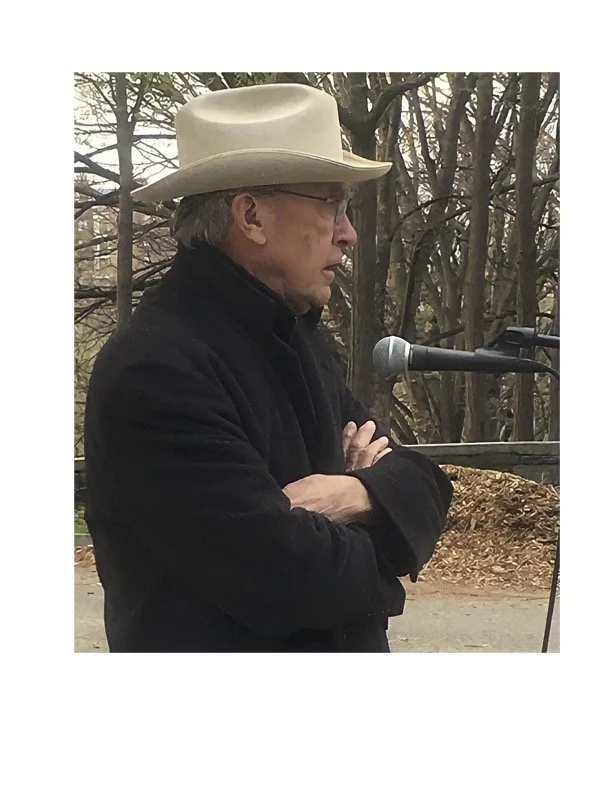 Image 2 of 2
Publication Date: June 15, 2026
Paperback, 84 pages
ISBN: 978-1-966677-43-7
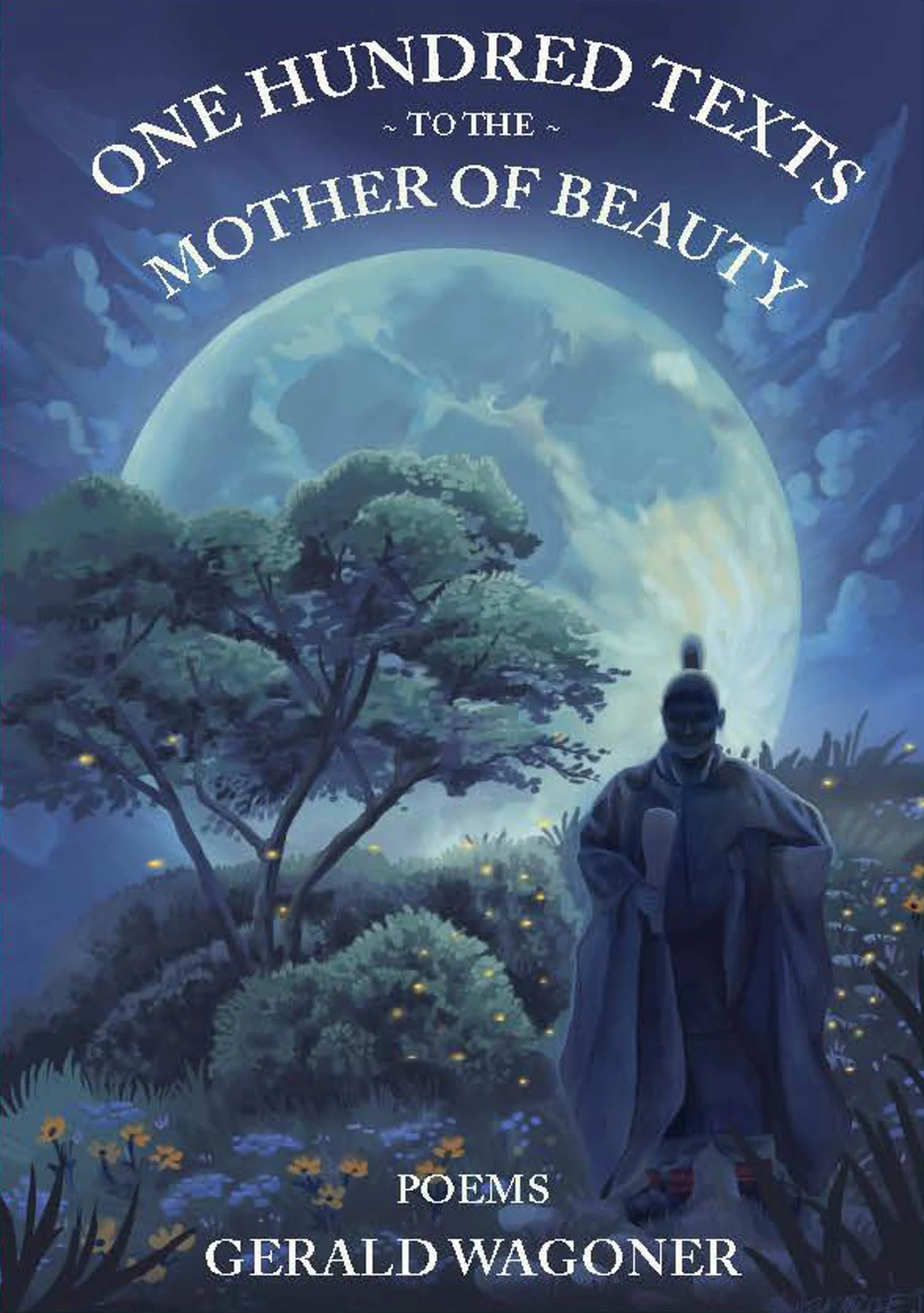
In One Hundred Texts to the Mother of Beauty, Gerald Wagoner writes of love, both physical and spiritual, framed by special intimate environs. “Every kiss a taste of spring water, so cold your eye teeth ache.” Wagoner’s poems are crafted as messages to his muse, the Mother of Beauty, addressed by many names, among them Klio for order and Urania for the cosmos, each inspired by a unique voice. “Heavenly Urainia, by whose grace go I. Sing the quickening of quarks: the weak force, the strong force, the gravity of it all that gathers us together.”
Praise for Gerald Wagoner & One Hundred Texts to the Mother of Beauty
In a hundred invocations, entreaties, connections, contentions, and yearnings, Gerald Wagoner writes of encounters with the elusive and enlivening other—manifesting as muse, engenderer, and persistently possible paramour ever-altering in her proximity, These lithe, imagistic missives conjure both common life and abiding myth, with settings from the Gowanus Canal to waking dreamscapes of desire. One Hundred Texts to the Mother of Beauty gives us lyrics that at once classical and romantic—paeans to the desired inspirer, enthrallments to the passions of poetry.
—David Groff, author of Live in Suspense
Gerald Wagoner’s One Hundred Texts to the Mother of Beauty is both ecstatic and expansive, a dreamscape that touches on every myth I can think of that binds the creative powers of human effort to the divinely inspired eroticism of supernatural beings and their love. I loved getting lost in these tiny missives of desire, creation, devotion, and supplication. Wagoner’s touch is feather light, though his voice carries the weight of his art’s urgency.
—Jason Schneiderman, author of Self Portrait of Icarus as a Country on Fire
One Hundred Texts is a modern-day scroll depicting the many layers of love we only secretly acknowledge.
—Kristine Esser Slentz, author of Face to Faces
Sometimes in this book, there’s an almost-babble, like that of the lovelorn, a descent and ascent into the vortex of language attempting to say what love is and where it goes and lives and takes us prisoner. But this poet’s experience as a sculptor, his awareness of this Earth upon which we build and create keeps us just this side of beauty, with enough patience to detect “a faint whiff of the whispering night.” Sometimes he turns snitch, involves us all in the brazen effort to find the love he’s after—“the city was there, a commotion of wanting.” And we find we can’t deny, not a word of it.
—Mervyn Taylor, author of Unpainted Houses.
About the Author
Gerald Wagoner is the author of When Nothing Wild Remains (Broadstone Books, September 2023) and A Month of Someday, (Indolent Books, March 2023). Hischildhood was divided between Eastern Oregon and Montana where he was raised under the doctrine of benign neglect. He has a BA in Creative Writing from the University of Montana and an MFA in sculpture from SUNY Albany. Wagoner exhibited regularly, and has taught Art and English for the NYC Department of Education. He currently lives in Brooklyn.
Publication Date: June 15, 2026
Paperback, 84 pages
ISBN: 978-1-966677-43-7
In One Hundred Texts to the Mother of Beauty, Gerald Wagoner writes of love, both physical and spiritual, framed by special intimate environs. “Every kiss a taste of spring water, so cold your eye teeth ache.” Wagoner’s poems are crafted as messages to his muse, the Mother of Beauty, addressed by many names, among them Klio for order and Urania for the cosmos, each inspired by a unique voice. “Heavenly Urainia, by whose grace go I. Sing the quickening of quarks: the weak force, the strong force, the gravity of it all that gathers us together.”
Praise for Gerald Wagoner & One Hundred Texts to the Mother of Beauty
In a hundred invocations, entreaties, connections, contentions, and yearnings, Gerald Wagoner writes of encounters with the elusive and enlivening other—manifesting as muse, engenderer, and persistently possible paramour ever-altering in her proximity, These lithe, imagistic missives conjure both common life and abiding myth, with settings from the Gowanus Canal to waking dreamscapes of desire. One Hundred Texts to the Mother of Beauty gives us lyrics that at once classical and romantic—paeans to the desired inspirer, enthrallments to the passions of poetry.
—David Groff, author of Live in Suspense
Gerald Wagoner’s One Hundred Texts to the Mother of Beauty is both ecstatic and expansive, a dreamscape that touches on every myth I can think of that binds the creative powers of human effort to the divinely inspired eroticism of supernatural beings and their love. I loved getting lost in these tiny missives of desire, creation, devotion, and supplication. Wagoner’s touch is feather light, though his voice carries the weight of his art’s urgency.
—Jason Schneiderman, author of Self Portrait of Icarus as a Country on Fire
One Hundred Texts is a modern-day scroll depicting the many layers of love we only secretly acknowledge.
—Kristine Esser Slentz, author of Face to Faces
Sometimes in this book, there’s an almost-babble, like that of the lovelorn, a descent and ascent into the vortex of language attempting to say what love is and where it goes and lives and takes us prisoner. But this poet’s experience as a sculptor, his awareness of this Earth upon which we build and create keeps us just this side of beauty, with enough patience to detect “a faint whiff of the whispering night.” Sometimes he turns snitch, involves us all in the brazen effort to find the love he’s after—“the city was there, a commotion of wanting.” And we find we can’t deny, not a word of it.
—Mervyn Taylor, author of Unpainted Houses.
About the Author
Gerald Wagoner is the author of When Nothing Wild Remains (Broadstone Books, September 2023) and A Month of Someday, (Indolent Books, March 2023). Hischildhood was divided between Eastern Oregon and Montana where he was raised under the doctrine of benign neglect. He has a BA in Creative Writing from the University of Montana and an MFA in sculpture from SUNY Albany. Wagoner exhibited regularly, and has taught Art and English for the NYC Department of Education. He currently lives in Brooklyn.