
 Image 1 of 2
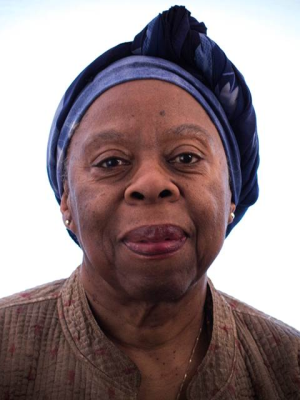 Image 2 of 2
Publication Date: October 31, 2026
Paperback, 114 pages
ISBN: 978-1-966677-62-8
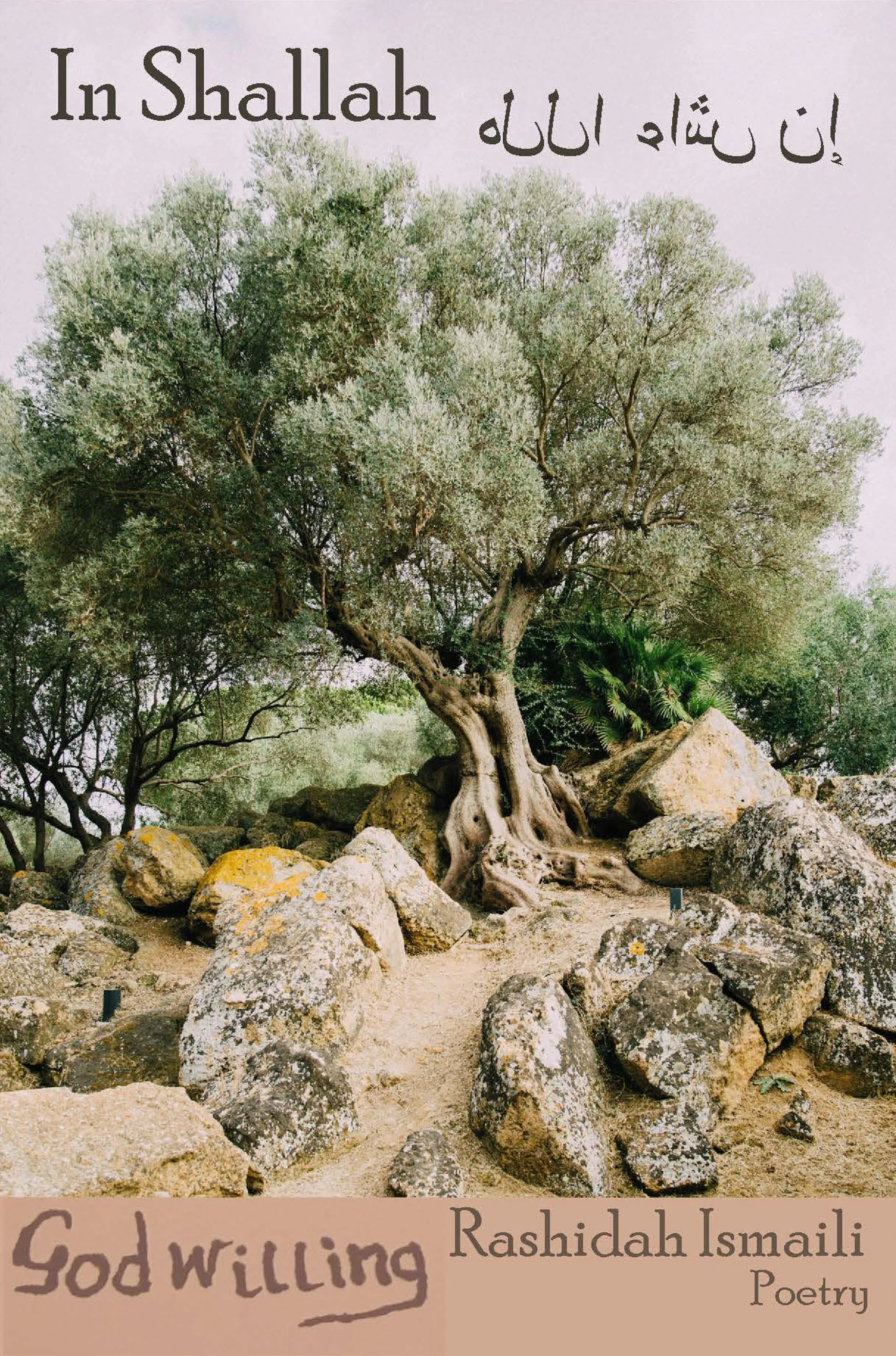
Coinciding with the 25th anniversary of the 9/11 attacks, In Shallah by poet Rashidah Ismaili captures the Muslim response to those events and their aftermath, a volume filled with grief and despair taking the reader on a journey of family and community displacement as a metaphor for that response, reflecting the continuing loss – fueled by prejudice and misunderstanding – to a community still struggling to recover itself.
Praise for Rashidah Ismaili & In Shallah
Rashidah Ismaili – novelist, professor, activist, and founder of Salon d’Afrique – in this searing collection In Shallah brings the lives of uprooted refugees drifting from snow to sea, widows waiting endlessly at windows, grandmothers carrying the memories of an olive tree severed from its land. Clear-eyed and luminous, Ismaili transforms a lifetime of listening into fierce acts of witness – to exile, cruelty and love. In Shallah – “In God’s Time / God Willing” – offers a window into a tragic episode and the consequences still felt a quarter of a century afterwards.
—Dr. Hisham Aidi, political scientist & author
“Poems cannot comfort the dying” writes Rashidah Ismaili in her collection, In Shallah. And yet, ironically, her words aspire to do just that. “Each tooth” she says,
“break forth to test the teats of a yielding mother.” These poems inexorably track the connectivity of life, generation to generation, practice by practice, noting how in the midst of suffering, knowledge grows and is passed on. It’s how we thwart the dying, how somehow, life continues.
In language often sacred and profound, clear and distilled, this poet reminds us that poetry is a tool, an art trying to find a way “to say, to gather colours to paint the smell of dismembered death.” Her poems compress time – “Yesterday is today,” she writes. In narrow verses, she presents trauma and wonder in the same voice, lets us journey her ancient land, feel “the stones under the soles, stop with her at a house of stone and dirt floors” She describes hunger as “the music of missed meals.”
Years ago I heard Ismaili read “The Shaming of an Olive Tree,” the final poem in this book. I was stunned then by the beauty of lines, by the connection of words to deed and outcome. I am stilled now, seeing for myself how her words move across the page. And I feel compelled to return to one of her earlier observations. “I watch the sinews of hand / hands that held my father’s oud.” She brings the same acute power to witness the ugliness and beauty of the world.
—Mervyn Taylor, author of Unpainted Houses
About the Author
Rashidah Ismaili is an academic and writer. Her works have been widely anthologised, recently included in New Daughters of Africa (ed. Margaret Busby). Her novel in linked stories Autobiography of the Lower East Side has been well received, and the second volume in the trilogy of An African Woman in New York (of which the autobiography is the first) is due out late Spring 2027. It is titled Turmoil of Truth.
Ismaili was a member of Umbra, a group of mostly African-American writers and visual artists active in the Sixties on the Lower East Side of New York City. Umbra was short lived but was a forerunner of the Black Arts Movement. She is a founding member of OWWA, Organisation of Women Writers of Africa, created in the late 1980s, and the vice president of Pen & Brush, an all women’s organisation of writers, visual artists, and at one time musicians. It is the oldest such organisation in the country.
She is the founder and hostess of Salon d’Afrique, where intellectuals, artists and writers hold salons to exchange the ideas and critique literary and cultural of modern creators and works.
Publication Date: October 31, 2026
Paperback, 114 pages
ISBN: 978-1-966677-62-8
Coinciding with the 25th anniversary of the 9/11 attacks, In Shallah by poet Rashidah Ismaili captures the Muslim response to those events and their aftermath, a volume filled with grief and despair taking the reader on a journey of family and community displacement as a metaphor for that response, reflecting the continuing loss – fueled by prejudice and misunderstanding – to a community still struggling to recover itself.
Praise for Rashidah Ismaili & In Shallah
Rashidah Ismaili – novelist, professor, activist, and founder of Salon d’Afrique – in this searing collection In Shallah brings the lives of uprooted refugees drifting from snow to sea, widows waiting endlessly at windows, grandmothers carrying the memories of an olive tree severed from its land. Clear-eyed and luminous, Ismaili transforms a lifetime of listening into fierce acts of witness – to exile, cruelty and love. In Shallah – “In God’s Time / God Willing” – offers a window into a tragic episode and the consequences still felt a quarter of a century afterwards.
—Dr. Hisham Aidi, political scientist & author
“Poems cannot comfort the dying” writes Rashidah Ismaili in her collection, In Shallah. And yet, ironically, her words aspire to do just that. “Each tooth” she says,
“break forth to test the teats of a yielding mother.” These poems inexorably track the connectivity of life, generation to generation, practice by practice, noting how in the midst of suffering, knowledge grows and is passed on. It’s how we thwart the dying, how somehow, life continues.
In language often sacred and profound, clear and distilled, this poet reminds us that poetry is a tool, an art trying to find a way “to say, to gather colours to paint the smell of dismembered death.” Her poems compress time – “Yesterday is today,” she writes. In narrow verses, she presents trauma and wonder in the same voice, lets us journey her ancient land, feel “the stones under the soles, stop with her at a house of stone and dirt floors” She describes hunger as “the music of missed meals.”
Years ago I heard Ismaili read “The Shaming of an Olive Tree,” the final poem in this book. I was stunned then by the beauty of lines, by the connection of words to deed and outcome. I am stilled now, seeing for myself how her words move across the page. And I feel compelled to return to one of her earlier observations. “I watch the sinews of hand / hands that held my father’s oud.” She brings the same acute power to witness the ugliness and beauty of the world.
—Mervyn Taylor, author of Unpainted Houses
About the Author
Rashidah Ismaili is an academic and writer. Her works have been widely anthologised, recently included in New Daughters of Africa (ed. Margaret Busby). Her novel in linked stories Autobiography of the Lower East Side has been well received, and the second volume in the trilogy of An African Woman in New York (of which the autobiography is the first) is due out late Spring 2027. It is titled Turmoil of Truth.
Ismaili was a member of Umbra, a group of mostly African-American writers and visual artists active in the Sixties on the Lower East Side of New York City. Umbra was short lived but was a forerunner of the Black Arts Movement. She is a founding member of OWWA, Organisation of Women Writers of Africa, created in the late 1980s, and the vice president of Pen & Brush, an all women’s organisation of writers, visual artists, and at one time musicians. It is the oldest such organisation in the country.
She is the founder and hostess of Salon d’Afrique, where intellectuals, artists and writers hold salons to exchange the ideas and critique literary and cultural of modern creators and works.