
 Image 1 of 2
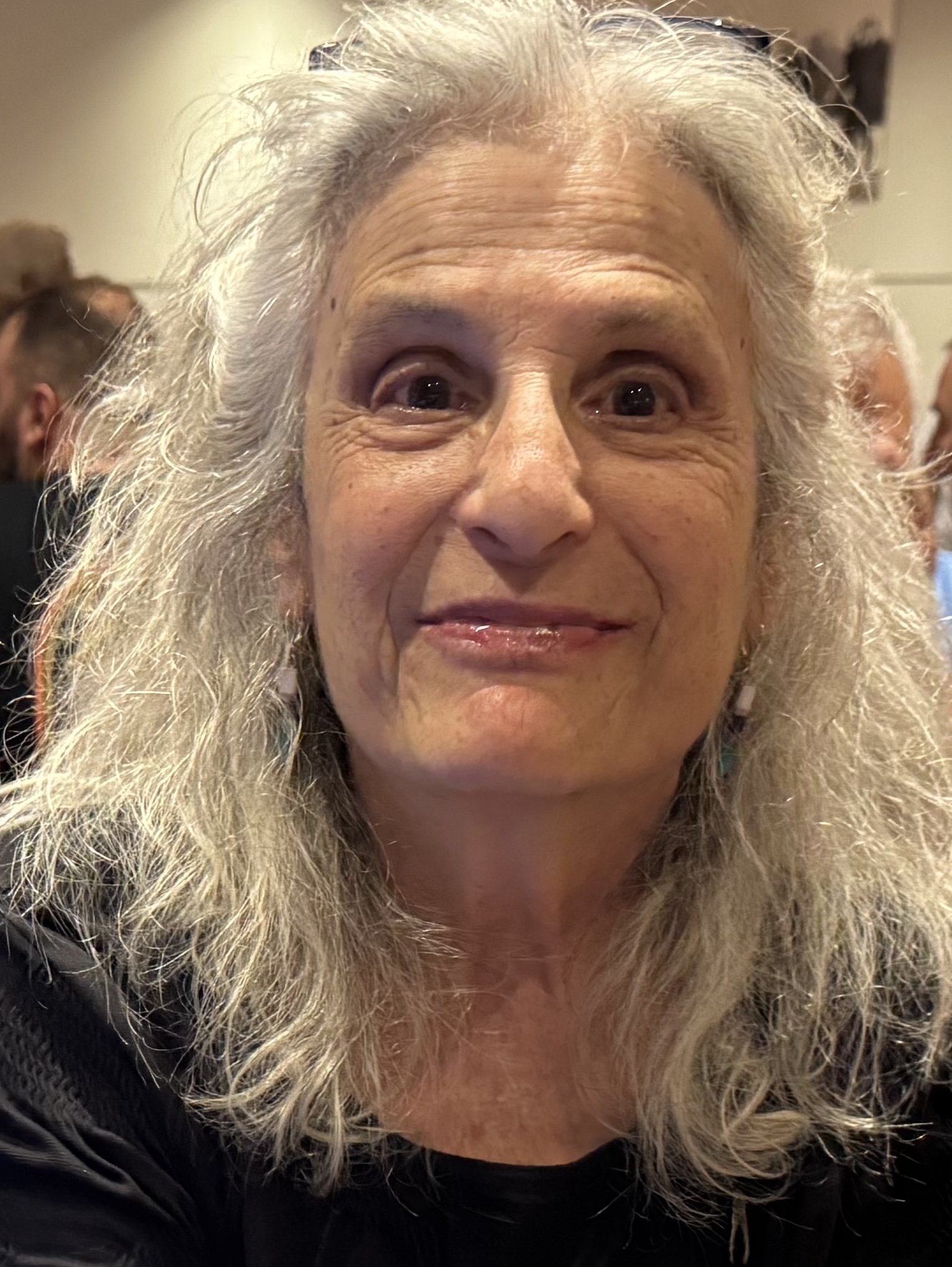 Image 2 of 2
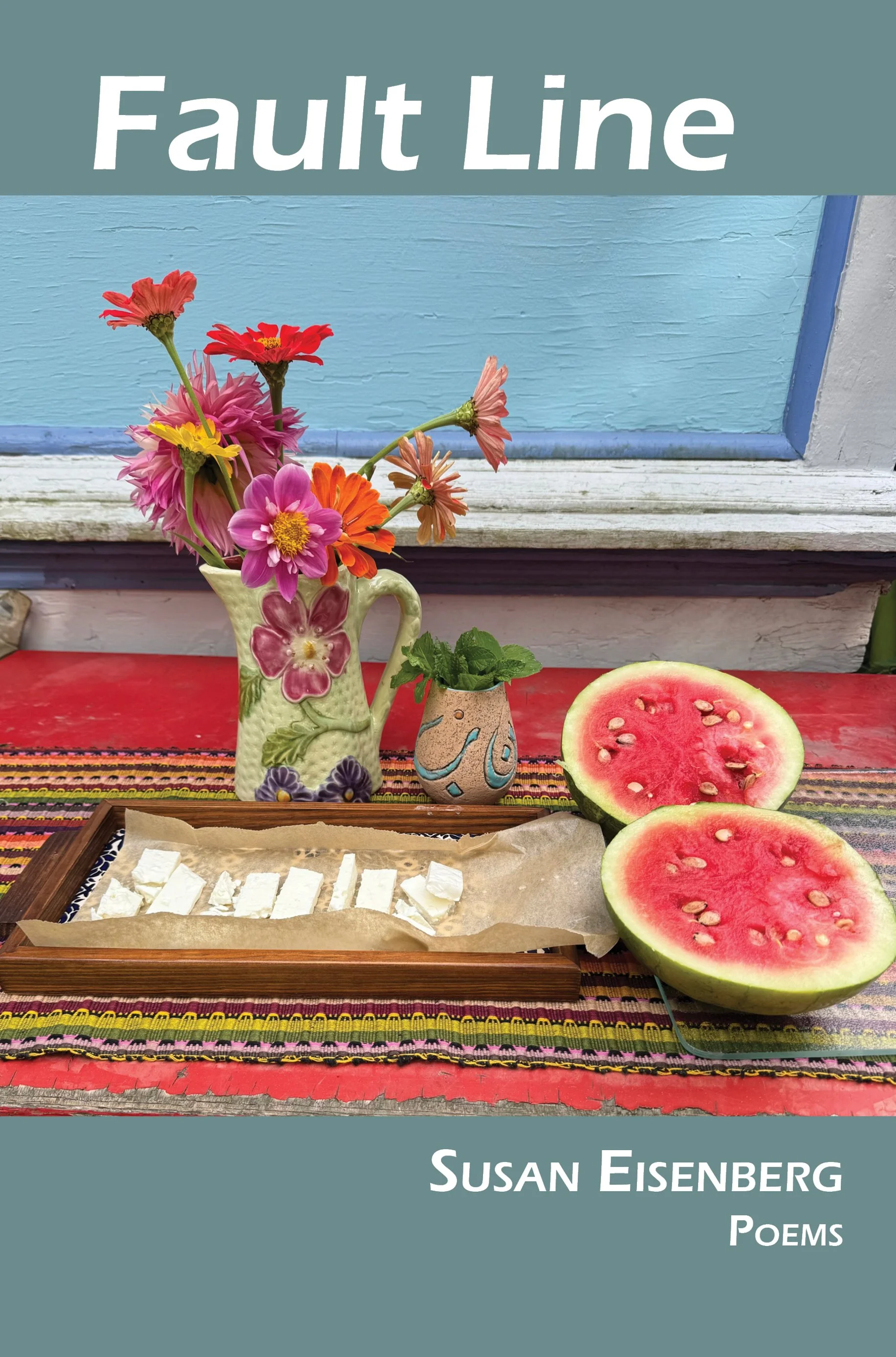
Publication Date: August 15, 2026
Paperback, 42 pages
ISBN: 978-1-966677-55-0
Drawing on a range of poetic strategies, Susan Eisenberg grafts onrushing news accounts onto the page. With haunting imagery, the poems of Fault Line stress test how the political and moral landscape, friendships, and language itself become altered by the catastrophic destruction in Palestine. The collection closes with a bit of hope from Jenin.
Praise for Susan Eisenberg & Fault Line
These straight-talking, truth-seeking poems, as they fill in the blanks, remind us that what we think we know is shaped by what has been left out of a self-justifying script. Grieving for what they bring to light by looking where we aren’t supposed to go and knowing who we aren’t supposed to know, these ethically grounded poems give statistics embodied human shape, expose the perversion of official naming, and, in the astonishing “Unlearning Deafness,” reveal what can block even open-air calls to prayer.
— Eleanor Wilner, Chancellor of the Academy of American Poets
Susan Eisenberg’s razor-sharp, powerful poetry gives voice to the anguish and horror that swirls and metastasizes through this ongoing history: Gaza, Jenin, the Naqba, the countless dead and wounded, the bulldozed homes, the trees, the children … a “devastation so shocking so fast / I failed to keep up.” Even irony loses its irony as self-serving justifications spill “like cyanide.” This courageous collection of poems has us join her in protest but also in perseverance: Jenin’s watermelon seeds do germinate, she tells us.
— Linda Dittmar, author of Tracing Homelands: Israel, Palestine, and the Claims of Belonging
For years, Susan Eisenberg, an electrician by trade, has written tough-minded poems about the working-class experience. Now, she turns her clear-eyed vision to the dehumanization and devastation of the Palestinian people. Seeing that dehumanization and destruction from a deeply empathetic Jewish perspective, she writes: “How could a God who / commanded, Thou shalt not steal / promise land not His?” Being a poet above all, she finds her metaphor with her hands in soil, planting thirteen watermelon seeds from Jenin on the West Bank. When nothing grows, to her consternation, her friend advises patience: “They are from Jenin. They don’t give up easily.” And fourteen plants sprout. The parallels with the cultivation of empathy — and poetry — are unmistakable. The collection closes with an Arabic translation of the same poem, proving that Susan Eisenberg still knows the meaning of the word “solidarity,” and can teach us all.
— Martín Espada
About the Author
Poet, visual artist, and oral historian, Susan Eisenberg is author of the nonfiction NYT Notable Book, We’ll Call You If We Need You: Experiences of Women Working Construction and five previous books of poetry — Stanley’s Girl, Perpetual Care, Blind Spot, Pioneering, and It’s a Good Think I’m Not Macho. Among the first women in the country to become a licensed union construction electrician, she has read her poems at the ILO in Geneva, Switzerland, and the U.S. Department of Labor; her mixed media art installation, On Equal Terms, exhibited at the AFL-CIO. Honors include the Virginia Quarterly Review’s Emily Clark Balch Prize for Poetry, the Joe Hill Award, and the University of Michigan Center for the Education of Women’s Twink Frey Visiting Social Activist fellowship. A Resident Scholar at the Brandeis Women’s Studies Research Center, she is Poetry Editor of Labor: Studies in Working Class History (Duke). Raised in a three-generation household in Cleveland, she lives in Boston.
Publication Date: August 15, 2026
Paperback, 42 pages
ISBN: 978-1-966677-55-0
Drawing on a range of poetic strategies, Susan Eisenberg grafts onrushing news accounts onto the page. With haunting imagery, the poems of Fault Line stress test how the political and moral landscape, friendships, and language itself become altered by the catastrophic destruction in Palestine. The collection closes with a bit of hope from Jenin.
Praise for Susan Eisenberg & Fault Line
These straight-talking, truth-seeking poems, as they fill in the blanks, remind us that what we think we know is shaped by what has been left out of a self-justifying script. Grieving for what they bring to light by looking where we aren’t supposed to go and knowing who we aren’t supposed to know, these ethically grounded poems give statistics embodied human shape, expose the perversion of official naming, and, in the astonishing “Unlearning Deafness,” reveal what can block even open-air calls to prayer.
— Eleanor Wilner, Chancellor of the Academy of American Poets
Susan Eisenberg’s razor-sharp, powerful poetry gives voice to the anguish and horror that swirls and metastasizes through this ongoing history: Gaza, Jenin, the Naqba, the countless dead and wounded, the bulldozed homes, the trees, the children … a “devastation so shocking so fast / I failed to keep up.” Even irony loses its irony as self-serving justifications spill “like cyanide.” This courageous collection of poems has us join her in protest but also in perseverance: Jenin’s watermelon seeds do germinate, she tells us.
— Linda Dittmar, author of Tracing Homelands: Israel, Palestine, and the Claims of Belonging
For years, Susan Eisenberg, an electrician by trade, has written tough-minded poems about the working-class experience. Now, she turns her clear-eyed vision to the dehumanization and devastation of the Palestinian people. Seeing that dehumanization and destruction from a deeply empathetic Jewish perspective, she writes: “How could a God who / commanded, Thou shalt not steal / promise land not His?” Being a poet above all, she finds her metaphor with her hands in soil, planting thirteen watermelon seeds from Jenin on the West Bank. When nothing grows, to her consternation, her friend advises patience: “They are from Jenin. They don’t give up easily.” And fourteen plants sprout. The parallels with the cultivation of empathy — and poetry — are unmistakable. The collection closes with an Arabic translation of the same poem, proving that Susan Eisenberg still knows the meaning of the word “solidarity,” and can teach us all.
— Martín Espada
About the Author
Poet, visual artist, and oral historian, Susan Eisenberg is author of the nonfiction NYT Notable Book, We’ll Call You If We Need You: Experiences of Women Working Construction and five previous books of poetry — Stanley’s Girl, Perpetual Care, Blind Spot, Pioneering, and It’s a Good Think I’m Not Macho. Among the first women in the country to become a licensed union construction electrician, she has read her poems at the ILO in Geneva, Switzerland, and the U.S. Department of Labor; her mixed media art installation, On Equal Terms, exhibited at the AFL-CIO. Honors include the Virginia Quarterly Review’s Emily Clark Balch Prize for Poetry, the Joe Hill Award, and the University of Michigan Center for the Education of Women’s Twink Frey Visiting Social Activist fellowship. A Resident Scholar at the Brandeis Women’s Studies Research Center, she is Poetry Editor of Labor: Studies in Working Class History (Duke). Raised in a three-generation household in Cleveland, she lives in Boston.